

WeVote

Bill

Bill

SB 1858

revenue; 2026-2027.

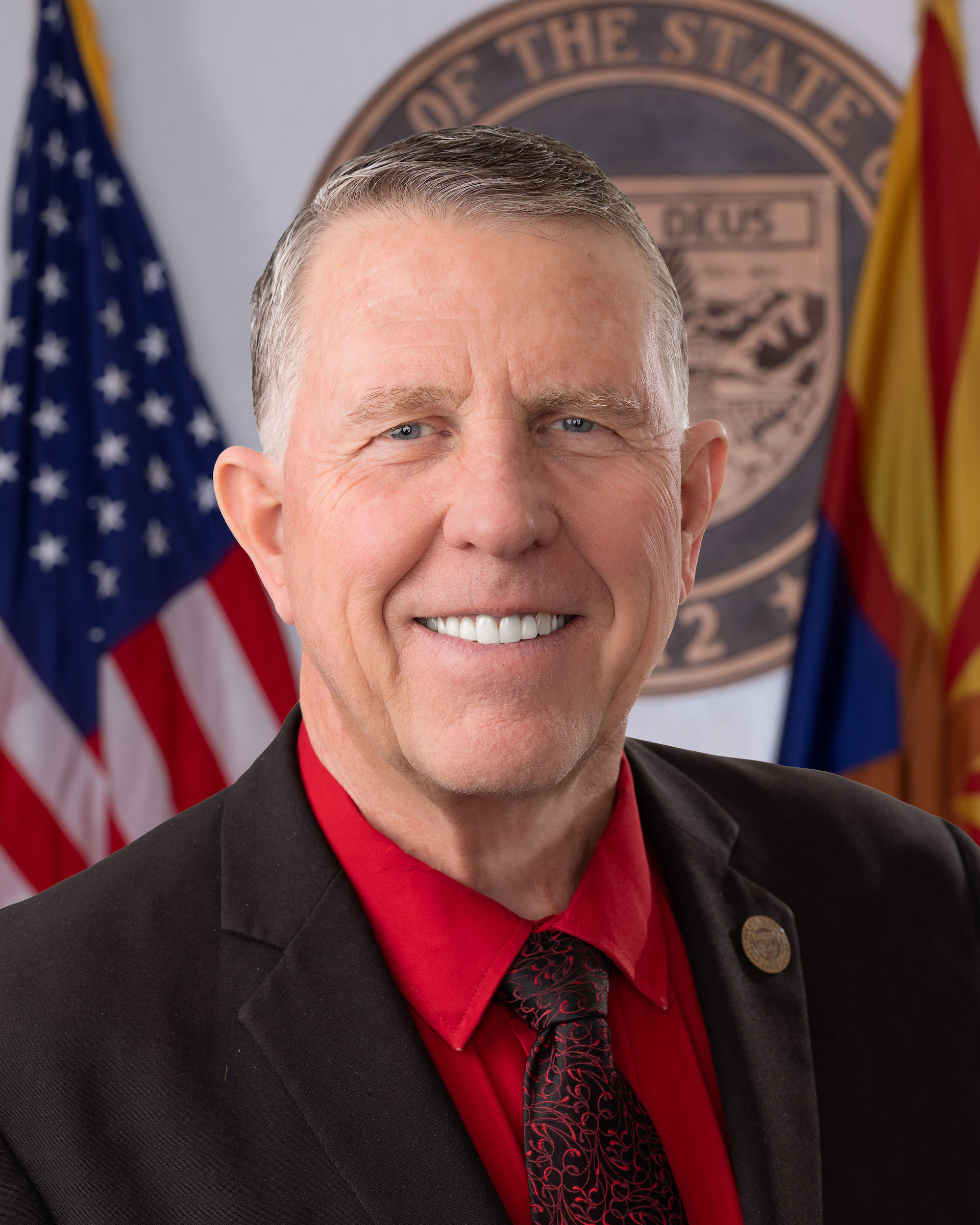
57th Legislature - Second Regular Session Introduced by Dave Farnsworth

Extends ITS funding through 2030, updates education funding distributions, and caped ITS fees for FY2026-2027 while formalizing fee transfers to fund education programs.

DP
0
WeVote Research Nonpartisan
Bill Summary · SB 1858

Summary of SB 1858 (57th-2nd Regular, Arizona)

Purpose and intent

  • The bill amends existing statutes related to education funding distributions and the integrated tax system (ITS) project to modify the allocation of education revenues and to extend the ITS funding provisions through 2030 (instead of 2028).
  • It also introduces fiscal-year-specific caps and allocation guidelines for ITS-related fees and transfers, and updates a repeal timeline for a previously enacted statute.

Key provisions and changes

  • Section 42-5029.02 – Distribution of revenues for education; definitions (amended)

    • Revenues collected under sections 42-5010.01 and 42-5155(E) continue to be distributed annually, in addition to other funding sources, and must not supplant existing public education funding.
    • Distributions are allocated as follows: 1) Basic state aid: $64,100,000 annually to the Superintendent of Public Instruction, paid monthly. 2) Technology and research initiative fund (universities): 12% of remaining monthly funds after the base aid transfer to be distributed to universities for tech and research initiatives. 3) Workforce development: 3% of the remaining monthly funds after the base aid transfer to community college districts for workforce programs. 4) Indian tribe community colleges (on reservations): If applicable, one-twelfth of the per-month share that a tribe-held community college would receive under section 15-1472(D)(2) to a tribe’s treasurer for tribal community colleges. 5) Increased cost of basic state aid (2000 adjustment): One-twelfth of $86,280,500 each month to the Department of Education for added school days and related teacher salary increases enacted in 2000. 6) School safety and character education: $7,800,000 per fiscal year for school safety; $200,000 per fiscal year for character education matching grants. 7) Accountability funding cap: Legislature may not appropriate more than $7,000,000 per fiscal year for accountability programs (as described in statute 15-241.02 and related article). 8) Failing schools tutoring: $1,500,000 per fiscal year to the failing schools tutoring fund. 9) Income tax credit reimbursement: $25,000,000 per fiscal year to reimburse the state general fund for the cost of the income tax credit under section 43-1072.02. 10–11) ITS and Classroom Site Fund transfers: From June 30, 2022 through June 30, 2030, money determined by the ITS project director under 42-5041 and additional subsection mechanisms may be transferred into the ITS project fund and, after those transfers, the remaining funds go to the Classroom Site Fund under section 15-977 per applicable distribution rules.
    • B–G definitions and clarifications related to
    • “Community college district”
    • “Qualifying Indian tribe”
  • Section 42-5041 – Integrated tax system modernization project; fund (amended)

    • Continues to authorize a cost-sharing mechanism for ITS modernization, with fees assessed on counties, cities, towns, councils of governments, and regional transportation authorities to fund the ITS project.
    • Fees apply to entities receiving state shared revenues (42-5029, 43-206, etc.) and to councils of governments and regional transportation authorities in certain counties.
    • Key operational mechanics:
    • Fees assessed by October 31 each year; payable immediately.
    • Delinquent payments can be withheld from distributions to affected entities (until fully satisfied).
    • Counties, cities, towns may fund their obligation from various designated revenue sources.
    • Transfers from existing revenue sources (42-5010.01, 42-5155(E), 36-2856(B)(2)) may cover actual costs of ITS upgrades.
    • All fees and transfers are deposited into the “Department of Revenue Integrated Tax System Project Fund,” administered by the Director of the Department of Revenue and subject to legislative appropriation.
  • Laws 2022, Chapter 321, Section 3 – Repeal (amended)

    • Repeal date for Section 42-1009 is pushed to December 31, 2031 (from earlier date).
  • Legislative intent (Section 4)

    • Establishes fiscal guidelines for fiscal year 2026-2027:
    • The total ITS-related fees for all entities may not exceed $1,273,800.
    • Fee shares are allocated proportionally to counties, cities, towns, councils of governments, and regional transportation authorities based on relative distributions from prior years (with formulas tied to populations and prior-year distributions, including counties over 800,000 population).
    • Specific caps and proportional sharing are outlined for:
      • Counties (based on prior distributions)
      • Cities and towns (based on prior distributions)
      • Councils of governments (based on prior distributions)
      • Regional transportation authorities in large counties (based on prior distributions)
    • Cap for the 2026-2027 transfer under subsection E is not to exceed $154,500; cap for transfer under subsection F not to exceed $34,400.

Who would be affected

  • Education funding recipients: Arizona school districts, charter schools, universities under the Arizona Board of Regents, community colleges, and tribal community colleges could see changes in how funds are allocated, including their share of technology, workforce development, safety, tutoring, and accountability funding.
  • State agencies: Department of Education and Department of Revenue are central to administering these distributions and the ITS fund.
  • Local governments and authorities: Counties, cities, towns, councils of governments, and certain regional transportation authorities would be responsible for ITS modernization fees and would experience potential withholdings if fees are not timely paid.
  • Taxpayers and taxpayers’ credits: The bill interacts with the state income tax credit cost reimbursement, impacting the General Fund.

Procedural and timeline aspects

  • Effective timeframes stretch through 2030 for ITS funding-related transfers, and through 2031 for repealed statute sections (42-1009).
  • The Department of Revenue ITS project fund is established and continues to be the repository for ITS-related revenues and expenditures.
  • The fiscal-year cap for ITS fees in 2026-2027 is explicitly defined, with proportional allocation rules based on prior-year distributions and population data.
  • The bill was introduced for the 57th Legislature, Second Regular Session and assigned to committee; it received a first reading on June 9, 2026.

Notable numerical details

  • Base state aid: $64,100,000 annually.
  • ITS-related annual cap for 2026-2027: up to $1,273,800 total fees (subject to distribution formulas).
  • Specific annual caps under the new framework for certain ITS-related transfers: $154,500 (section 42-5041(E) cap) and $34,400 (section 42-5041(F) cap).
  • Monthly transfers include: 12% to the tech and research initiative fund; 3% to workforce development; 1/12 of various fixed amounts for other programs.

This summary captures the bill’s core architecture: sustaining and reallocating education funding, extending ITS funding through 2030, formalizing fee collections for ITS, and setting explicit FY2026-2027 caps and distribution formulas.

Compiled from official sources — confirm details with the bill’s official record.

Sign in to ask a question.