

WeVote

Bill

Bill

HR 8868

Restoring Overtime Pay Act of 2026

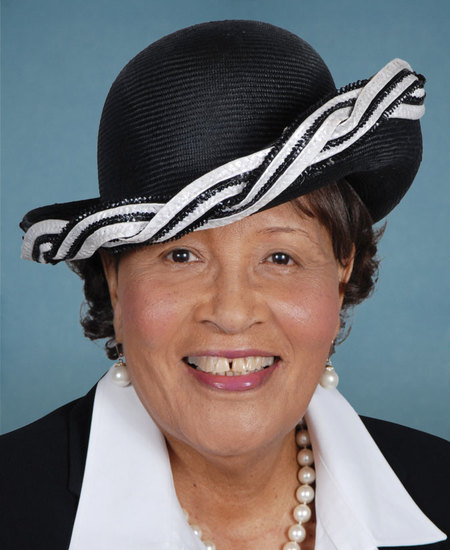
119th Congress Introduced by Alma Adams and 21 co-sponsors

The bill raises the federal overtime exemption salary threshold and automates annual updates, expanding overtime protections for more workers.

Introduced in House
0
WeVote Research Nonpartisan
Bill Summary · HR 8868

Overview

  • Bill: Restoring Overtime Pay Act of 2026 (H.R. 8868)
  • Session: 119th Congress
  • Purpose: Amend the Fair Labor Standards Act of 1938 to establish a new minimum salary threshold for employees exempt from federal overtime, with automatic annual updates. Also adjusts nonexempt duties standards for bona fide executive, administrative, or professional employees.
  • Introduced: May 15, 2026
  • Primary sponsor(s): Representatives Takano, Dams, Norton, Taib, Scanlon, Frost, Omar, Delauro, Simon, Hayes, Mannion, Ramirez, Schakowsky, Deluzio, Lee (PA), Horsford, Dingell, Jayapal, García (IL), Hanedar, McBride, Casar, Evans (PA) and others. Multiple co-sponsors listed.

Main purpose and intent

  • Create a mandatory minimum salary threshold for employees to maintain exemption from federal overtime pay under the FLSA.
  • Implement automatic, annual updates to the threshold thereafter.
  • Adjust the nonexempt duties test to limit exemptions further, ensuring only those whose duties are closely tied to executive/administrative activities may be exempt.
  • Provide a consistent, rising standard intended to restore overtime protections for more workers.

Key provisions and changes

  • Section 13(a)(1) exemption reform:
    • Establishes a salary basis requirement for exemption, aligned with a weekly rate corresponding to an annual salary threshold.
  • Schedule of annual salary thresholds:
    • Starting threshold: $45,000 per year (effective date of the Act).
    • Step increases: $55,000 (Jan 1, 2027); $65,000 (Jan 1, 2028); $75,000 (Jan 1, 2029).
    • From Jan 1, 2030 onward: annualized amount equal to the 55th percentile of weekly earnings of full-time salaried workers nationwide, as determined by BLS data from Q2 of 2029.
  • Automatic updates:
    • If no higher threshold is set under subsection (B), the threshold in subsection (A)(v) (the 55th percentile-based amount) is updated annually to reflect changes in the 55th percentile, based on a specified data set/methodology.
    • If an increased threshold is established under subsection (B), updates apply to the increased threshold, with the higher of the two values used.
    • Updates bypass formal rulemaking under 5 U.S.C. 553 (no notice-and-comment required for these automatic updates).
  • Notice requirements:
    • The Secretary must publish notices in the Federal Register and on the Department of Labor website at least 60 days before a revised threshold takes effect.
  • Public reporting of earnings:

    • BLS must publish quarterly on its public website the weekly earnings of full-time salaried workers by U.S. Census region.
  • Section 3 – Nonexempt duties limit for these employees:

    • Revises the nonexempt duties test for bona fide executive, administrative, or professional employees.
    • Changes include increasing permissible related activities and tightening language around activities that are not directly or closely related to executive/administrative duties.
    • Specifically revises several phrases to narrow the scope of what is considered exempt duties and to ensure more activities fall under nonexempt status if they are not closely tied to core exempt duties.
  • Effective date:

    • The Act and all amendments take effect on the first day of the third month after enactment.

Who/what would be affected

  • Workers currently classified as exempt from overtime under the FLSA due to salary thresholds could lose exemption if their salary falls below the new threshold (starting at $45,000 and rising annually).
  • Employers would need to adjust payroll to ensure exempt workers earning below the threshold are properly classified (and compensated with overtime) or raise salaries to meet the threshold.
  • Employers with workers performing administrative/executive duties would need to review duties to determine exemption status under the revised nonexempt duties standard.
  • Bureau of Labor Statistics (BLS) would provide ongoing wage data used for automatic updates and quarterly earnings reporting.

Procedural and timeline aspects

  • Effective date: Three months after enactment.
  • Automatic updates: Annual, with a potential higher threshold if the Secretary establishes one under the amendment; no required notice-and-comment for automatic updates (except the 60-day advance notice before change takes effect).
  • Data publication: BLS quarterly earnings data published and regional wage data published for transparency.
  • Legislative status: Referred to the House Committee on Education and Workforce upon introduction (as of the bill’s current status in the provided text).

Practical implications

  • The bill aims to broaden overtime protections by raising the salary floor for exemptions and making the threshold adjust automatically with wage growth, potentially reducing the number of employees exempt from overtime.
  • It also tightens the scope of permissible exempt duties, potentially shifting some roles from exempt to nonexempt depending on duties performed.
  • Employers should prepare for annual threshold changes and assess payroll classifications and job duties to ensure compliance.

Compiled from official sources — confirm details with the bill’s official record.

Sign in to ask a question.