

WeVote

Bill

Bill

HR 9032

RESTORE Third Spaces Act of 2026

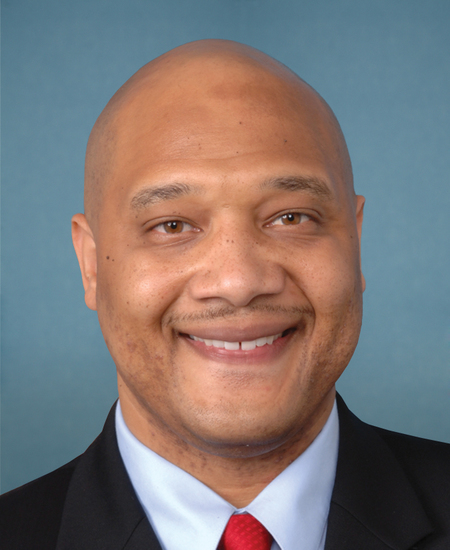
119th Congress Introduced by André Carson and 13 co-sponsors

The act funds a 3-year pilot giving grants to renovate third spaces (libraries, centers, parks, etc.) to reduce isolation and boost local equity and economy.

Introduced in House
0
WeVote Research Nonpartisan
Bill Summary · HR 9032

Overview

Restoring and expanding equitable public life through investment in third spaces. The RESTORE Third Spaces Act of 2026 (HR 9032) would direct the Secretary of Commerce to create a three-year pilot program to award grants for renovating and developing “third spaces”—publicly accessible venues that support social, cultural, and economic life outside home or work. The bill emphasizes equity, community engagement, and the mitigation of historical inequities.

Main purpose and intent

  • Establish a national pilot program to seed and study third spaces as engines of democratic participation, social cohesion, mental health, cultural vitality, and local economic resilience.
  • Target reductions in social isolation and support for community life, while fostering entrepreneurship and inclusive development.
  • Collect and report on metrics to evaluate the effectiveness of third spaces in improving belonging, social cohesion, and economic outcomes.

Key provisions and changes

  • Pilot Program Establishment (Section 3)
    • The Secretary of Commerce, with HUD and HHS, shall create a pilot program awarding grants to eligible entities to renovate or develop third spaces.
    • Grant priorities favor projects that strengthen the local economy and reduce social isolation.
  • Eligibility and Applications
    • Eligible entities include local governments, nonprofit corporations, Federally recognized tribes, Native Hawaiian organizations, public libraries, community colleges, or partnerships combining nonprofits with a local government or agency.
    • Applications must document community history, historic inequities, and explain how design will engage residents, benefit the community, and preserve local culture, history, and identity.
  • Use of Funds
    • Grants may cover planning and pre-development (community engagement, feasibility studies) and construction costs for renovation or development.
  • Equity, Historical Justice, and Accessibility
    • Federal rule: at least 60% of grant funds in a fiscal year must go to entities serving low-income and underserved communities.
    • Grantees must maintain free or low-cost access to the public, with allowance for reasonable rent for a business.
  • Timeframe and Extensions
    • Pilot expires 3 years after enactment, with a potential 2-year extension if approved no later than 30 days before expiration.
  • Reporting and Evaluation
    • Immediate reporting requirements post-enactment on attendance, programs, and social/cultural/economic impacts, tailored to community capacity.
    • A Congress-directed report due within 3 years after pilot expiration, detailing metrics (attendance, new businesses, affordability, belonging), social/cultural/economic impacts, and effectiveness in reducing isolation and bolstering community life; includes recommendations for expansion.
  • Administration and Administrative Cap
    • Administrative expenses capped at 5% of funds for a given fiscal year.
  • Authorization of Appropriations
    • $200 million authorized to carry out the Act.
  • Definitions
    • "Third space" includes libraries, community centers, parks, markets, makerspaces, incubators, schoolyards with shared use, small business spaces, and other combinations of listed spaces.
    • "Underserved community" includes areas meeting certain economic distress criteria and facing rural status or recent disinvestment, poverty, segregation, or loss of third spaces due to redevelopment or gentrification.

Who is affected

  • Eligible entities capable of applying for grants (local governments, nonprofits, tribes, Native Hawaiian organizations, public libraries, community colleges, or public-private partnerships).
  • Residents and users of renovated or developed third spaces, especially in low-income and underserved communities.
  • Local businesses and startups that could benefit from increased foot traffic and shared-use infrastructure.
  • Communities historically subject to inequities and disinvestment.

Procedural and timeline aspects

  • Introduction and referral: May 26, 2026.
  • Pilot program duration: 3 years post-enactment, with potential 2-year extension.
  • Funding: Authorizes $200 million; annual admin costs capped at 5%.
  • Reporting:
    • Immediate (within a short window after enactment) on reporting requirements for grantees.
    • Final Congress-wide evaluation due 3 years after pilot expiration, with expansion recommendations.

Potential impact

  • Creates a federally funded mechanism to renovate and establish third spaces as inclusive community hubs.
  • Aims to reduce social isolation, strengthen civic participation, and stimulate local economic activity through shared-use models.
  • Promotes equity by directing most funding to underserved communities and ensuring affordable access.
  • Generates data on social, cultural, and economic outcomes to inform broader national strategy on community spaces and inclusive development.

Compiled from official sources — confirm details with the bill’s official record.

Sign in to ask a question.