

WeVote

Bill

Bill

SB 558

Requiring computer science course prior to graduation

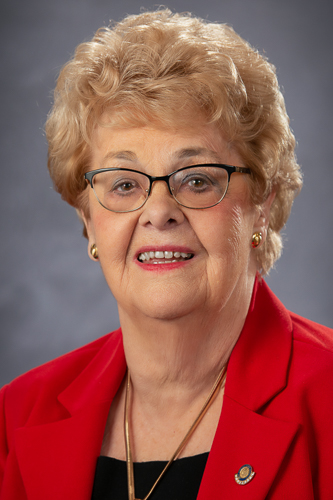
2025 Regular Session Introduced by Donna Boley and 4 co-sponsors

Requires the Department of Legislative Services to include a standardized family impact statement in every fiscal/policy note; committees cannot vote on a bill without it.

To Finance
0
WeVote Research Nonpartisan
Bill Summary · SB 558

SB 558 — General Assembly: Fiscal Notes — Family Impact Statement (Maryland)

Status: Enacted (Chapter 53, Statutes of 2025). Presented to Governor 6/27/2025; approved 7/14/2025. Effective date: October 1, 2025.
Introduced: January 23, 2025. Assigned to Education, Energy, and the Environment.

Main purpose

Require the Department of Legislative Services (DLS) to include a standardized "family impact statement" in each fiscal and policy note prepared for legislation, and to make that statement a prerequisite for committee consideration (a committee may not vote on a bill unless the fiscal note includes the family impact statement).

Key provisions

  • Adds a required family impact statement to the fiscal and policy note for each bill prepared by DLS. The statement must:
    • Indicate whether the bill may or will have an impact on families in the State.
    • If so, specify the basis for that assessment and the type and category of impact, explicitly including effects on:
    • marriage and family stability,
    • marriage promotion,
    • family formation, and
    • family welfare.
    • Specify the basis and methodology used for the analysis.
  • Amends State Government Article (Article 2) to define terms used by the requirement, including “family,” “family formation,” “family welfare,” and “marriage and family stability.”
  • Prohibits a committee from voting on a bill unless the fiscal note accompanying the bill includes (or has attached) the required family impact statement.
  • Keeps existing DLS processes for preparing and distributing fiscal notes; DLS may request information from State and local agencies to prepare analyses.

Fiscal impact (per DLS fiscal note)

  • General fund expenditures increase to support DLS workload.
    • FY 2026: +$602,479 (includes hiring 5 policy analysts, one-time consultant contract, start‑up/operating costs).
    • Salaries & fringe: $365,635
    • Contractual services (one‑time framework consultant): $200,000
    • Operating expenses: $36,844
    • FY 2027: ~$476,500 (annualized personnel and operating costs; consultant one‑time cost removed).
    • FY 2028: ~$497,700
    • FY 2029: ~$520,000
    • FY 2030: ~$542,100
  • No projected effect on State revenues.
  • Local governments: expected to provide information using existing resources; no direct fiscal effect anticipated.
  • Small business: none indicated.

Who is affected

  • Department of Legislative Services — additional staffing and analytic burden to produce family impact assessments for legislation.
  • General Assembly committees — procedural requirement (cannot vote without the statement).
  • State agencies and local governments — may receive DLS requests for data to inform family impact analyses.
  • Sponsors and members of the public — greater transparency about potential family-related consequences of legislation.
  • General fund/taxpayers — support for DLS staffing and consultant costs.

Procedural/timeline aspects and implementation

  • Applies to fiscal notes DLS prepares for bills introduced after the Act’s effective date; the statute takes effect October 1, 2025.
  • DLS estimated average legislative workload (roughly the historical ~2,500 bills per session) when sizing staff needs.
  • DLS will develop and use a documented methodology/framework (consultant support budgeted) for family impact assessments.
  • Committees are barred from voting on bills lacking the required family impact statement as part of the fiscal note.

Observations / potential operational effects

  • The new requirement formalizes an additional analytic dimension (family impacts) into the legislative review process, increasing DLS workload and creating potential for longer lead times for fiscal notes. DLS anticipates State agencies can respond from existing resources, though some agencies (e.g., Department of Human Services) may receive more information requests.

Compiled from official sources — confirm details with the bill’s official record.

Sign in to ask a question.