

WeVote

Bill

Bill

A 328

Requires the prosecution to disclose to the defendant certain information relating to jailhouse informants; requires prosecutors to notify victims of the informant's crimes in certain circumstances

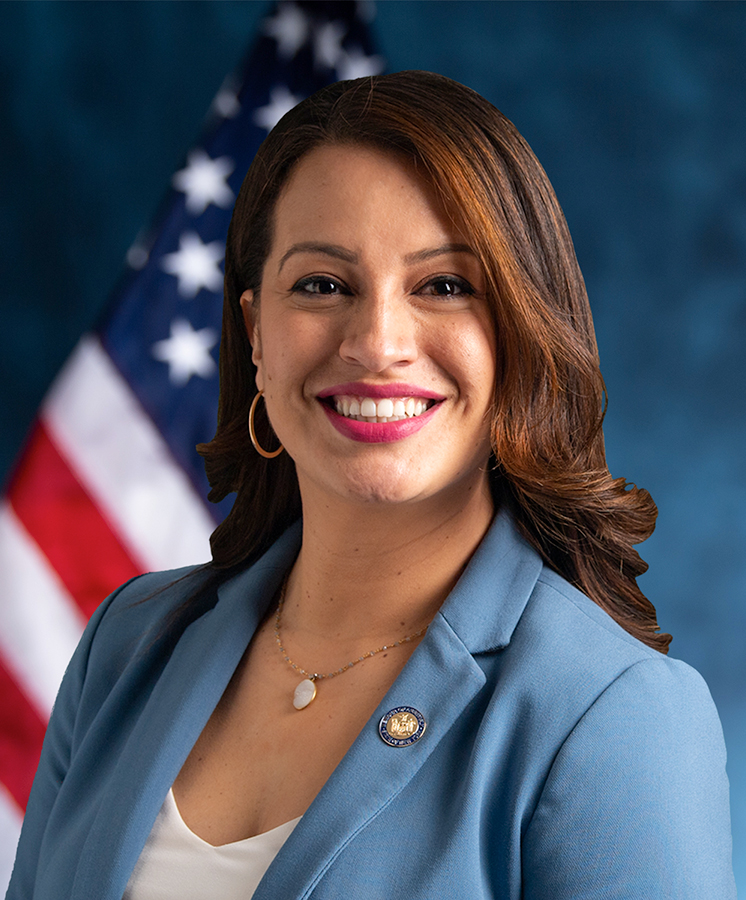
2025 Regular Session Introduced by Catalina Cruz

Requires all New Jersey local government officers to complete a standardized ethics training program, delivered by DLGS, with timelines and penalties for noncompliance.

REFERRED TO CODES
0
WeVote Research Nonpartisan
Bill Summary · A 328

Bill Summary: A-328 (Local Government Ethics Training Requirement)

Overview

A-328 would supplement the Local Government Ethics Law to require comprehensive training for all local government officers in New Jersey. The bill directs the development and administration of a standardized ethics training program, establishes timelines for completion, creates penalties for noncompliance, and authorizes enforcement mechanisms. The intent is to improve understanding and application of ethics rules across local government.

Key Provisions

  • Training Requirement for Local Government Officers

    • All local government officers must complete a training program about the Local Government Ethics Law (P.L.1991, c.29) and any applicable municipal/county ethics codes.
    • A newly elected or appointed officer must complete the training within the first six months of the officer’s first term. If the officer was elected or appointed before the rules/regulations are promulgated, training must be completed within six months after those rules come into effect.
    • Once training is completed, officers are not required to repeat training upon subsequent elections/appointments to other local bodies, except updates as required.
  • Program Development and Delivery

    • The Division of Local Government Services (DLGS) within the Department of Community Affairs (DCA) must develop the training program.
    • The program should reflect best practices by looking at similar ethics trainings nationwide and may be delivered online or via video when practicable.
    • Training can be conducted by DCA employees or by contractors/agencies/entities contracted by DCA.
    • Training shall be offered semi-annually or more frequently, at accessible locations, and may include mandatory update sessions when significant ethics changes occur.
  • Acknowledgment and Compliance

    • Upon completing the training, each officer must sign a statement acknowledging receipt and understanding of the Local Government Ethics Law and related ethical requirements.
  • Regulatory Timeline and Penalties

    • Within 120 days of the act’s effective date, the Commissioner of Community Affairs must adopt and promulgate rules/regulations implementing the act (Administrative Procedure Act process).
    • The rules must include a training timeframe not to exceed 18 months from their promulgation and an escalating fine schedule for noncompliance:
    • Fines range from $1,000 to $5,000 for failure to complete training within the specified timeline.
    • Fines are not payable or reimbursable by the governing body or local government agency.
    • Penalties are collected under the Penalty Enforcement Law of 1999.
  • Effective Date

    • The act takes effect immediately, but Section 1 (the training requirement) becomes operable only after the rules/regulations are promulgated.

Affected Parties

  • Covered individuals: All local government officers as defined by the Local Government Ethics Law (elected officials, those serving on local government agencies with authority to enact ordinances or approve development, members of independent authorities, and managerial or confidential employees). Notably, school district employees or school board members are excluded from this definition.
  • Institutions: Local governments (cities, towns, counties, authorities) and the DLGS within the DCA.
  • Enforcement: Penalties implemented via the state enforcement framework for noncompliance.

Legislative Status and Details

  • Introduced: January 9, 2024
  • Status: Referred to Codes (as of January 8, 2025)
  • Sponsor: Catalina Cruz (primary)
  • Related/Companion Bills: S 5137 (companion), and prior-session related bills

Potential Impact

  • Promotes uniform ethics training for local government officers.
  • Standardizes training content and delivery (potentially online), increasing accessibility.
  • Introduces measurable compliance timelines and penalties to incentivize participation.
  • Likely administrative and budgeting considerations for DLGS to design, deploy, and update the training program and to administer enforcement.

If you’d like, I can tailor this summary to specific audiences (e.g., policymakers, local government officials, or public researchers) or add a brief comparison to existing ethics training requirements.

Compiled from official sources — confirm details with the bill’s official record.

Sign in to ask a question.