

WeVote

Bill

Bill

A 1682

Requires that certain New York state police vehicles be equipped with a dashboard camera

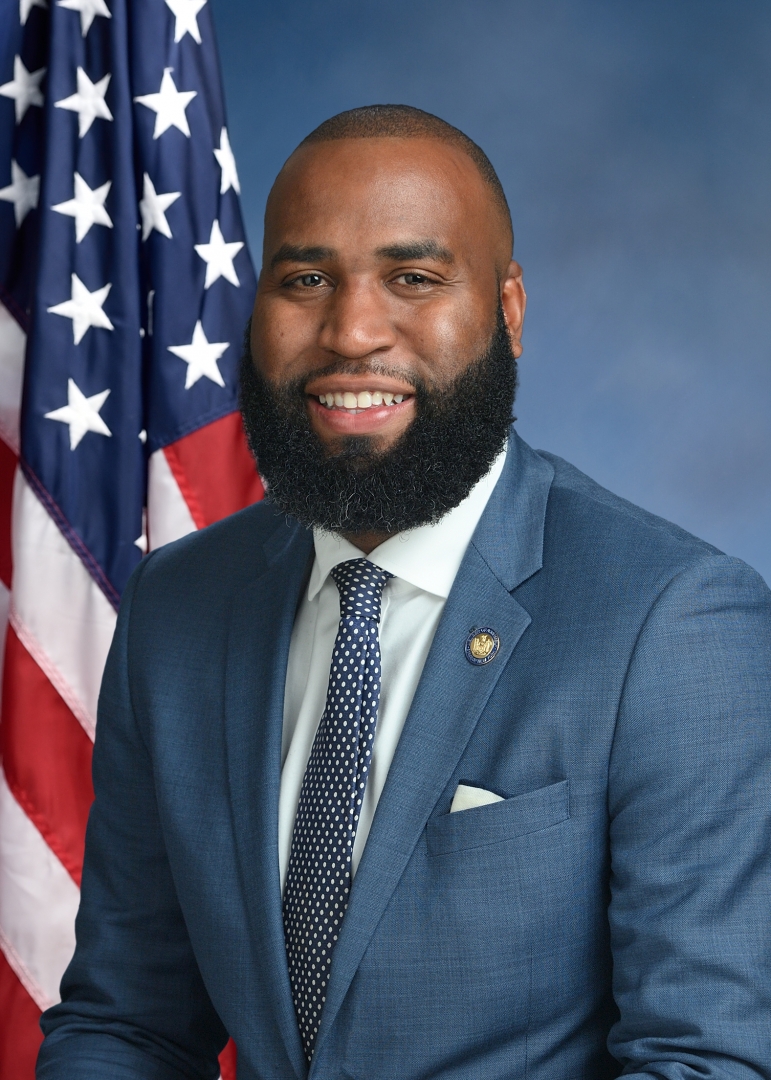
2025 Regular Session Introduced by Brian Cunningham and 9 co-sponsors

NJ law requires public middle and high schools (grades 6-12) to teach labor history and unions, with State Board standards and district-aligned materials and policies.

REFERRED TO GOVERNMENTAL OPERATIONS
0
WeVote Research Nonpartisan
Bill Summary · A 1682

Note: The descriptive title you supplied (requiring dashboard cameras in New York state police vehicles) does not match the text and legislative history you provided. The documents and actions you supplied describe New Jersey Assembly Bill A1682 (reprinted/amended and enacted as P.L.2025, c.137) concerning K–12 curriculum on labor and labor movements. The summary below is based on the provided bill text and legislative record.

Bill summary — A1682 (New Jersey) / P.L.2025, c.137

Purpose and intent

Require that New Jersey public schools teach the history and contributions of labor and labor movements, and ensure the State Board of Education adopts corresponding Social Studies learning standards. The aim is to incorporate instruction about organized labor, strikes, unionization, collective bargaining, and workplace legal protections into grades 6–12.

Key provisions

  • State Board of Education duty:

    • Adopt New Jersey Student Learning Standards (NJSLS) in Social Studies specifically addressing the history of labor and labor movements in the United States and New Jersey.
    • Adoption of these standards is to occur concurrent with each future update to the NJSLS as required by existing law (P.L.2007, c.260 / C.18A:7F-46).
  • Local school district (board of education) requirements:

    • Include instruction on U.S. and New Jersey labor history and the contributions of the labor movement in an appropriate place in the curriculum for students in grades 6–12, as part of implementing the NJSLS in Social Studies.
    • Minimum topics to be covered:
    • History of organized labor;
    • Notable strikes throughout history;
    • Unionization drives; and
    • The collective bargaining process and existing legal protections in the workplace.
    • Boards must adopt inclusive instructional materials that portray the political, economic, and societal contributions of individuals involved in labor movements when selecting curriculum resources.
  • Removed/modified provisions (committee amendments):

    • The requirement that the Commissioner of Education provide sample learning activities/resources was removed.
    • The bill was amended to require the State Board to adopt standards concurrent with regular NJSLS updates and to require boards to establish policies/procedures for selection of instructional materials.

Who is affected

  • Students: public school students in grades 6–12 across New Jersey.
  • State Board of Education: responsible for adopting the new standards.
  • Local boards of education and school districts: required to incorporate the required instruction and adopt inclusive materials; must establish policies/procedures for instructional material selection.
  • Teachers and curriculum planners: will need to develop or adopt lesson plans and materials aligned to the new standards.
  • Potential indirect stakeholders: unions, historians, educational publishers, and teacher-training entities.

Procedural and timeline details

  • Effective date: The act takes effect immediately upon enactment; however, the State Board’s adoption of the labor-history standards is tied to the timing of regular updates to the NJSLS (concurrent with statutory update cycles).
  • Legislative action and status:
    • Introduced in Assembly on Jan 9, 2024; reported out of Assembly Education Committee with amendments Dec 12, 2024.
    • Passed Assembly and Senate through 2025 (Senate amendment June 2, 2025).
    • Enacted as P.L.2025, c.137—approved Sept 3, 2025.
  • Companion and related bills: S1054 (companion). Prior-session related measures: A8497, A4045, A5172.

Potential impacts and considerations

  • Curriculum change: Districts will need to integrate specified labor-history content into middle and high school Social Studies curricula.
  • Materials and training: Adoption of new or revised instructional materials and potential professional development for teachers may be required; local costs will vary by district.
  • Educational consistency: Tying standards adoption to the NJSLS update cycle aims to coordinate implementation statewide, but may pace adoption according to the State Board’s update schedule.

Sponsors and cosponsors

  • Primary sponsors (as reported): Assemblyman Reginald W. Atkins, Assemblywoman Linda S. Carter, Assemblyman William B. Sampson IV. (Various co-sponsors listed in the bill file and Senate reprint.)

Compiled from official sources — confirm details with the bill’s official record.

Sign in to ask a question.