

WeVote

Bill

Bill

A 4083

Requires liability insurance for bicycles, bicycles with electric assist and electric scooters in N.Y. City

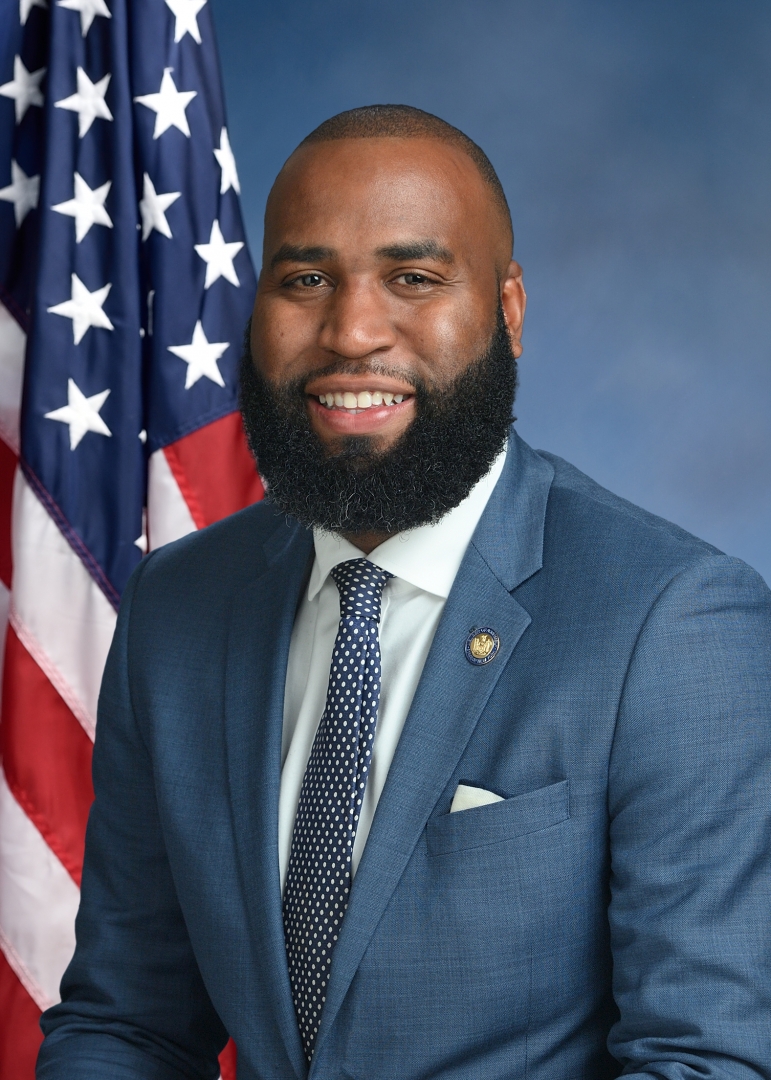
2025 Regular Session Introduced by Brian Cunningham and 1 co-sponsor

Creates Division of Voting Rights to enforce voting protections, require preclearance of changes, expand language assistance, and provide remedies and data for voters.

REFERRED TO INSURANCE
0
WeVote Research Nonpartisan
Bill Summary · A 4083

Summary — A4083 (John R. Lewis Voter Empowerment Act of New Jersey)

Status: Introduced March 18, 2024; committee-reported with amendments (12/12/2024; 6/12/2025); referred to Appropriations. Current reprint appropriates $2.5 million.

Purpose

Establishes the “John R. Lewis Voter Empowerment Act of New Jersey” to strengthen protections for the right to vote, increase access for racial, ethnic and language-minority voters, standardize remedies for voting-rights violations (including remedies for vote dilution), improve election data availability, and create state-level enforcement and oversight mechanisms.

Key provisions

  • Liberal-construction rule: statutes, rules and local laws related to the elective franchise are to be construed liberally in favor of protecting ballot casting/counting, registration, and equitable access for protected-class voters.
  • Legal standard: any policy that burdens voting must be narrowly tailored to a compelling interest and supported by substantial evidence; the bill codifies criteria for identifying vote dilution and racially polarized voting.
  • Division of Voting Rights: later committee amendments create an independent Division of Voting Rights (established “in, but not of,” the Department of the Treasury) to oversee enforcement, mediation, preclearance review, public education, and reporting related to election laws. (Earlier versions assigned expanded powers to the Attorney General; later reprints shift many functions to the new Division and remove AG authority for certain election enforcement.)
  • Preclearance: political subdivisions with histories of voting-rights violations (court orders, enforcement actions, VRA violations, consent decrees, or findings against protected-class voting rights) — and certain counties/municipalities meeting other criteria — must obtain prior approval from the Division (or a court) before changing covered election policies (e.g., at-large/districting methods).
  • Redress process: an aggrieved party may send an NJVEA notification letter to a political subdivision; the subdivision can adopt an NJVEA resolution setting a remedy plan. If the governing body cannot or does not implement the remedy within the designated cure period (committee amendment shortened this period from 140 to 90 days), the Division becomes involved to resolve the violation.
  • Language assistance: local election offices must provide physical and online election materials and oral assistance in a non-English language when either (a) more than 2% — but never fewer than 100 — of eligible voters in the jurisdiction are members of a single limited-English-proficient language-minority group, or (b) more than 4,000 eligible voters are members of that group. Materials must be of equal quality to English materials; dialect considerations required.
  • Filing and remedies: aggrieved persons, organizations, or the Division may sue. If a local government implements a remedy in response to a pre-suit notification (or the Division approves), plaintiffs may be reimbursed up to $50,000 for substantiation costs; if the matter goes to trial there is no statutory cap on recovery as determined by the court.
  • Data institute: establishes a New Jersey Voting and Elections Institute at a public university to create a central elections data repository, support research and best practices, and offer courses.

Who is affected

  • State: new Division of Voting Rights, Department of State coordination, possible shift of enforcement functions away from the Attorney General in later reprints.
  • Local governments and school districts: required to provide language materials when thresholds met; subject to preclearance and potential remedies, administrative costs, and litigation exposure.
  • Courts/Judiciary: likely increase in voting-rights litigation and associated caseload.
  • Public university: to host the Voting and Elections Institute.
  • Voters (esp. racial, ethnic, and language-minority groups): expanded protections, language assistance, and procedures to remediate vote-dilution effects.

Fiscal impact

  • Second reprint appropriates $2.5 million to implement the bill (establish Division of Voting Rights).
  • Office of Legislative Services estimates ongoing/indeterminate annual costs for the Division, Department of State (public education campaign), the Judiciary (additional caseload), local governments (language-assistance costs and potential remedy/litigation costs), and the public university that hosts the institute.

Procedural/timeline notes

  • Introduced 3/18/2024; reported with amendments 12/12/2024 (State & Local Gov’t Committee) and again 6/12/2025 (Oversight, Reform & Federal Relations Committee).
  • Committee amendments (6/12/2025) notably: created the Division of Voting Rights; provided expanded preclearance and enforcement mechanisms; shortened remedial implementation period from 140 to 90 days; added appropriation language ($2.5M).

Sponsors and related legislation

Primary sponsors include Assemblywoman Verlina Reynolds-Jackson and Assemblywoman Shavonda E. Sumter (with a broad list of cosponsors). Companion Senate bill: S3009. Prior-session related bills: S7294, A7940.

This summary highlights the bill’s structural changes to election oversight, new enforcement pathways, preclearance procedures, language-access thresholds, and estimated fiscal implications.

Compiled from official sources — confirm details with the bill’s official record.

Sign in to ask a question.