

WeVote

Bill

Bill

HB 2625

Repealing the provision of code related to anchoring or beaching shanty boats on lands of another

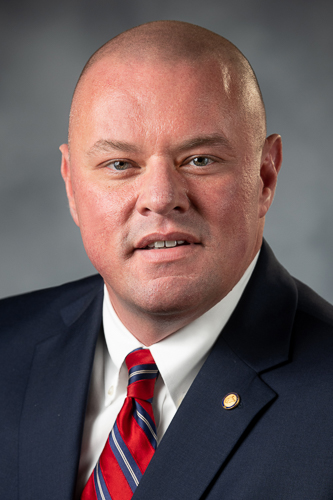
2025 Regular Session Introduced by Brandon Steele

Expands use of two‑way CCTV so certain child and developmentally disabled victims can testify outside the courtroom to reduce trauma, with safeguards for defendants.

To House Judiciary
0
WeVote Research Nonpartisan
Bill Summary · HB 2625

HB 2625 — Child Victim Testimony (Illinois)

Statute amended: 725 ILCS 5/106B-5
Introduced: February 2025 (Rep. Adam M. Niemerg) — companion: SB 1358
Current status (selected): Passed House (2/26/2025); transmitted to Senate; Senate readings and actions through May 13, 2025 (read 2nd time; postponed). Referenced as “Child Victim Testimony.”

Purpose

To expand and clarify rules allowing the testimony of child victims and victims with intellectual or developmental disabilities to be taken outside the courtroom and presented to the courtroom by closed-circuit television (CCTV), add procedural protections for defendants, and establish presumptions and standards governing when remote testimony is used.

Key provisions

  • Adds victims who have a moderate, severe, or profound intellectual disability or are affected by a developmental disability to the class of persons eligible for testimony outside the courtroom (in addition to children under 18).
  • Allows the court to order that such testimony be taken outside the courtroom and shown in the courtroom by CCTV if:
    • The testimony is taken during the proceeding; and
    • The judge determines in advance that in‑court testimony would cause the victim to suffer serious emotional distress or severe emotional distress that impairs communication or is likely to cause severe adverse effects.
  • Explicitly states the child/victim does not need to testify or be present in court for the judge to make that determination.
  • Creates a rebuttable presumption that victims under age 13 should testify outside the courtroom and be shown in‑court via two‑way closed‑circuit television. The defendant may overcome this presumption only by clear and convincing evidence that the victim will not suffer severe emotional distress.
  • Requires the court to find that two‑way CCTV testimony will not prejudice the defendant before permitting it.
  • Limits questioning during the remote testimony to the prosecuting attorney, defense attorney, and the judge.
  • Restricts who may be present in the remote testimony room to: prosecutor, defense counsel, judge, CCTV operators, court security, and any persons the court deems contribute to the victim’s well‑being (e.g., parent, guardian, treating therapist).
  • Requires the defendant to be physically present in the courtroom (and not communicate with the jury during remote testimony); the defendant may communicate with persons in the remote room by appropriate electronic means.
  • Operators of the CCTV must be unobtrusive.
  • Excludes these provisions where the defendant represents themself (pro se) and does not prevent both victim and defendant from being in the courtroom simultaneously when necessary (e.g., identification).
  • Clarifies examples of “developmental disability” (includes cerebral palsy, epilepsy, autism).

Who is affected

  • Child victims (under 18), especially those under 13 (presumption), and victims with intellectual or developmental disabilities.
  • Defendants in covered prosecutions (criminal sexual assault, related sexual and aggravated offenses as listed in statute).
  • Prosecutors, defense attorneys, judges, court personnel, CCTV operators, and caregivers who may accompany victims.
  • Court systems that must implement procedures and ensure technology and safeguards for two‑way CCTV.

Procedural/implementation notes

  • Amends existing Illinois criminal procedure (725 ILCS 5/106B-5) that governs remote testimony for vulnerable victims.
  • Establishes higher procedural protections for defendants (two‑way CCTV, prejudice finding, right to communicate electronically).
  • Requires courts to make written factual findings when determining remote testimony is appropriate (implied by standards and rebuttable presumption).
  • If enacted, courts and clerks will need policies and technology to implement two‑way CCTV and ensure compliance with presence and questioning limits.

Potential impacts

  • Likely increases use of remote two‑way CCTV for young children and developmentally disabled victims, reducing trauma from in‑court testimony.
  • Balances victim protection with added safeguards to protect defendants’ confrontation rights (two‑way communication, prejudice finding, in‑court presence of defendant).
  • May require modest investments in courtroom audiovisual systems and training for personnel.

Compiled from official sources — confirm details with the bill’s official record.

Sign in to ask a question.