

WeVote

Bill

Bill

HB 2294

Relating to theft of firearms.

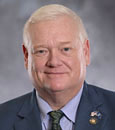
2025 Regular Session Introduced by Paul Evans and 1 co-sponsor

Creates the Kansas Office of Early Childhood to consolidate licensing, funding, and oversight of child care, expanding capacity and allowing waivers/pilots to boost access.

In committee upon adjournment.
0
WeVote Research Nonpartisan
Bill Summary · HB 2294

Summary — HB 2294 (2025) — Kansas Office of Early Childhood; child care licensing reforms

Status: Referred to Committee on Public Health and Welfare
Introduced: January 30, 2025
Classification: Bill (House Substitute recommended)

Purpose

HB 2294 creates a consolidated Kansas Office of Early Childhood and restructures state oversight, funding and licensing of early childhood programs and day care facilities. The bill aims to increase transparency, reduce administrative burdens, expand capacity, and update staffing/training and facility requirements for child care providers.

Key provisions and changes

  • Establishes the Kansas Office of Early Childhood (the Office)

    • Director appointed by the Governor (Senate confirmation), unclassified service, serves at pleasure of Governor.
    • Office subject to Governmental Operations Accountability Law (audits, reviews).
    • Director required to submit an annual report with allocations, outcomes, performance metrics and fiscal recommendations.
    • Director may adopt rules, enter contracts, charge fees for processing paper documents, appoint deputy directors, and maintain an office in Topeka.
  • Organizational structure and program transfers

    • Creates deputy director positions (e.g., Division of Home Visitation; Kansas Children’s Cabinet; Child Care Licensure and Finance; Child Care Advocacy).
    • Transfers early childhood programs and related statutes (currently in DCF, KSDE, KDHE and Kansas Children’s Cabinet) into the Office, including child care assistance/subsidies, child care quality programs, workforce registry, home visitation, Head Start collaboration, and related CCDF administration.
    • Lexie’s Law (KDHE) provisions transferred with modifications.
  • Child care licensing, staffing and training reforms (temporary provisions through June 30, 2026; then administered by Office)

    • New/updated definitions (e.g., program director, lead teacher, unit, youth development program).
    • Staff qualification framework requiring program directors/lead teachers to meet specified education or experience options (bill contains specific degree, credential and experience pathways; substituted version gives Director authority to set at least four options including a non‑academic experience route).
    • Assistant teachers minimum age set at 16; director cannot require educational credentials for assistant teachers in the substitute.
    • Child care homes: professional development training capped at up to 10 clock hours per licensure year (minimum 8 hours specified by Secretary) with certain infant-focused training requirements.
    • Facility space requirements: minimum 28 sq ft indoor per child; minimum 60 sq ft outdoor play space per child (in specified sections).
    • Clarifies licensure exemptions (care under 35 hours/week for 4 or fewer unrelated children).
  • Waiver and pilot authority

    • Establishes a process for licensees to request temporary, case‑by‑case waivers from statutory requirements (initially to Secretary of KDHE; after transition, to Deputy Director/Director).
    • Authorizes KDHE (until July 1, 2026) and thereafter the Director of Early Childhood to create and run pilot programs that may waive certain licensure/operational requirements to increase capacity or availability of child care.
  • Fees and funds

    • Creates “day care facilities and child care resource and referral agencies licensing fee fund” and “day care criminal background and fingerprinting fund.”
    • Eliminates annual license fees for conducting a child care facility (documented in supplemental note).

Fiscal impact (from Fiscal Note)

  • Estimated reduction in expenditures for DCF of approximately $150.96 million (all funds) beginning FY2027; State General Fund (SGF) reduction of about $16.41 million in FY2027, reflecting transfer of programs and associated funding to the new Office.
  • KDHE estimates revenue reductions related to transferred programs of ~$9.8 million in FY2026 and ~$16.7 million in FY2027.
  • About 14.00 positions currently associated with transferred programs were identified; some positions and eligibility functions (e.g., DCF eligibility determinations for child care subsidies) are expected to remain with DCF under interagency agreements.

Who is affected

  • Families using child care and early childhood services (access, subsidies, and information).
  • Child care providers (centers, homes, youth development programs): licensing, staffing, training, and facility standards.
  • State agencies: DCF, KDHE, KSDE and Kansas Children’s Cabinet (programs, funding streams and staff shifted to new Office).
  • Local jurisdictions for inspection/compliance of facilities.

Timeline and procedural notes

  • Transitional provisions: an interagency transition team to be appointed on or after July 1, 2025; full transition to the consolidated Office targeted by July 1, 2026.
  • Many amended child care licensing provisions expire June 30, 2026 and will be replaced by rules/provisions under the Office.
  • Current status: introduced January 30, 2025; referred to Committee on Public Health and Welfare.

This summary focuses on major structural and regulatory changes; the bill text contains detailed lists of qualifying pathways for staff, specific administrative authorities, and statutory cross‑references that implement the transfers and rulemaking authority.

Compiled from official sources — confirm details with the bill’s official record.

Sign in to ask a question.