

WeVote

Bill

Bill

HB 3291

Relating to the military.

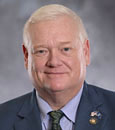
2025 Regular Session Introduced by Paul Evans

HB 3291 expands abuse definitions to include minors forced to panhandle by family or others, and creates penalties and reporting for adults who panhandle with minors.

In committee upon adjournment.
0
WeVote Research Nonpartisan
Bill Summary · HB 3291

HB 3291 — Summary (104th General Assembly, 2025–2026)

Sponsor: Rep. Angelica Guerrero‑Cuellar
Title: Relating to the military / criminal law (amendments to juvenile and child‑welfare statutes)
Status: In committee upon adjournment (last action: 2025‑06‑28)
Introduced: Feb 18, 2025 (filed Feb 25, 2025)

Purpose / Intent

HB 3291 is designed to strengthen protections for minors who are involved in panhandling by (1) expanding the statutory definitions of “abused” minors under the Juvenile Court Act and (2) creating new criminal and reporting consequences for adults who engage in panhandling with minors. The bill treats adults who use, encourage, require, or participate in panhandling with children as both a law‑enforcement and child‑welfare concern.

Key provisions

  • Amends the Juvenile Court Act of 1987 (705 ILCS 405/2‑3) to add as an element of “abused” minor:
    • A minor whom a parent, immediate family member, person responsible for the minor’s welfare, any person in the same family or household, any individual residing in the same home, or a paramour of the minor’s parent allows, encourages, or requires to engage in panhandling with a person 18 years of age or older.
  • Amends the Wrongs to Children Act (720 ILCS 150/1 and 150/5) to:
    • Make it unlawful for a child under 18 to engage in panhandling.
    • Make it unlawful for any person 18 years of age or older to engage in panhandling with a person under 18; a violating adult is subject to a Class B misdemeanor.
    • Require a peace officer who witnesses an adult engaging in panhandling with a minor to issue a citation to the adult.
    • Require the officer’s local law‑enforcement agency to send written or electronic notice to the Illinois Department of Children and Family Services (DCFS) that the minor is endangered by engaging in panhandling with an adult.
    • Define the terms “panhandling” and “citation” (definitions included in the bill text).

Who is affected

  • Minors (under 18): the bill treats participation in panhandling caused or facilitated by specified family/household members or paramours as abuse/neglect and renders panhandling by minors unlawful (shifts response to child‑welfare authorities).
  • Adults (18+): adults who engage in panhandling with minors can receive citations, face Class B misdemeanor charges, and trigger DCFS notifications.
  • Law enforcement: officers must issue citations when they witness violations and agencies must notify DCFS electronically or in writing.
  • DCFS and juvenile courts: likely to receive additional reports/referrals and to consider expanded grounds for abuse/neglect findings.

Procedural / timeline notes

  • Introduced by Rep. Angelica Guerrero‑Cuellar (Feb 18, 2025); filed Feb 25, 2025.
  • Referred to various committees (Rules; Emergency Management, General Government, and Veterans; Ways & Means).
  • Read first time/first reading actions occurred in February–March 2025.
  • Status as of 2025‑06‑28: In committee upon adjournment.

Potential impacts / considerations

  • Increases protections for children exploited or pressured into panhandling by family/household members or adults.
  • Shifts some enforcement emphasis onto adults who co‑panhandle with minors and elevates reporting to DCFS, which could increase child‑welfare investigations.
  • Criminalizes adults’ conduct with minors in this context (Class B misdemeanor), which may lead to increased citations/arrests and related court proceedings.
  • The bill also makes it unlawful for minors to panhandle; enforcement approach and interaction between criminal justice and child‑welfare responses may require local policy guidance to prioritize protection over punishment.

(Statutory references amended: 705 ILCS 405/2‑3; 720 ILCS 150/1 and 150/5.)

Compiled from official sources — confirm details with the bill’s official record.

Sign in to ask a question.