

WeVote

Bill

Bill

HB 5625

Relating to the licensure of radon mitigators, testers, contractors, and laboratories

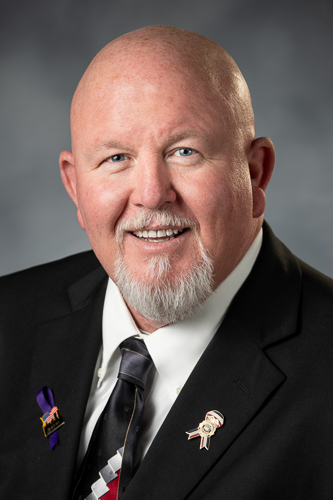
2026 Regular Session Introduced by Scot Heckert and 2 co-sponsors

West Virginia would create a state licensing system requiring radon testers, mitigators, contractors, and laboratories to be licensed and regulated to protect public health.

On 3rd reading, House Calendar
0
WeVote Research Nonpartisan
Bill Summary · HB 5625

Summary of HB 5625 (2026) — West Virginia

Relating to the licensure of radon mitigators, testers, contractors, and laboratories

Purpose and intent

HB 5625 would establish a comprehensive licensing framework for radon-related professions and laboratories in West Virginia. The bill defines key terms, sets licensing requirements, and authorizes the Director of the Bureau for Health to administer licensing, approvals, and related training. The overarching goal is to ensure qualified professionals handle radon testing, mitigation, construction, and laboratory analysis to protect public health.

Key provisions and changes

Definitions (§16-34-2)

  • Clarifies terms used throughout the radon licensing framework, including:
    • Building, business entity, director (Commissioner of the Bureau for Health), secretary of the Department of Health.
    • Radon-related activities: mitigate, test, and “RRNC” (radon resistant new construction).
    • Roles: radon mitigation contractor, radon mitigation specialist, radon tester, radon laboratory.
    • Radon-222 and its decay products.
  • RRNC: refers to passive radon mitigation techniques used during new home construction.

License requirements and exemptions ( §16-34-3)

  • General rule: Individuals must hold valid licenses to perform radon testing, provide professional advice on radon testing/exposure/health risks, supervise radon mitigation on-site, provide advice on radon mitigation/entry routes, or operate as a radon mitigation contractor or radon laboratory.
  • Exemptions:
    • Entities performing their own radon tests or mitigations on owned/leased property.
    • Research activities in accordance with the code.
    • Employees of the radiological health program.
  • Prohibition on performing RRNC construction without a licensed radon mitigation specialist or contractor (with certain conditions).

Director’s powers, duties, and licensing process ( §16-34-5)

  • The Director shall license radon testers, mitigation specialists, mitigation contractors, and radon laboratories located in West Virginia.
  • Licenses expire annually and are renewable upon meeting criteria and paying renewal fees.
  • Licensing process:
    • Applicants submit forms prescribed by the Director.
    • Licenses issued upon payment of fees, meeting criteria, and complying with training requirements.
    • A business entity or government entity may hold multiple licenses, with separate applications per license.
  • Special provision for contractor licensing:
    • If a radon mitigation specialist is the owner or sole working professional in a business entity, the Director can issue a radon mitigation contractor license based on the specialist’s credentials. The contractor license would expire concurrently with the specialist license.
  • Regulatory actions:
    • The Director may refuse, suspend, or revoke licenses; may conduct inspections of radon systems; may approve training courses and vendors; may assess fees for licenses and training.
  • Director responsibilities:
    • Administer and enforce the radon licensing program.
    • Examine records to ensure compliance.
    • Coordinate with radon programs in schools.
    • Collect and disseminate information on radon; conduct research (including statewide surveys).
    • Conduct inspections and training as needed, and establish related fees.
  • Other notes:
    • The Director may contract or cooperate with other entities to fulfill the article’s requirements.
    • Provisions clarify that licensing does not authorize requiring individuals to perform tests, regulate construction practices, or regulate retail sales of DIY radon test kits.

Who and what would be affected

Affected groups

  • Individuals who test for, mitigate, or supervise radon work:
    • Radon testers
    • Radon mitigation specialists
    • Radon mitigation contractors
  • Radon laboratories conducting analyses of radon in air/soil or on radon testing devices
  • Businesses and government entities engaging in radon-related services
  • Builders involved in RRNC projects (to ensure licensed professionals are used)

Exemptions and oversight

  • Private individuals or entities testing/mitigating on their own properties are exempt.
  • Research entities and radiological health program employees are exempt in specified circumstances.
  • The Director’s oversight includes licensing, enforcement, training approvals, and inspections.

Procedural and timeline aspects

  • Licenses are issued by the Director and expire annually.
  • Renewal requires meeting established criteria and paying renewal fees.
  • Applications must be filed on forms prescribed by the Director.
  • The Director may suspend, revoke, or refuse licenses or approvals for violations.
  • The bill contemplates inspections of radon systems and coordination with education programs and statewide radon research.
  • Effective dates and specific fee amounts are to be established by Director rules under §16-34-6 (not provided in the text).

Additional note

The bill is a product of the Health and Human Resources Committee, introduced by Delegates Worrell, Hite, and Heckert, and supported by the West Virginia Department of Health. The intent is to strengthen consumer protection and professional standards in the radon sector through formal licensure and ongoing oversight.

Compiled from official sources — confirm details with the bill’s official record.

Sign in to ask a question.