

WeVote

Bill

Bill

AB 93

Relating to: the distribution and labeling of fertilizers and soil or plant additives produced from manure. (FE)

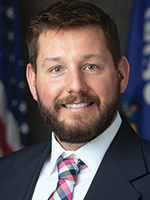
2025-2026 Regular Session Introduced by Elijah Behnke and 4 co-sponsors

AB 93 broadens who is a police officer to include more public safety workers, extending their benefits, insurance, and jury exemptions.

Laid on the table
0
WeVote Research Nonpartisan
Bill Summary · AB 93

AB 93 (BDR 53‑160) — Summary: Revising the definition of “police officer” and related benefits

Status: Enacted — Chapter 396 (approved by the Governor).
Introduced: Jan 7, 2025.

Main purpose

AB 93 expands the statutory definition of “police officer” in Nevada law so additional categories of law‑enforcement and peace‑officer personnel qualify for certain benefits, exemptions, and coverage (including industrial disease protections) that are tied to that definition.

Key provisions

  • Amends NRS 617.135 to broaden who is included in the definition of “police officer.” Newly explicit inclusions (in addition to many existing categories) include:
    • School police officers (employed or appointed by school boards);
    • Juvenile probation officers;
    • Bailiffs and deputy marshals of municipal courts;
    • Marshals and deputy marshals of cities or towns;
    • All category I, II, and III peace officers (as defined in NRS 289.460–289.480) not already listed.
    • Continues coverage for many other specified Department of Public Safety and other officers already enumerated.
  • As a result of the expanded definition, the following statutory benefits/exemptions now apply to the newly included personnel where referenced elsewhere in statute:
    • Industrial insurance coverage and benefits under the Nevada Occupational Diseases Act (NRS chapter 616A–616D);
    • Exemption from grand or trial jury service (NRS 6.020);
    • Compensation for temporary disabilities for police officers (NRS 281.153);
    • Eligibility for certain group insurance, medical/hospital services and survivor benefits (e.g., NRS 287.021, 287.0477).
  • Appropriation: a small targeted appropriation from the State General Fund to the Department of Public Safety for annual physicals for (1) the Chief Parole and Probation Officer of the Division of Parole and Probation and (2) Capitol Police officers:
    • FY 2025–26: $3,235
    • FY 2026–27: $8,129
    • Any unspent balances revert to the State General Fund per the schedule in the bill.
  • Fiscal and local government provisions:
    • The bill contains an unfunded mandate (section 1) and explicitly states that NRS 354.599 does not apply to additional local government expenses related to this act.

Who is affected

  • State and local law‑enforcement personnel not previously covered by the “police officer” definition — notably school police, juvenile probation officers, municipal bailiffs/deputy marshals, city/town marshals, and category I–III peace officers — and their employing jurisdictions (counties, cities, school districts, state agencies).
  • Local governments may incur additional costs (not reimbursed) associated with extending benefits/exemptions.

Timeline / implementation

  • Enacted as Chapter 396 (approved by the Governor).
  • Effective dates (per the enrolled/reprint text):
    • The appropriation and certain administrative provisions: July 1, 2025.
    • The expanded definition and related statutory changes: July 1, 2026.

Practical effect

By widening the statutory definition of “police officer,” AB 93 extends occupational‑disease coverage, certain insurance and survivor benefits, juror‑service exemptions, and temporary‑disability protections to additional public safety employees. The change creates potential additional costs for local employers (not covered by the state under the bill) while formalizing parity in benefits for personnel performing law‑enforcement or peace‑officer functions.

Compiled from official sources — confirm details with the bill’s official record.

Sign in to ask a question.