

WeVote

Bill

Bill

HB 3614

Relating to tariffs.

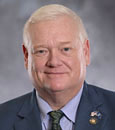
2025 Regular Session Introduced by Paul Evans

HB 3614 bars carbon sequestration in or through federally designated sole-source aquifers in Illinois, requiring IEPA permits and pore-space orders.

In committee upon adjournment.
0
WeVote Research Nonpartisan
Bill Summary · HB 3614

Summary — HB 3614 (104th General Assembly, 2025-2026)

Status: In committee upon adjournment (as of 2025-06-28)
Introduced: March 3, 2025 (introduced by Rep. Carol Ammons)
Subject: Amends the Environmental Protection Act; relates to carbon sequestration and protections for sole‑source aquifers.
Effective date: Upon becoming law

Purpose

HB 3614 adds statutory prohibitions and clarifications to Illinois’ Environmental Protection Act intended to protect federally designated sole‑source aquifers from underground carbon dioxide (CO2) sequestration activities. The bill also clarifies related permitting, reporting, and project requirements for carbon sequestration facilities.

Key provisions

  • Prohibition: The bill provides that no person shall conduct a carbon sequestration activity within a sequestration facility that overlies, underlies, or passes through a sole‑source aquifer.
  • Definitions: Amends Section 59 to define or revise terms used for sequestration regulation, including:
    • "Carbon dioxide capture project," "carbon dioxide stream," and "carbon sequestration activity"
    • "Sequestration facility" and related construction/operation terms (wells, equipment, pipelines)
    • "Sole‑source aquifer" — tied to areas designated by the U.S. EPA as sole‑source drinking water areas (including the EPA‑identified project review area)
    • Adds language addressing "project labor agreement" and workforce goals for construction on sequestration projects.
  • Permitting and compliance: Retains/clarifies existing prohibitions against conducting sequestration activities without an Agency (IEPA) permit under Section 59.6 and requires compliance with Pollution Control Board rules and permit conditions. Requires submission of required reports.
  • Pore‑space integration: Requires obtaining an order for integration of pore space from the Department of Natural Resources when applicable.

Who is affected

  • Carbon capture and storage (CCS) developers, owners, and operators proposing Class VI or other underground injection activities in Illinois.
  • Landowners and project contractors building sequestration facilities.
  • Illinois Environmental Protection Agency (IEPA), Pollution Control Board, and Department of Natural Resources (DNR) for permitting, enforcement, and pore‑space orders.
  • Communities relying on federally designated sole‑source aquifers (protection intended to prevent potential contamination or risk to drinking water supplies).
  • Labor interests and contractors building sequestration facilities due to added project labor agreement language.

Procedural history (selected)

  • Filed: 02/07/2025; First reading: 02/18/2025
  • Referred to Energy & Environment Committee; Do Pass (Energy & Environment) on 03/18/2025 (23–3)
  • Public committee activity and hearing on 04/21/2025; left pending in committee
  • Multiple co‑sponsors added through April–June 2025
  • Status as of 06/28/2025: In committee upon adjournment

Potential impacts

  • Environmental protection: Would block siting of underground CO2 storage projects that intersect or sit above federally recognized sole‑source aquifers, protecting drinking water resources.
  • CCS deployment: Could reduce available geology for sequestering CO2 in Illinois, potentially limiting project siting options and affecting industry planning.
  • Regulatory clarity: Codifies permit and reporting obligations and links state approvals to federal designations and DNR pore‑space processes.
  • Construction/labor: Inclusion of project labor agreement language may affect contracting and workforce arrangements on sequestration projects.

This summary highlights the bill’s main effect—the statutory prohibition on carbon sequestration activities in or through federally designated sole‑source aquifer areas—while noting related permitting, definitions, and administrative requirements.

Compiled from official sources — confirm details with the bill’s official record.

Sign in to ask a question.