

WeVote

Bill

Bill

HB 3287

Relating to property tax exemption for disabled veterans; prescribing an effective date.

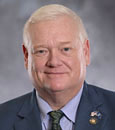
2025 Regular Session Introduced by Paul Evans

HB 3287 creates the Illinois Health Services Program, a universal single-payer system with no out-of-pocket costs, state financing, and non-profit provider reforms.

In committee upon adjournment.
0
WeVote Research Nonpartisan
Bill Summary · HB 3287

HB 3287 — Illinois Medicare for All Health Care Act (Introduced)

Overview / Purpose

HB 3287 would create a statewide single‑payer-style health care system called the Illinois Health Services Program (the Program). Its stated purposes are to provide universal health coverage for all Illinois residents, improve public health and prevention, contain costs, and to be compatible with any future federal single‑payer system. The Act is effective January 1, 2026 (as drafted).

Eligibility & enrollment

  • All individuals residing in Illinois are covered under the Program.
  • Residents receive an Illinois Health Services Insurance Card with a unique number; Social Security numbers may not be used for registration.
  • Presenting to a participating provider establishes presumptive eligibility; a short (≤2 page) application at a provider suffices to receive the card and for the provider to be paid.

Covered benefits & cost sharing

  • Comprehensive medically necessary services are covered, including primary, specialty, inpatient, outpatient, emergency care, prescription drugs, durable medical equipment, long‑term care, mental health, full dental (non‑cosmetic), substance use treatment, chiropractic services, and basic vision.
  • Coverage is available from any licensed provider in the State and emergency care anywhere in the U.S.
  • No deductibles, copayments, coinsurance, or other cost sharing for covered benefits, except for services/goods that exceed “basic covered benefits” as defined by the Program Board.

Provider participation & qualifications

  • Participating providers must meet state/regional licensing and quality guidelines; suspended or revoked licensees cannot participate.
  • Only non‑profit HMOs that deliver care in their own facilities and directly employ clinicians may participate.
  • Patients have free choice among eligible providers and hospitals.

Provider payment model

  • Hospitals and institutions receive negotiated monthly lump‑sum global budgets to cover operating expenses; budgets are negotiated annually and cannot be used for excessive executive pay, marketing, or major capital purchases. Capital projects are funded separately and overseen by regional health planning districts.
  • Physicians/providers may choose fee‑for‑service (paid under an annually negotiated fee schedule), salaried employment, or participation in group/global budgets/capitation. Investor‑owned HMOs and group practices are to be converted to non‑profit status.

Pharmaceuticals & durable goods

  • The Program establishes a single prescription drug formulary and a list of approved durable medical goods.
  • A Pharmaceutical and Durable Medical Goods Committee will negotiate prices with manufacturers/suppliers on an open‑bid, competitive basis; bulk purchasing and lowest‑cost therapeutically equivalent drugs are emphasized.

Financing, administration & other provisions

  • The State shall establish an Illinois Health Services Trust to finance the Program. Specific funding levels or revenue sources are not detailed in the summary text.
  • Private insurers would be prohibited from selling coverage that duplicates the Program’s coverage.
  • Investor ownership of health delivery facilities would be unlawful.
  • The Act includes provisions on claims billing, patients’ rights, and sets Program employee compensation consistent with State pay scales, subject to legislative determination.

Who is affected

  • All Illinois residents (coverage).
  • Health care providers, hospitals, HMOs (changes in licensing, ownership status, payment arrangements).
  • Private health insurers (prohibition on duplicate plans).
  • Drug and device manufacturers and suppliers (price negotiation, formulary).
  • Investors/owners of health delivery facilities (prohibition of investor ownership).

Procedural status & timeline (selected)

  • Introduced by Rep. Hoan Huynh (filed Feb 6, 2025; introduced Feb 18/25, 2025).
  • Referred through various committees; public hearing held April 15, 2025.
  • Committee substitute reported favorably April 25, 2025; committee report sent to Calendars May 5, 2025.
  • Current status noted as Rule 19(a) / Re‑referred to Rules Committee.
  • Effective date in text: January 1, 2026 (if enacted).

Related legislation

  • Companion bill: SB 1612.

Potential impacts (high level)

  • Universal coverage expansion and removal of point‑of‑service cost sharing for covered benefits.
  • Major restructuring of provider payment and ownership (movement toward non‑profit models, global budgets).
  • Significant market effects on private insurers, investor‑owned facilities, and pharmaceutical pricing; financial details (taxes, trust revenue) are not specified in the text provided and would determine net fiscal impact.

(This summary highlights substantive provisions; the bill text contains additional operational and legal details that would determine implementation specifics and fiscal consequences.)

Compiled from official sources — confirm details with the bill’s official record.

Sign in to ask a question.