

WeVote

Bill

Bill

AJR 22

Relating to: proclaiming April 26, 2025, as Shared Parenting Day in Wisconsin.

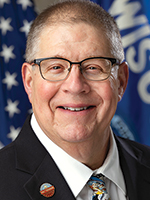
2025-2026 Regular Session Introduced by Dave Armstrong and 4 co-sponsors

Urges Congress to establish a Federal Infrastructure Bank to finance major national infrastructure projects.

Laid on the table
0
WeVote Research Nonpartisan
Bill Summary · AJR 22

Summary — AJR 22 (joint resolution)

Status: Laid on the table
Introduced: April–August 2025 (see Procedural timeline)
Classification: Joint resolution
Primary sponsors (per record): Representatives Sheehan, Armstrong, O'Connor, Mursau, Udell
Co-sponsors mentioned in chronology: Senators James, Jacque, Hesselbein

Important note on source material: The bill header provided (Relating to proclaiming April 26, 2025, as Shared Parenting Day in Wisconsin) does not match the text of the resolution supplied. The document text is a joint resolution urging Congress to establish a Federal Infrastructure Bank and largely mirrors a California Assembly/State-level resolution. This summary follows the supplied resolution text (Federal Infrastructure Bank), and flags the apparent clerical/matching inconsistency.

Main purpose

To strongly encourage the U.S. Congress to pass federal legislation creating a Federal Infrastructure Bank (referenced in the text as the Federal Infrastructure Bank Act of 2023 — H.R. 4052 in the body; an initial digest reference also cites H.R. 1235), with the stated goal of facilitating financing for urgently needed infrastructure projects nationwide.

Key findings and factual claims cited

  • ASCE 2025 Report Card: national grade C; a $3.7 trillion documented infrastructure funding gap.
  • California-specific infrastructure needs and conditions (examples cited):
    • Roads, wastewater, dams, levees graded poorly; many bridges past design life; congestion and safety costs estimated at $63 billion annually for Californians.
    • Estimated capital needs: ~$20B (Los Angeles water quality over 20 years), $5B (San Diego), $45B (levee rehabilitation), $75B+ (high-speed rail financing).
    • Large portion of dams older than 50 years; significant percentage of bridges structurally deficient or functionally obsolete.

What the resolution would do

  • Formally urge the U.S. Congress to establish a Federal Infrastructure Bank to finance major infrastructure projects.
  • Promote a financing model described in the resolution that:
    • Is modeled on historical national infrastructure banks.
    • Would be capitalized by repurposing existing U.S. Treasury debt (the resolution claims no new federal spending or new federal tax).
    • Would include labor and procurement protections: Davis‑Bacon wage coverage, “Buy American” provisions.
    • Would mandate large-scale minority hiring, prioritize projects in long-term poverty-impacted communities, and ensure disadvantaged business enterprise funding.
  • The resolution lists claimed outcomes if implemented (as presented in the text): creation of 25,000,000 jobs, annual GDP growth of 5%, and large-scale investment across infrastructure sectors.

Who would be affected / targeted

  • Federal policymakers (Congress) — the resolution is non-binding and seeks to influence federal legislation.
  • State and local governments — potential partners and recipients of bank financing for projects.
  • Construction and infrastructure workers and contractors — subject to Davis‑Bacon, Buy American, and contracting priorities for disadvantaged businesses.
  • Communities with long-term poverty and disadvantaged business enterprises — identified beneficiary priorities.

Procedural notes and timeline (from record)

  • Introduced and printed in April–August 2025 (dates in the record vary).
  • Referred to Committee on Transportation (per one action: 2025-08-21: Referred to Com. on TRANS.).
  • Placed on calendar and later laid on the table (4-22-2025: Laid on the table).
  • Fiscal Committee: NO (resolution does not create or appropriate funds).

Limitations / legal effect

  • This is a joint resolution at the state level urging federal action — it does not itself create the Federal Infrastructure Bank nor appropriate funds.
  • The resolution’s substantive claims about H.R. 4052/H.R. 1235, capitalization mechanisms, job creation estimates, and economic growth are assertions included to support the urging and are not legal findings.

Notes on inconsistencies

  • The provided metadata/title referencing “Shared Parenting Day in Wisconsin” conflicts with the resolution text (Federal Infrastructure Bank urging) and with text references to the California Legislature. This indicates a mismatch in the supplied bill header vs. body text. Readers should verify the official bill text and bill number in the relevant legislative database for authoritative content.

Compiled from official sources — confirm details with the bill’s official record.

Sign in to ask a question.