

WeVote

Bill

Bill

HB 3514

Relating to persons convicted of a crime

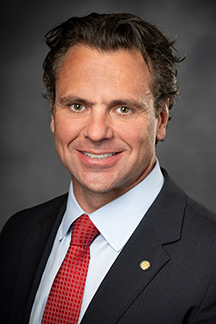
2025 Regular Session Introduced by J.B. Akers and 1 co-sponsor

Expands DNR grants to fund stormwater ponds and shoreline stabilization, allowing nonprofits and park districts to receive funds and broaden eligible uses.

To Judiciary
0
WeVote Research Nonpartisan
Bill Summary · HB 3514

HB 3514 — DNR — Stormwater Retention (2025)

Summary / Purpose

HB 3514 amends two Illinois statutes to expand the Department of Natural Resources’ (DNR) grant authority and clarify allowable uses under the Healthy Forests, Wetlands, and Prairies Grant Program. The bill (1) authorizes DNR to make grants to local not‑for‑profit organizations for development, management, maintenance, and study of stormwater retention ponds and other landscapes that reduce climate‑change impacts, and (2) permits Healthy Forests, Wetlands, and Prairies grants to be used for creating or maintaining stormwater retention ponds and shoreline stabilization projects that provide habitat on park district lands.

Key provisions

  • Department of Natural Resources Act (20 ILCS 801/1‑15)

    • Adds explicit authority for DNR to make grants to local not‑for‑profit organizations for development, management, maintenance, and study of:
    • Wetlands, forests, prairies
    • Stormwater retention ponds
    • Other landscapes demonstrated to reduce the impact of climate change
    • Permits DNR to use outside monitoring/administration entities for evaluating grant applications and administering compliance; such contracts generally must not exceed 5 years without an executed extension.
    • Confirms DNR may accept and administer gifts/bequests/donations into the DNR Special Projects Fund; interest reinvested.
  • Healthy Forests, Wetlands, and Prairies Act (525 ILCS 22/20)

    • Expands eligible uses of grant funds to include:
    • Creation or maintenance of stormwater retention ponds
    • Shoreline stabilization projects that provide habitat for native plants and animals on park district lands
    • Restates applicant/recipient categories (state/local governments, conservation land trusts, conservation‑mission not‑for‑profits, and others determined eligible).
    • Funding allocation framework (existing structure shown in text):
    • At least 75% of program moneys must be awarded to eligible entities (state/local govts, land trusts, etc.).
    • Up to 23% may be used by the Department for restoring degraded forest lands and native prairies.
    • Up to 2% may be used for administrative costs.

Who is affected

  • Local not‑for‑profit conservation organizations and land trusts (new grant eligibility/uses)
  • Park districts (newly explicit access to funds for shoreline/stormwater projects on their lands)
  • State and local government units already eligible under the Healthy Forests program
  • DNR (expanded grant administration duties and ability to contract monitoring entities)
  • Communities benefiting from improved stormwater infrastructure, water quality, flood control, and habitat creation

Funding & administration notes

  • Grants may be funded from appropriations to the Healthy Forests, Wetlands, and Prairies Grant Program and from gifts/donations deposited to the DNR Special Projects Fund.
  • The bill allows DNR to contract external entities for grant evaluation/monitoring; contracts limited to 5 years absent extension.

Legislative status / timeline (selected)

  • Introduced by Rep. Janet Yang Rohr: 02/18/2025 (filed 02/28/2025)
  • House passed and sent to Senate: 05/15/2025 (read 3rd time, passed; received from House 05/15/2025)
  • Senate activity: read and referred to Transportation; Rule 19(a) / re‑referred to Rules Committee (03/21/2025)
  • Companion bill: SB 2793

Potential impacts

  • Enables more public‑private funding and local not‑for‑profit participation in stormwater infrastructure projects that deliver co‑benefits (flood mitigation, water quality, habitat, climate resilience).
  • Provides DNR flexibility to outsource grant evaluation and compliance monitoring (with multi‑year contract limits).
  • Relies on program appropriations and donated funds; actual scale depends on legislative funding decisions.

Compiled from official sources — confirm details with the bill’s official record.

Sign in to ask a question.