

WeVote

Bill

Bill

AB 448

Relating to: nonprofit agricultural organization health benefit coverage.

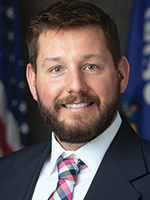
2025-2026 Regular Session Introduced by Elijah Behnke and 18 co-sponsors

AB 448 extends interest‑free, 36‑month start and 60‑month payoff for 2022 cash‑flow loans to nondesignated public hospitals, and adds STRTPs’ resident protections and enforcement r

Representative Kitchens added as a coauthor
0
WeVote Research Nonpartisan
Bill Summary · AB 448

AB 448 (Patel) — Summary

Status: Introduced Feb 6, 2025. Passed Assembly Health Committee (Do pass; 4/29/2025) and re‑referred to Appropriations. Classification: bill (appropriation).

Purpose

AB 448 (as amended) amends two separate areas of California law:
1. Extends and modifies repayment terms for nondesignated public hospitals that received cash‑flow loans under the Budget Act of 2022 (Provision (1) of Item 0977‑101‑0001), and
2. Adds operational, posting, and enforcement requirements for short‑term residential therapeutic programs (STRTPs) licensed under the California Community Care Facilities Act.

Key provisions

Health Facilities Financing Authority (loans to nondesignated public hospitals)
- Clarifies definitions: “Authority” = California Health Facilities Financing Authority; “nondesignated public hospital” per Welfare & Institutions Code §14165.55(l), excluding county health system affiliates.
- For nondesignated public hospitals that (a) obtained loan approval and entered into a loan/security agreement with the Authority under the 2022 Budget Act and (b) the Authority has determined were unable to repay by the original deadline:
- Requires monthly repayments to begin 36 months after the loan date (as amended).
- Requires loans to be fully discharged within 60 months of the loan date.
- Monthly payments must be amortized over the loan term at 0% interest; no prepayment penalty.
- References existing appropriation of $40,000,000 made in the 2022 Budget Act for these cash‑flow loans and removes certain prior spending restrictions (effectively making an appropriation).

Short‑term residential therapeutic programs (STRTPs)
- Adds Section 1562.015 to Health & Safety Code with requirements that an STRTP must:
1. Before admission, ensure at least one parent or legal guardian will reside at a single physical in‑state address for the duration of the child/youth’s treatment.
2. Ensure residents can make confidential telephone calls to their parent/guardian at all times (this may be waived by the department, the program, or the parent/guardian).
3. Ensure residents have access at all times to appropriate outdoor footwear.
- Requires the STRTP to prominently post these requirements on its website.
- Establishes enforcement: civil penalties (per violation/day and total cap) and potential license suspension or revocation if violations cause harm to a child’s health or safety. The bill text currently contains placeholders for penalty dollar amounts.
- Requires the Department of Social Services to adopt implementing regulations.
- Because violations would constitute crimes under the bill, it creates a state‑mandated local program, but the bill states no reimbursement to local agencies is required for that mandate.

Who is affected

  • Nondesignated public hospitals that participated in the 2022 cash‑flow loan program (excluding those affiliated with county health systems).
  • STRTPs licensed by the State Department of Social Services, children/youth placed in those programs, and their parents or legal guardians.

Timeline / Procedural status

  • Introduced: Feb 6, 2025.
  • Committee actions: Referred to Human Services and Judiciary; amended and moved among committees; Health Committee approved and re‑referred to Appropriations on April 29, 2025.
  • Next: Consideration by Assembly Appropriations Committee.

Potential impacts

  • Provides additional, interest‑free repayment flexibility to certain public hospitals affected financially by the COVID‑19 emergency, potentially reducing near‑term repayment pressure.
  • The removal of prior expenditure restrictions may increase the state’s budgetary obligations (appropriation effect).
  • STRTP operators will need to update admission practices, websites, and operations to comply; possible enforcement costs and exposure to civil penalties and licensing actions. Exact penalty amounts were not specified in the published text (placeholders present), which may be resolved in later amendments.

Notes / Outstanding items

  • Early digest language referenced a 32‑month repayment start; the amended bill text specifies 36 months. The operative text should be consulted for final language.
  • Civil penalty amounts for STRTP violations are blank in the circulated draft and should be confirmed in subsequent versions.

Compiled from official sources — confirm details with the bill’s official record.

Sign in to ask a question.