

WeVote

Bill

Bill

HB 3303

Relating to infrastructure financing; declaring an emergency.

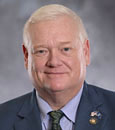
2025 Regular Session Introduced by Paul Evans

Prohibits distributing materially deceptive deepfakes within 90 days of an election and requires clear disclosures or disclaimers to prevent voter deception.

In committee upon adjournment.
0
WeVote Research Nonpartisan
Bill Summary · HB 3303

HB 3303 — Summary (2025)

Title: Relating to infrastructure financing; declaring an emergency.
(Note: bill text actually amends the Election Code to regulate materially deceptive digital media/disclosure of digitally altered content.)
Bill Number: HB 3303 (introduced by Rep. Marcus C. Evans, Jr.)
Introduced: Feb 18, 2025 (filed Feb 25, 2025)
Status: In committee upon adjournment (as of 2025-06-28)
Companion: SB 2410
Effective date: Upon becoming law

Purpose

To prohibit the distribution of materially deceptive digitally altered media (“deepfakes”) intended to harm a candidate’s reputation or influence voting within 90 days before an election, and to require disclosure or disclaimers for altered media so voters are not deceived.

Key definitions

  • "Deepfake": audio, video, image or other media that is so realistic a reasonable person would believe it depicts an individual engaging in speech or conduct they did not actually engage in, where the production relied substantially on technical means (not simple impersonation).
  • "Depicted individual": the person who appears in a deepfake but did not in fact engage in the depicted speech or conduct.

Main prohibitions and timeline

A person may not distribute, or agree to distribute, materially deceptive media if all of the following are true:
1. They know the media falsely represents the depicted individual;
2. The distribution occurs within 90 days before an election;
3. They intend to harm the reputation or electoral prospects of a candidate and distribution is reasonably likely to do so; and
4. They intend to change electors’ voting behavior by deceiving them into believing the depicted individual engaged in the depicted speech/conduct, and the distribution is reasonably likely to produce that result.

Exceptions and disclosure requirements

  • A clear, visible disclaimer that the media has been manipulated and depicts speech/conduct that did not occur will exempt the distributor. The bill sets out sample disclaimer language and format rules:
    • Video: disclaimer must appear throughout the video, be clearly visible/readable, in letters at least as large as most other text, and in the same language as the video.
    • Audio-only: disclaimer must be read at the beginning and end in a clearly audible manner and in the same language.
    • Images: disclaimer must be clearly visible/readable and of adequate size and language.
    • If edited from existing media, including a citation to the original source may suffice.
  • Other exemptions include bona fide news broadcasts that disclose questions about authenticity; broadcasters who have been paid and made good-faith verification efforts; regularly published news outlets that clearly state the media is not accurate; and satire or parody.

Remedies and penalties

  • A candidate depicted in violation may seek injunctive or other equitable relief to prohibit publication.
  • Criminal penalties:
    • Generally a Class C misdemeanor for violations of the prohibition.
    • If the violation is intended to cause violence or bodily harm: Class A misdemeanor.
    • Second or subsequent conviction within 5 years: Class 3 felony.

Who is affected

  • Creators and distributors of digitally altered content, political campaigns, media organizations, broadcasters, social media platforms, and voters/candidates targeted by deceptive media.
  • Platforms and publishers may need to implement labeling/disclosure procedures and moderation policies to avoid liability.

Procedural notes

  • Read first time and assigned to committees (Ethics & Elections; Rules; Ways & Means). Last recorded status: in committee upon adjournment (6/28/2025).
  • Contains a severability clause; takes effect immediately upon enactment.

Considerations

The bill targets deceptive political deepfakes close to elections by combining intent and likelihood standards, while carving out news, verification, and satire exceptions. Enforcement requires proof of knowledge and intent; criminal penalties and injunctive remedies could influence platform practices, content moderation, and verification procedures. Legal and free-speech implications may be raised during committee review.

Compiled from official sources — confirm details with the bill’s official record.

Sign in to ask a question.