

WeVote

Bill

Bill

AB 687

Relating to: establishing a statewide wolf population goal.

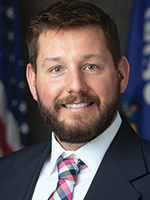
2025-2026 Regular Session Introduced by Elijah Behnke and 15 co-sponsors

Allows up to 35 publicly funded noncommercial wildfire fuels-reduction projects per year to satisfy CEQA using a THP under the Z’berg-Nejedly Act, temporarily through 2031.

Failed to pass pursuant to Senate Joint Resolution 1
0
WeVote Research Nonpartisan
Bill Summary · AB 687

Important note: the bill title you provided ("establishing a statewide wolf population goal") does not match the text in the documents you supplied. The documents for AB 687 (introduced Feb 14, 2025, Patterson) concern forestry — specifically authorizing a narrow, temporary pathway for noncommercial wildfire fuels‑reduction projects to use a timber harvesting plan (THP) to satisfy California Environmental Quality Act (CEQA) requirements. The summary below describes the bill as reflected in the provided legislative documents.

AB 687 — Summary (Patterson)

Topic: Forestry — timber operations; fuels reduction; CEQA compliance
Introduced: February 14, 2025

Purpose / Intent

To create a limited, temporary mechanism allowing certain publicly funded, noncommercial wildfire fuels‑reduction projects on timberland to use a timber harvesting plan (THP) as the CEQA compliance vehicle. The intent is to facilitate implementation of select fuels‑reduction projects while using the existing THP regulatory structure.

Key provisions

  • Adds Section 4581.5 to the Public Resources Code.
  • Authorizes up to 35 projects per year that meet all of the following to prepare a THP pursuant to the Z’berg‑Nejedly Forest Practice Act to satisfy CEQA:
    • Projects are exclusively for noncommercial wildfire fuels reduction on timberland.
    • Projects are paid for in whole or in part with public funds.
    • Projects are under an acreage cap indicated in the bill text as “less than 1,000 1,500 acres” (the printed text shows both figures, reflecting an amendment that appears to raise the acreage cap to 1,500 acres).
  • The provision is temporary and is set to be repealed January 1, 2031.
  • The bill notes that expanding the scope of criminal liability under the Forest Practice Act (violations are misdemeanors) creates a state‑mandated local program; it also states no state reimbursement is required under the state constitution because any local costs arise from changes to criminal definitions/penalties.

Who is affected

  • Department of Forestry and Fire Protection (Cal Fire) / State Board of Forestry and Fire Protection — review and approval of THPs.
  • Registered professional foresters who prepare THPs.
  • Landowners and project sponsors of eligible fuels‑reduction projects paid with public funds.
  • Local agencies that may be involved as CEQA lead agencies or in enforcement.
  • Contractors and environmental consultants implementing fuels‑reduction work and preparing CEQA/THP documents.

Fiscal / legal implications

  • Digest indicates no appropriation; fiscal committee review required; local program designation applies.
  • The bill asserts no state reimbursement obligation under Article XIII B because added costs would stem from changes to criminal law definitions/penalties.

Procedural status & timeline

  • Introduced Feb 14, 2025. Committee referrals and actions occurred through spring 2025 (assembly committee amendments, passage in Assembly in May 2025; transmitted to Senate in June 2025). As of the latest entries, it had been referred to relevant Senate committees; a first‑hearing was set then canceled at the author’s request (July 2, 2025).
  • The statutory authority created by the bill would expire (be repealed) January 1, 2031.

Potential impact / considerations

  • Could expedite or simplify CEQA compliance for a limited number of publicly funded fuels‑reduction projects by using the THP process.
  • The cap of 35 projects/year and the acreage limit (as amended) limit scope; sunset in 2031 makes it temporary.
  • Raises questions for stakeholders about environmental review adequacy for noncommercial fuels projects under a THP framework and about coordination between CEQA and forest practice regulation.
  • The bill’s text shows an amendment citation (the “1,000 1,500 acres” phrasing) that should be clarified in final engrossed language.

Compiled from official sources — confirm details with the bill’s official record.

Sign in to ask a question.