

WeVote

Bill

Bill

HB 3300

Relating to desalination; prescribing an effective date.

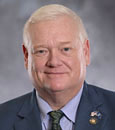
2025 Regular Session Introduced by Paul Evans

Strengthens Illinois higher-ed oversight by mandating annual public-program reviews with potential consolidation or closure.

In committee upon adjournment.
0
WeVote Research Nonpartisan
Bill Summary · HB 3300

HB 3300 — HIGHER ED‑VARIOUS (Public Act 104‑0292)

Status: Enacted — Public Act 104‑0292
Bill No.: HB 3300
Introduced: Feb 25, 2025; Governor approved Aug 15, 2025; Effective Aug 15, 2025

Purpose / Intent

To (1) strengthen statewide oversight and reporting of higher‑education programs, (2) expand the Illinois Board of Higher Education’s authority to accept and distribute private and public funds and to form organizational entities to support higher education, (3) tighten application and consumer‑disclosure rules for private post‑secondary institutions, and (4) update degree‑granting requirements for non‑residential institutions.

Key provisions

  1. Board of Higher Education Act (amends 110 ILCS 205/7; adds 110 ILCS 205/9.45)

    • Requires the Board to annually identify programs at public universities that show indicators of low performance (low enrollment, low degree completion, relatively high expense per degree).
    • Each public university must review the Board’s identifications and report annually to the Board using a Board‑provided rubric, including a proposed performance improvement plan for each identified program and indicating programs to be closed or consolidated if applicable.
    • The Board must prepare an annual statewide report on instructional programs (number/type/location of programs; new programs created; programs closed or consolidated due to the review; other portfolio information) and submit it to the General Assembly and the Governor. Reporting begins March 15, 2026 and annually thereafter.
    • The Board may define relevant terms and timelines by rule.
    • New explicit authorities (Section 9.45):
      • Accept gifts, grants, and legacies for higher education purposes.
      • Create/participate in corporations, joint ventures, partnerships, associations, or other entities that can acquire land/buildings/equipment; accept and make grants; aid instruction; and promote institutional facilities.
      • Distribute grants authorized or appropriated by the General Assembly and adopt rules to implement/distribute such funds.
  2. Private College Act (amends 110 ILCS 1005/3 and 1005/4.5)

    • Application requirements for a certificate of approval must include, among other items, a tuition schedule (tuition rates per course or unit).
    • The Board may not approve applications that are plagiarized or incomplete; incomplete applications must be returned.
    • If a private institution is placed on U.S. Dept. of Education Heightened Cash Monitoring 2 or reimbursement payment method (34 C.F.R. 668.162), the institution must, within 14 days:
      • Post a clear, conspicuous disclosure on its website;
      • Provide notice to all current and prospective students on a Board‑prescribed form; and
      • Provide written notice to the Illinois Board of Higher Education.
    • Board may require other disclosures by rule.
  3. Academic Degree Act (amends 110 ILCS 1010/5 and 1010/6; summary language)

    • For entities awarding degrees without in‑residence instruction, the bill requires appropriate accreditation to be maintained for the educational programming they provide (text in enrolled bill truncated; synopsis indicates accreditation requirement).

Who is affected

  • Public institutions (State universities named in statute and the Illinois Community College Board) — program review, reporting, and potential consolidation/closure actions.
  • Illinois Board of Higher Education — expanded fundraising, organizational, and grant distribution authority and new annual reporting responsibilities.
  • Private post‑secondary institutions — stricter application standards and disclosure obligations related to federal financial monitoring.
  • Students and prospective students — improved disclosure about institutions’ federal monitoring status; possible impacts from program consolidations or closures.

Procedural / timeline notes

  • Annual statewide reports: first due March 15, 2026; then each March 15 thereafter.
  • 14‑day disclosure deadline for federal heightened monitoring actions.
  • Enactment: Governor approved Aug 15, 2025; law effective Aug 15, 2025 (Public Act 104‑0292).

Potential impacts (practical)

  • Greater centralized oversight could lead to program restructuring, consolidation, or closure at public universities based on performance/r cost metrics.
  • Board’s new authority to accept and manage gifts and create entities may enable new public‑private projects, capital acquisitions, or targeted grant programs.
  • Increased transparency for students about institutions’ financial oversight status; higher application standards for private colleges may reduce incomplete/plagiarized filings.
  • Accreditation requirement for non‑residential degree‑granting entities could affect out‑of‑state or online providers seeking degree status in Illinois.

For statutory references, see amendments to: Board of Higher Education Act (110 ILCS 205), Private College Act (110 ILCS 1005), and Academic Degree Act (110 ILCS 1010).

Compiled from official sources — confirm details with the bill’s official record.

Sign in to ask a question.