

WeVote

Bill

Bill

AB 132

Relating to: creating a board to organize, promote, and host a Wisconsin nuclear power summit. (FE)

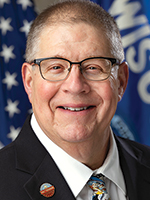
2025-2026 Regular Session Introduced by Dave Armstrong and 14 co-sponsors

AB 132 broadens tax rules: expands e-waste fee collection, clarifies local tax authority, and temporarily excludes certain retirement, wildfire, and Chiquita Canyon payments from i

Laid on the table
0
WeVote Research Nonpartisan
Bill Summary · AB 132

AB 132 (Committee on Budget) — Budget Act of 2025: Taxation

Status: Re‑referred to Senate Committee on Budget and Fiscal Review (7/2/2025)
Introduced: 1/8/2025 | Classification: bill; appropriation

Purpose / Intent

AB 132 is a multi‑part Budget Act bill that makes targeted changes to California tax administration, local transactions and use tax authority, personal income tax exclusions, and eligibility treatment of certain one‑time payments. Many provisions are time‑limited (sunset) and some are expressly declaratory or contingent on federal law.

Key provisions

  1. Sales/use tax reporting for certain vehicle sales

    • For reporting periods beginning on or after January 1, 2021, an application filed with the DMV for a qualifying vehicle sale is deemed a filed sales/use tax return with the California Department of Tax and Fee Administration (CDTFA).
    • CDTFA may exempt a licensed (non‑new) vehicle dealer from the requirement to pay applicable taxes to the DMV if the dealer sold 1,000+ vehicles in the current or preceding calendar year and the dealer’s CDTFA account is in “good standing” (as defined).
  2. Marketplace Facilitator Act — e‑waste fees

    • Expands the Marketplace Facilitator Act to designate marketplace facilitators as responsible for any fee imposed under the Electronic Waste Recycling Act of 2003 (i.e., marketplace facilitators may be treated as the seller/retailer for collection/payment of those fees).
  3. Sonoma County transactions and use tax authority

    • Recasts/clarifies that Sonoma County, cities within Sonoma, and the Sonoma County Transportation Authority each have separately determined authority to adopt an additional transactions and use tax (up to 1% that could exceed a 2% combined limit) under specified conditions.
    • Repeals an existing conditional repeal and instead requires that any ordinance exercising this authority be approved by the voters voting on the ordinance before January 1, 2026.
    • Bill states this clarification is declaratory of existing law.
  4. Personal income tax exclusions (time‑limited)

    • For taxable years beginning on or after Jan 1, 2025 and before Jan 1, 2030: excludes up to $20,000 of federal retirement pay received for uniformed service and up to $20,000 of annuity payments under the DoD Survivor Benefit Plan for qualifying taxpayers.
    • For taxable years beginning on or after Jan 1, 2021 and before Jan 1, 2030: excludes amounts received in settlement related to a California wildfire (as provided).
    • For taxable years beginning on or after Jan 1, 2024 and before Jan 1, 2029: excludes amounts received on or after March 1, 2024 as compensation for specified costs/losses tied to the Chiquita Canyon elevated‑temperature landfill event (Los Angeles County).
  5. Treatment of Chiquita Canyon payments for means‑tested programs

    • To the extent permitted by federal law, payment(s) received in connection with the Chiquita Canyon event would not be counted as income or resources when determining eligibility or benefit amounts for means‑tested programs (e.g., CalWORKs, CalFresh, Medi‑Cal) or for guaranteed income pilot payments.

Who is affected

  • Vehicle dealers (administrative reporting/payment options; potential exemption for high‑volume dealers)
  • CDTFA and DMV (administrative processes)
  • Marketplace facilitators/operators and marketplace sellers (responsibility to collect/pay e‑waste fees)
  • Sonoma County and cities, Sonoma County Transportation Authority, and local voters (tax adoption/approval process)
  • Uniformed service retirees and DoD survivor beneficiaries (temporary state tax exclusions up to $20,000)
  • Wildfire settlement recipients and Chiquita Canyon compensation recipients (state income tax exclusion; noncounting for means‑tested benefits to the extent federal law permits)
  • Recipients/administrators of means‑tested programs and guaranteed income pilots (eligibility determination rules)

Timeline / Procedural status

  • Assembly: passed (3/20/2025; Ayes 53, Noes 17). Multiple committee actions and amendments in spring–summer 2025.
  • Senate: read first time and referred for assignment; most recently re‑referred to Senate Committee on Budget and Fiscal Review (7/2/2025).
  • Several provisions are retroactive (e.g., reporting periods beginning Jan 1, 2021) and others have explicit sunset dates (2026, 2029, 2030).

Notes / Considerations

  • Some exclusions and noncounting rules are time‑limited and contingent on federal law where noted (e.g., means‑tested program treatment).
  • The bill includes declaratory language regarding Sonoma authority and shifts a conditional repeal to a voter‑approval requirement by Jan 1, 2026.

Compiled from official sources — confirm details with the bill’s official record.

Sign in to ask a question.