

WeVote

Bill

Bill

HB 2611

Relating to allowing localities contiguous to the border of West Virginia to join the state via local elections

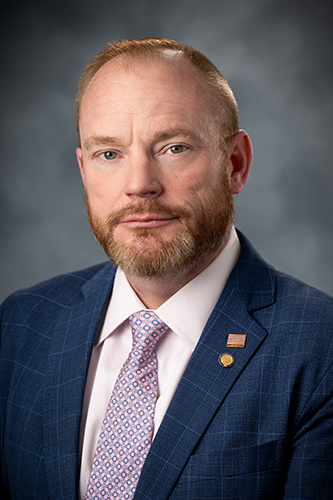
2025 Regular Session Introduced by Chris Anders and 2 co-sponsors

Creates Education Savings Accounts funded by state aid for eligible students to use on private, online, tutoring, or other approved educational expenses.

To House Judiciary
0
WeVote Research Nonpartisan
Bill Summary · HB 2611

HB 2611 — Education Savings Account Act (summary)

Status (as provided): Introduced February 2025; referred to Rules; passed both chambers; transmitted to Governor; signed May 12, 2025. Program to begin fall semester 2026–2027. Sponsor: Rep. Adam M. Niemerg. Companion: SB 4.

Purpose / Intent

Creates an Education Savings Account (ESA) Program administered by the State Board of Education to provide eligible elementary and secondary students (targeting low‑ and moderate‑income households) with State education funds deposited into accounts parents can use for approved educational expenses outside the resident public school.

Who is eligible

  • Any student who was eligible to attend a public school in the State the prior semester (or is starting school in the State for the first time) and whose household annual income does not exceed 2.5 times the federal free or reduced‑price lunch (FRL) income standard.
  • A “parent” includes a parent, guardian, custodian, or other person authorized to act for the child.

Parents must sign an agreement promising to provide instruction in core subjects (reading, grammar, mathematics, social studies, science) and not to enroll the student in a district or charter school while participating.

Key provisions / grant amounts

  • The State Board deposits into each eligible student’s ESA some or all of the State aid under the State aid formula (Section 18‑8.15 of the School Code) that would have gone to the resident school district.
  • Grant amount is tiered by household income (relative to the FRL threshold):
    • Households that qualify for FRL: 100% of the district’s per‑student State aid amount.
    • >FRL to <1.5× FRL threshold: 75% of that per‑student State aid.
    • ≥1.5× to <2.0× FRL threshold: 50% of that per‑student State aid.
    • ≥2.0× to ≤2.5× FRL threshold: 25% of that per‑student State aid.
  • Participating private schools, tutors, and providers must notify the State Board and comply with program requirements.

Permitted uses of ESA funds

Funds may only be used for educational purposes, including (non‑exhaustive list):
- Tuition and fees at participating private schools
- Required textbooks
- Licensed/accredited tutoring
- Curriculum purchases
- Tuition/fees for non‑public online programs
- Fees for nationally normed tests, AP exams, college admissions tests
- Contributions to qualified 529 plans
- Educational services for students with disabilities from licensed providers
- Tuition/fees at eligible postsecondary institutions
- Approved account management fees

Providers are prohibited from issuing refunds, rebates, or sharing the grant with parents or students.

Administration & accountability

  • State Board of Education establishes and runs the Program, sets participating school/provider requirements, calculates grants, and oversees compliance.
  • Resident school districts lose the portion of State aid redirected to ESAs for participating students; districts and the State Board have specified responsibilities under the Act.

Potential impact

  • Expands school‑choice options for low‑ and moderate‑income families by funding private, online, tutoring, and other options.
  • Redirects State education dollars from resident districts to individual ESAs, with potential fiscal impacts on district budgets, program administration, and accountability/enforcement burdens for the State Board.
  • May affect services funded at district level (depending on scale and amount of transfers).

Timeline / Legislative status

  • Program effective for the fall semester 2026–2027.
  • According to the provided legislative actions, the bill progressed through readings, committee referrals, was passed and signed by the Governor (May 12, 2025). (Readers should confirm official enactment and chapter citation with State legislative records.)

Compiled from official sources — confirm details with the bill’s official record.

Sign in to ask a question.