

WeVote

Bill

Bill

AB 166

Relating to: academic and career planning services provided to pupils and requiring the reporting of certain data on college student costs and outcomes. (FE)

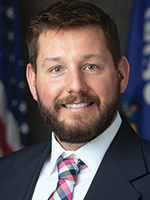
2025-2026 Regular Session Introduced by Elijah Behnke and 10 co-sponsors

AB 166 expands child labor rules to under 18, cuts weekly hours to 40, adds school-day work limits, with exemptions for farm work and film, affecting teen employers.

Failed to pass notwithstanding the objections of the Governor pursuant to Joint Rule 82
0
WeVote Research Nonpartisan
Bill Summary · AB 166

AB 166 — Summary

Status: Introduced Jan. 8, 2025; passed Assembly (Mar. 20, 2025); transmitted to Senate; (Apr. 12, 2025) Pursuant to Joint Standing Rule No. 14.3.1, no further action allowed.

Note on jurisdictional text: The packet contains mixed boilerplate referencing both California and Nevada; statutory citations and sponsor list (BDR 53‑742; NRS references; Nevada legislators) indicate the operative text amends Nevada law (NRS 609.240).

Main purpose

AB 166 revises child labor restrictions by (1) expanding the age range subject to limits from under 16 to under 18, (2) reducing the allowable maximum weekly hours for minors, and (3) adding time-of-day work limits for school-enrolled minors. The bill retains existing exceptions for motion‑picture performers and farm work.

Key provisions and specific changes

  • Age threshold:
    • Changes the statute’s protected age group from “child under 16 years” to “child under 18 years.”
  • Weekly and daily hour limits (amendment to NRS 609.240):
    • Weekly maximum reduced from 48 hours to 40 hours.
    • Daily maximum remains capped at 8 hours.
  • School‑day time restrictions (new for enrolled pupils):
    • Prohibits a pupil from working before 5:00 a.m. on any day the pupil’s school is in session.
    • Prohibits working after 10:00 p.m. on any day immediately preceding a school day.
  • Exceptions:
    • Existing exceptions for employment as a motion‑picture performer and for work on a farm are preserved.
  • Evidence and definitions:
    • Presence of a child in an establishment during working hours is declared prima facie evidence of employment.
    • “Pupil” is defined to mean a child enrolled in the current academic year in a public or private school (cross‑referencing NRS 385.007 and NRS 394.103).

Who is affected

  • Primary: Employers who hire minors and minors under 18 (especially those aged 16–17 who were previously outside these limits).
  • Secondary: Schools (scheduling considerations), parents/guardians, and industries relying on teen labor (retail, food service, hospitality, etc.). Farm work and film production employers remain largely exempt.
  • Enforcement: Local jurisdictions — the fiscal note indicates an effect on local government related to increased or newly provided terms of imprisonment in county/city jails or detention facilities (state fiscal effect: none).

Procedural/timeline notes

  • Introduced and prefiled January 2025; referred to relevant committees (Commerce & Labor; Budget). Passed the Assembly March 20, 2025 (Ayes 53, Noes 17). Sent to the Senate for committee assignment and later referred to budget-related committee(s).
  • Final listed status (Apr. 12, 2025): “Pursuant to Joint Standing Rule No. 14.3.1, no further action allowed” — indicating the measure is not advancing further in the current session.

Potential impacts and considerations

  • Employers must revise scheduling and total-hour calculations for workers under 18; compliance costs and staffing adjustments likely for businesses with teen employees.
  • Teen workers may see reduced available work hours and potential loss of income or job opportunities; protection of schooling and sleep schedules is a likely policy aim.
  • Local governments may incur increased detention-related costs if enforcement includes criminal penalties.

Compiled from official sources — confirm details with the bill’s official record.

Sign in to ask a question.