

WeVote

Bill

Bill

AB 657

Relating to: a sales and use tax exemption for nuclear fusion technology projects. (FE)

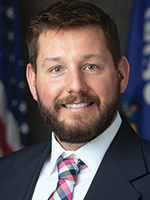
2025-2026 Regular Session Introduced by Elijah Behnke and 9 co-sponsors

AB 657 broadens the Otay Mesa East Toll Facility Act to include adjacent cross-border projects, authorizes public-private partnerships, and uses tolls to pay private partners.

Read first time and referred to joint committee on Finance
0
WeVote Research Nonpartisan
Bill Summary · AB 657

AB 657 — Summary (version as amended: Otay Mesa East Toll Facility Act changes)

Note: The bill header supplied lists a different subject (a sales/use tax exemption for nuclear fusion projects). The text provided and the Legislative Counsel’s Digest describe an amendment to the Otay Mesa East Toll Facility Act (SANDAG / State Route 11 corridor). This summary follows the bill text provided.

Purpose / Intent

AB 657 revises and recasts the Otay Mesa East Toll Facility Act to broaden the scope of “project” along the State Route 11 / Otay Mesa East Port of Entry corridor, expand SANDAG’s tolling and delivery authorities, and explicitly authorize public‑private partnership (P3) agreements as an alternative project delivery method. The bill also clarifies allowable uses of toll revenues to include payments to private partners under P3 agreements.

Key provisions

  • Redefines “project”: Expands the statutory definition to include property and facilities located at or adjacent to the Otay Mesa East Port of Entry that (a) facilitate movement of goods and people, or (b) facilitate generation of revenue for, or related to, the Otay Mesa East Port of Entry. The expanded list continues to include ports of entry, border crossing facilities, transportation facilities, terminals, customs/immigration facilities, approaches, energy infrastructure, etc.
  • Authorizes public‑private partnerships: Adds P3 agreements as an available alternative project delivery method (in addition to existing methods such as design‑build and CM/GC) for carrying out construction, operation, financing, and related services.
  • Tolling authority expanded: Authorizes SANDAG to impose tolls and other charges for use of any project or property covered by the act (not limited only to corridor entrance or use).
  • Toll revenue uses expanded: Toll revenues may be used, as provided in the act, to pay costs associated with projects and expressly to make payments to private partners under P3 agreements.
  • Conforming and nonsubstantive updates: Makes related conforming edits and a nonsubstantive change to Department of Transportation/California Transportation Commission language.

Who is affected

  • SANDAG (San Diego Association of Governments): Gains broader project definition, expanded tolling powers, and explicit authority to enter P3 agreements.
  • Private sector partners: Eligible to contract with SANDAG under P3 arrangements and receive payments funded by toll revenues.
  • Road users, commercial shippers, and border crossers: May face new or expanded tolling/fees on projects and adjacent facilities.
  • Local/state fiscal/finance stakeholders: Changes affect financing structure and allowable uses of toll bond proceeds and revenues.

Procedural / timeline notes

  • Introduced: February 14, 2025 (as amended).
  • Committee activity: Referred and re‑referred to the Assembly Transportation Committee (COM. on TRANS.); amendments were adopted and the bill re‑referred.
  • Fiscal: Fiscal estimate received (12/04/2025). Digest indicates majority vote required; no direct appropriation specified.
  • Status: Pending in committee as of latest entries; text excerpt is truncated and final bill language may contain additional details.

Potential impacts / considerations

  • Enables more flexible project delivery and financing (including P3 structures) for cross‑border infrastructure, potentially accelerating construction and leveraging private capital.
  • Broadening toll authority and including P3 payments among toll‑fundable costs could shift long‑term obligations onto toll revenue streams and affect toll-setting policy.
  • The expanded “project” scope may allow commercial or revenue‑generating developments adjacent to the port of entry to be financed/operated under the act, with implications for land use, concession arrangements, and public oversight.
  • Fiscal and legal details (bonding limits, procurement safeguards, revenue-sharing, consumer protection, and environmental/land‑use controls) will depend on the full bill text and implementing regulations.

Compiled from official sources — confirm details with the bill’s official record.

Sign in to ask a question.