

WeVote

Bill

Bill

A 4556

Relates to providing residents of municipal public housing in the state with free basic cable and high-speed internet service

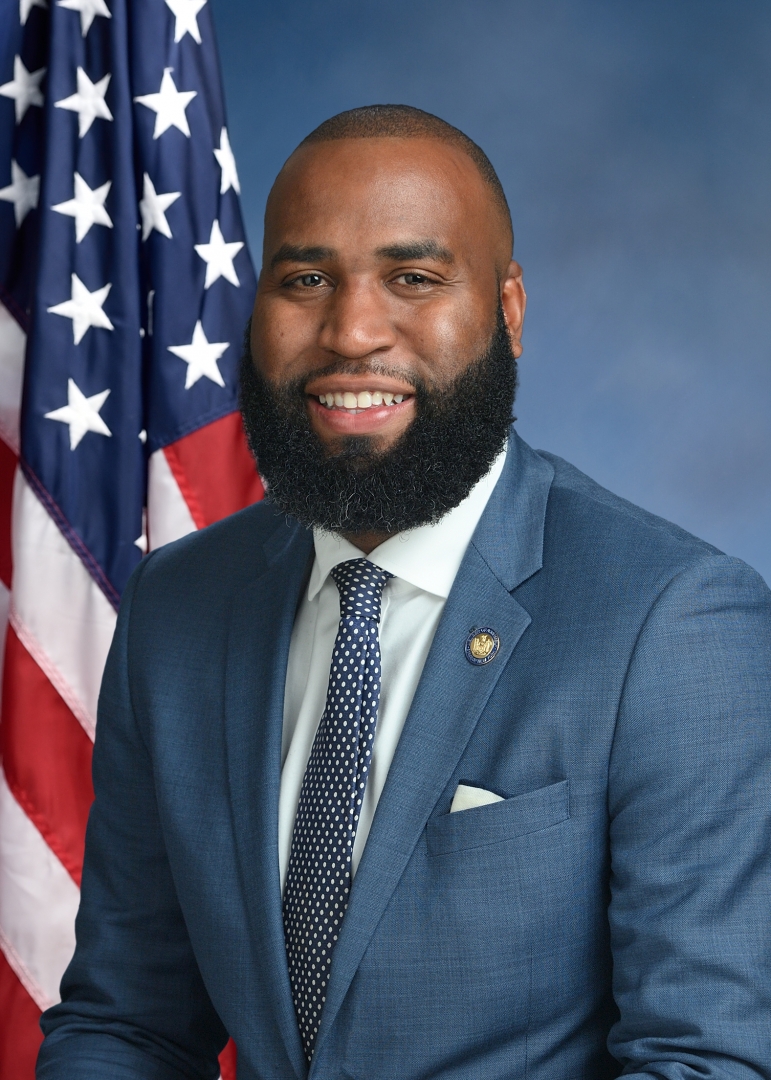
2025 Regular Session Introduced by Brian Cunningham and 2 co-sponsors

The bill lets recently built permanent structures (<5 years) on preserved farmland be used for approved special events if mainly winery-related or annual event revenue stays ≤10% o

REFERRED TO CORPORATIONS, AUTHORITIES AND COMMISSIONS
0
WeVote Research Nonpartisan
Bill Summary · A 4556

Summary — Assembly Bill A4556

Status: Referred to Corporations, Authorities and Commissions (introduced June 13, 2024; committee reports Dec. 16, 2024 and Feb. 13, 2025; substituted by S3418 (1R) Feb. 27, 2025)

Purpose

A4556 amends P.L.2023, c.9 (C.4:1C‑32.15 et seq.) to create a limited exception to an existing prohibition on using recently constructed permanent structures on preserved farmland for State‑approved “special occasion events.” The amendment clarifies when permanent structures built within five years of a special‑event application may be used.

Background / current law

Under P.L.2023, c.9 owners/operators of commercial farms on preserved farmland may hold limited special occasion events if they obtain written approval from the grantee (the State, local, or nonprofit entity that holds the farm’s development rights) and meet statutory conditions designed to protect agricultural use. Existing law generally bars use of permanent structures constructed within the five years prior to a special‑events application.

Key provisions (what the bill changes)

  • Creates a limited exception to the five‑year prohibition: a permanent structure constructed fewer than five years before the event application may be used for approved special occasion events if either:
    1. The structure is used by a winery (as defined in the special‑occasion law and in conformity with the Right to Farm Act) primarily to facilitate testing, sale, consumption, or marketing of wine, wine‑related products, or farm‑related products; OR
    2. Total revenues expected from all special occasion events on the farm in that calendar year will not exceed 10% of the farm’s total annual revenues.
  • Requires applicants to certify and submit supporting documentation in their grantee application demonstrating compliance with one of the two tests above.
  • Requires the grantee, in its written approval, to confirm whether the applicant provided satisfactory evidence of compliance with the purpose/use test (winery) or the revenue test (≤10%).

Who is affected

  • Owners and operators of commercial farms on preserved farmland seeking to host special occasion events.
  • Wineries operating on preserved farms (explicitly enabled to use recent structures for wine‑related event activities).
  • Grantees (State, local, or nonprofit holders of development rights), which must review and affirm compliance in applications.
  • Municipalities and local authorities involved in ancillary permits or municipal application processes.

Related existing rules reiterated by the bill

  • Special event limits: typically max two consecutive days if marketed as a single event; occupied area limited to the lesser of 10 acres or 10% of preserved acreage.
  • Temporary structures (tents, canopies, etc.) are permitted April 1–Nov 30 if compliant with construction and fire codes.
  • No new permanent structures may be erected for special events (except as governed by the limited exception); no extension of public gas/sewer lines for events (electric and water may be extended).

Legislative and procedural notes

  • Introduced in Assembly (6/13/2024); reported out of Assembly committee with amendments (12/16/2024); reported from Assembly Tourism, Gaming and the Arts Committee (2/13/2025).
  • Substituted by companion S3418 (1R) on 2/27/2025.
  • Sponsors: Assemblyman Brian Cunningham (primary), cosponsors MaryJane Shimsky and Phara Souffrant Forrest.
  • Related: S3418 (companion), A7837 (prior session).

Potential impact

The bill provides flexibility for farm businesses—particularly wineries—by allowing limited use of recently built permanent structures for farm events while preserving the intent of farmland preservation rules through revenue and purpose‑based safeguards and documentation requirements.

Compiled from official sources — confirm details with the bill’s official record.

Sign in to ask a question.