

WeVote

Bill

Bill

A 10524

Relates to motor vehicle insurance fairness; repealer

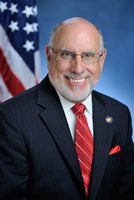
2025 Regular Session Introduced by Michael Benedetto and 10 co-sponsors

New York would ban many demographic and non-driving factors from motor vehicle insurance pricing, require public rate reviews, and boost transparency and oversight.

PRINT NUMBER 10524A
0
WeVote Research Nonpartisan
Bill Summary · A 10524

Summary of Bill A. 10524 (2025-2026) – Relates to motor vehicle insurance fairness; repealer

Overview

  • Jurisdiction: New York
  • Bill: A. 10524, introduced March 6, 2026
  • Primary aim: Reform motor vehicle insurance rating practices to prohibit the use of discriminatory underwriting and rating factors, enhance transparency, and establish a new framework for rate approvals and public participation.
  • Repeals: Section 2331 of the Insurance Law (the prior framework on motor vehicle insurance rates based on age, sex, or marital status) and replaces it with a new section 2331 emphasizing fairness, anti-discrimination, and public oversight.

Key Provisions

1) Prohibition on Certain Underwriting/Rating Factors

  • Insurers cannot refuse to issue or renew motor vehicle liability and collision policies based on prohibited factors.
  • Prohibited factors (summary):
    • Age (with limited exception as outlined in subsection (d))
    • Employment/occupation (except business-use purposes)
    • Education level
    • Home ownership or property value
    • Consumer credit information or credit-based scores
    • Absence of prior insurance
    • Amount or provider of prior insurance
    • Price elasticity of demand
    • Specific geographic identifiers smaller than a ZIP code (except for rate considerations tied to auto-related crime or accident rates)
    • Data older than two years used to justify a rate increase
    • Level of income or wealth
  • Note: Subsection (d) allows consideration of years of driving experience for underwriting/rating.

2) Territory/Geography

  • Geographic characteristics generally may not be used for underwriting decisions (e.g., to sell, cancel, or non-renew).
  • For rating purposes, a territorial factor may be used if it does not impact the premium by more than 25%.

3) Advertising and Business Practices

  • Insurers must demonstrate that marketing, underwriting, rating, claims handling, fraud investigations, and algorithmic models do not disparately impact protected groups (race, color, national/origin, religion, sex, sexual orientation, disability, gender identity/expression).

4) Rate Filings and Public Process

  • Rates must not be excessive, inadequate, or unfairly discriminatory; competition degree is not considered in determining rate fairness.
  • Any rate change requires a complete rate filing with necessary data; the insurer bears the burden of proof.
  • Public notice: The Department of Financial Services (DFS) must publicly announce rate change applications.
  • Automatic deemed-approval timeline: Absent action, rate changes are deemed approved after 60 days unless a hearing is requested, disapproved, or the DFS initiates a hearing.
  • Thresholds triggering a hearing: If proposed rate change exceeds 7% for personal lines or 15% for commercial, a hearing is required upon timely request.
  • If application is incomplete or disapprovable, DFS may extend review up to 60 days with applicant consent.

5) Public Access and Intervention

  • Public inspection: All rate information filed with DFS must be publicly viewable online, including a centralized database for rate increase applications, public comments, and a mechanism for submitting feedback.
  • Public intervention: Any person may request permission to intervene in proceedings; approval granted if intervention aids in creating a complete record or serves the public interest.

6) Rules and Implementation Timeline

  • DFS must adopt implementing rules within 90 days of enactment, including rate evaluation formulas.
  • Interim moratorium: Until rules are in place, insurers may not file for rate increases. If a reasonable return is not achievable, a limited exception allows a hearing and a minimal rate increase necessary to earn a reasonable return.
  • Within 180 days of effective date, DFS must adopt rules implementing testing of insurer business practices for compliance.

7) Fees

  • Insurers subject to this section must pay an annual fee equal to 0.05% (five-hundredths of one percent) of total earned premiums from the prior calendar year.
  • Fee payable by July 1 each year to support DFS implementation and enforcement.

8) Effective Date

  • Effective 90 days after enactment.

Who is Affected

  • Motor vehicle insurers issuing liability and collision coverage in New York.
  • Policyholders and drivers: potential changes in how premiums are calculated and what factors influence rates.
  • Consumers and public interest groups: gain enhanced access to rate filings, standing to comment, and potential intervention in rate proceedings.
  • Agencies: New York Department of Financial Services (DFS) will regulate, approve, and oversee filings, hearings, and enforcement; establish rules and a public database.

Procedural and Timeline Notes

  • Public notice and hearing processes govern rate change approvals.
  • Initial rulemaking: within 90 days of enactment.
  • Broader implementation rules (including testing of business practices): within 180 days.
  • Interim restrictions on rate increases apply until rules are in place.
  • Annual funding mechanism via insurer premium-based fee to the DFS.

Potential Implications

  • A shift toward more equitable pricing with reduced reliance on demographic and non-driving risk factors.
  • Increased transparency in rate filings and greater public participation.
  • Possible smoothing of premium disparities across protected classes, with ongoing monitoring of algorithmic fairness.
  • Short-term underwriting adjustments required by insurers due to transitional rules and frequency/hearing thresholds.

Compiled from official sources — confirm details with the bill’s official record.

Sign in to ask a question.