

WeVote

Bill

Bill

A 896

Relates to enacting the Justice for Nursing Home Victims Act

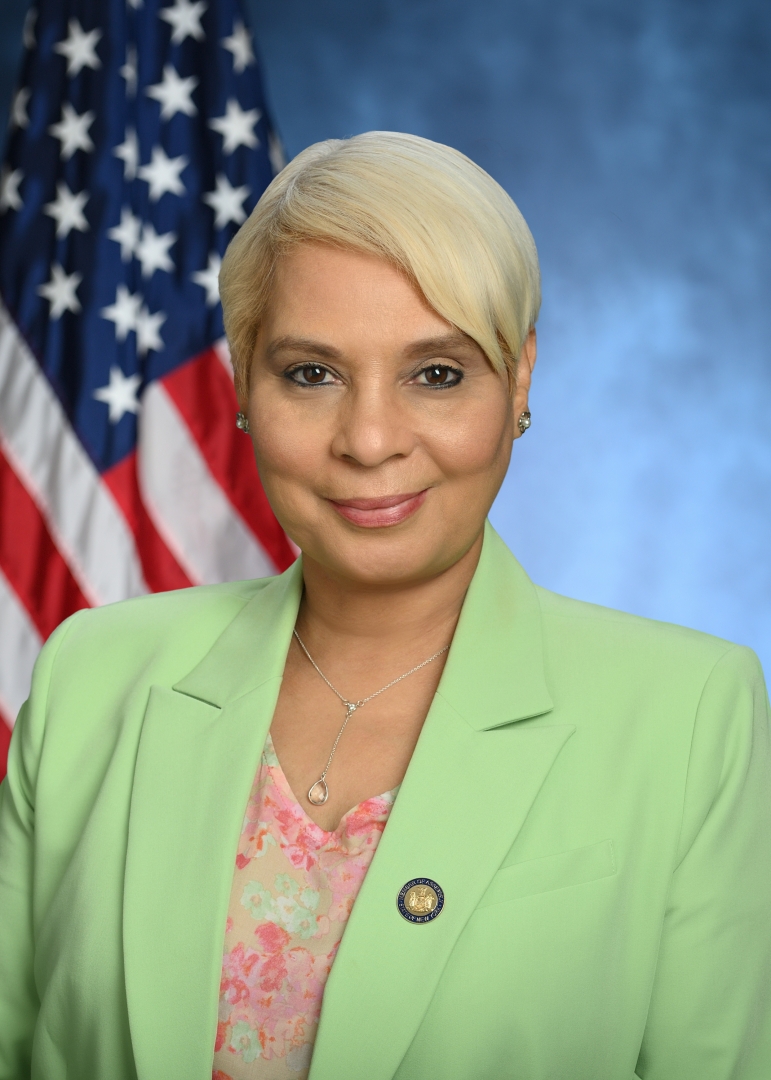
2025 Regular Session Introduced by Maritza Davila and 8 co-sponsors

Provides targeted grants to minority-serving county colleges to stabilize enrollment and staff post-pandemic, with plan-based funding and accountability.

REFERRED TO JUDICIARY
0
WeVote Research Nonpartisan
Bill Summary · A 896

Summary of Bill A 896 — Justice for Nursing Home Victims Act (Introduced as Minority-Serving County College Stabilization Act)

This bill establishes a targeted funding program to support minority-serving county colleges facing enrollment declines and faculty/staff reductions, and it appropriates funds to implement stabilization plans. The act is currently referred to the Judiciary.

Purpose and intent

  • Create the Minority-Serving County College Stabilization Program within the Office of the Secretary of Higher Education.
  • Provide grants to eligible minority-serving county colleges experiencing financial and enrollment challenges related to the COVID-19 pandemic, with the aim of stabilizing operations, restoring staff, and improving instructional capacity.

Key definitions

  • A “minority-serving county college” is a county college established under Chapter 64A, Title 18A of the New Jersey Statutes, where at least 50% of undergraduate students are members of racial or ethnic minority groups.

Eligible institutions and triggering conditions

  • Eligible colleges may apply for stabilization grants if they have:
    • Declining full-time undergraduate enrollment of at least 10% in the two years prior to submitting a stabilization plan; and
    • A reduction in full-time instructional faculty and staff due to fiscal reasons in the same period.

Stabilization plan requirements (submitted to the Secretary of Higher Education)

The plan must include:
1. Description of the college’s fiscal distress.
2. Plans to address enrollment decline.
3. Plans to restore and stabilize staff and student support (including recall of recently terminated or non-renewed staff, if applicable).
4. Strategies to deploy resources to improve instructional capacity and student enrollment/retention.
5. Input from faculty and staff, evidenced by letters of support from majority representatives of campus collective bargaining units.
6. Input from the broader college community, evidenced by a public hearing and formal board authorization.
7. The requested grant amount needed to implement the stabilization plan.

Grant awards and administration

  • The Secretary will award grants based on the stabilization plan and available funds.
  • Disbursements must be sufficient for the approved plan’s implementation.
  • The Secretary may set timelines and procedures for plan submission.

Reporting and monitoring

  • Within 180 days of receiving a grant, colleges must report approved and proposed expenditures to the Secretary.
  • A second report detailing expenditures from remaining funds must be submitted within 180 days after the first report.
  • Reports must be posted on the college’s internet site.
  • The Secretary will review reports in consultation with majority representatives of campus CBUs and may seek additional input from faculty and staff.

Appropriation and funding source

  • Total appropriation: $15,000,000 to the Office of the Secretary of Higher Education.
    • $7,500,000 from the General Fund.
    • $7,500,000, to the extent permitted by federal law, from ARP/Coronavirus State Fiscal Recovery Fund funds or other federal sources addressing the pandemic impact.
  • If funds remain unspent at year-end, they shall be distributed to all minority-serving county colleges on a per-student basis.

Rules, timing, and effectiveness

  • The Office of the Secretary of Higher Education shall adopt rules to implement the act (Administrative Procedure Act processes).
  • Effective date: immediate.

Legislative context

  • Sponsored by: Ron Kim (primary) with a slate of cosponsors including Jonathan Jacobson, Grace Lee, Jo Anne Simon, Jessica Gonzalez-Rojas, Joe DeStefano, Maritza Davila, Rebecca Seawright, and Michael Durso.
  • Related prior bills: A 8489 and A 3582.

Potential impact

  • Provides targeted financial support to minority-serving county colleges to stabilize enrollment and staffing after pandemic-related disruptions.
  • Encourages community and faculty/staff engagement in planning and accountability.
  • Creates a mechanism to channel unspent funds to maximize per-student benefit across eligible colleges.

Compiled from official sources — confirm details with the bill’s official record.

Sign in to ask a question.