

WeVote

Bill

Bill

A 5643

Relates to certain payment of prior year claims due to school districts

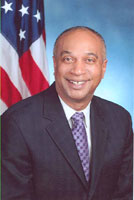
2025 Regular Session Introduced by Gary Pretlow

The bill waives mandatory DPS fitness exams and related penalties for pregnant or postpartum troopers, permitting physician clearance before resuming testing.

REFERRED TO EDUCATION
0
WeVote Research Nonpartisan
Bill Summary · A 5643

Bill Summary: A 5643

Note on context: The bill’s listed title references payment of prior-year claims for school districts, but the introduced text provided concerns protections for pregnant and postpartum state troopers in relation to Division of State Police physical fitness requirements. This summary focuses on the introduced content about pregnant/postpartum fitness standards, as that is the substantive text available.

Overview

  • Bill number: A 5643
  • Title (per provided content): Relates to Division of State Police physical fitness requirements for pregnant and postpartum troopers
  • Sponsor: J. Gary Pretlow (primary)
  • Status: Referred to Education (Introduced May 8, 2025)
  • Effective date: Immediate

Purpose and intent

The bill seeks to safeguard pregnant and postpartum State troopers from certain requirements tied to physical fitness testing. Specifically, it waives the obligation to complete fitness exams during pregnancy and the postpartum period for purposes of classifying compliance with Division of State Police fitness standards, and it protects pregnant/postpartum troopers from related testing requirements or penalties.

Key provisions

  • 1a. During pregnancy, a State trooper would not be required to complete a physical fitness exam to be considered compliant with DPS fitness standards.
  • 1b. During the postpartum period, a State trooper would not be required to complete a physical fitness exam to be considered compliant with DPS fitness standards.
  • 1c. Pregnant or postpartum troopers would not be required to:
    • appear at a physical fitness testing site,
    • complete documentation related to non-participation in a physical fitness exam, or
    • meet height/weight measurements or requirements.
    • be subject to discipline, exclusion from promotion, or other penalties for non-completion of a physical fitness exam.
  • 1d. Defines “postpartum” as the period immediately following pregnancy until the trooper has been cleared to take a physical fitness exam by:

    • the trooper’s personal physician, and
    • a Division of State Police physician.
    1. Effective date: The act takes effect immediately.

Affected entities

  • Primary affected group: State troopers who are pregnant or in the postpartum period.
  • Implementing agency: Division of State Police (within the relevant New Jersey statutes, Title 53 references).
  • Administrative considerations: Requires coordination between the trooper, the trooper’s personal physician, and a Division of State Police physician to determine clearance for return to testing after postpartum status.

Procedural and timeline aspects

  • Introduction and referral: Introduced May 8, 2025; referred to Education (assembly track). Earlier listings show a February 18, 2025 referral to Education as well.
  • Legislative history notes related bills: A 7177, A 5983, A 3411, A 3432 (prior-session references).
  • The text indicates an immediate effective date upon enactment.

Potential impact

  • Rights and protections for pregnant/postpartum troopers regarding fitness testing and potential disciplinary or promotional ramifications.
  • Administrative process adjustments to accommodate physician clearance and testing schedules during pregnancy/postpartum.
  • No changes to the underlying fitness standards themselves, only the requirements and penalties related to participation during pregnancy/postpartum.

Important notes

  • There is a discrepancy between the provided title (relating to school district claims) and the introduced text (State Police fitness provisions). Readers should verify the bill’s official title and scope in the legislature’s database for precise alignment between the bill’s title, number, and content.

Compiled from official sources — confirm details with the bill’s official record.

Sign in to ask a question.