

WeVote

Bill

Bill

HR 9391

Reimbursable Screening Services Program Extension Act of 2026

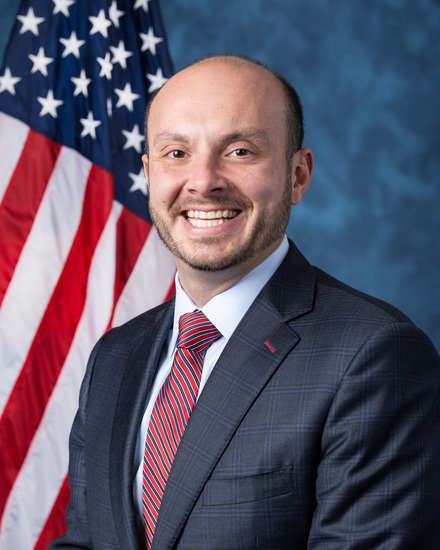
119th Congress Introduced by Andrew Garbarino and 1 co-sponsor

Extends TSA’s reimbursable screening program to 2031 and raises the cap from 8 to 14 sites, expanding capacity for reimbursed screening services.

Committee Consideration and Mark-up Session Held
0
WeVote Research Nonpartisan
Bill Summary · HR 9391

Summary of HR 9391 — Reimbursable Screening Services Program Extension Act of 2026

Purpose and intent

  • The bill would extend and expand the Transportation Security Administration’s (TSA) reimbursable screening services program. The aim is to prolong and increase the agency’s authority to offer screening services on a reimbursable basis beyond current timeframes and capacity limits.

Key provisions

  • Extension of the program timeline

    • Amends Subsection (e) of section 225 of Division A of the Consolidated Appropriations Act, 2019.
    • Primary change: replaced the existing expiration “through fiscal year 2026” with a new expiration “through fiscal year 2031,” effectively extending the program by five additional years.
  • Expansion of capacity limits

    • Amends Subsection (e) to increase the permissible scope of reimbursable screening services.
    • The current cap stated as “not more than eight” is removed and replaced with a higher cap of “not more than 14,” allowing more entities or activities to participate under the reimbursable framework.

Affected parties and implications

  • TSA and the federal government

    • TSA would continue and broaden its ability to provide screening services that can be reimbursed, potentially increasing its workload and revenue through cost-recovery mechanisms.
  • Eligible stakeholders (likely including airports, private partners, or entities utilizing reimbursable screening services)

    • Participants could be allowed to expand the scale of services funded on a reimbursable basis, up to the new cap, potentially enabling more sites or arrangements to utilize TSA screening capabilities.

Procedural and timeline aspects

  • Legislative process

    • Introduced in the House on June 23, 2026 by Rep. Garbarino (sponsor) with Rep. Pou as a co-sponsor.
    • Referred to the House Committee on Homeland Security on June 23, 2026.
    • Committee considered and marked up the bill on June 24, 2026.
    • The bill was ordered to be reported by voice vote (the record shows “Ordered to be Reported by the Yeas and Nays: 30 - 0,” indicating unanimous or near-unanimous approval in committee).
  • Next steps

    • If passed by the House and subsequently reconciled with any Senate version, the bill would be sent to the President for signature to become law.

Potential impact and considerations

  • Extending the expiration to 2031 and increasing the cap from 8 to 14 could allow TSA to deploy or contract more screening services on a reimbursable basis, potentially improving efficiency at certain points of entry or security operations, and offering more flexibility for public-private partnerships.
  • The bill does not specify funding levels or the precise financial terms of reimbursement, leaving such details to subsequent implementing guidance or appropriations.
  • Stakeholders may need to assess operational, security, and reimbursement administrative considerations tied to expanding reimbursable screening activities.

Compiled from official sources — confirm details with the bill’s official record.

Sign in to ask a question.