

WeVote

Bill

Bill

S 4319

Rehabilitation Through Reading Act of 2026

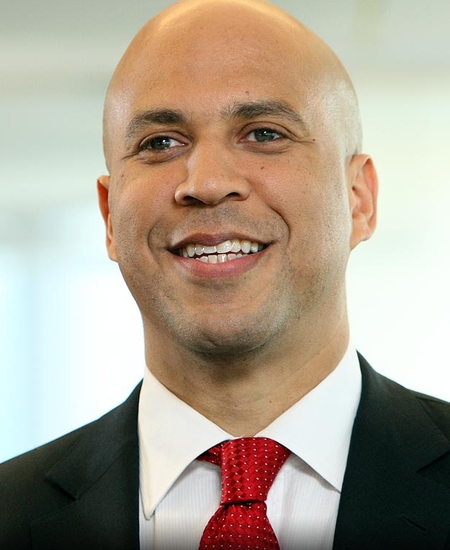
119th Congress Introduced by Cory Booker and 4 co-sponsors

Creates a formal Publication Review Committee to approve or disallow books in federal prisons, with appeals and annual transparency reports.

Introduced in Senate
0
WeVote Research Nonpartisan
Bill Summary · S 4319

Overview

Rehabilitation Through Reading Act of 2026 (S. 4319) aims to regulate which books may be available in Bureau of Prisons (BOP) facilities and establish a formal process for reviewing and appealing book prohibitions. The bill would create a Publication Review Committee, set criteria to prohibit or allow books, provide for appeals by incarcerated individuals, and require annual reporting.

Main purpose and intent

  • Ensure that book availability in federal prisons is governed by a formal review process.
  • Protect access to information by preventing prohibitions driven by disfavored viewpoints or content.
  • Provide transparency through annual reporting on prohibited titles and the outcomes of appeals.

Key provisions and changes

  • Short title: Act may be cited as the Rehabilitation Through Reading Act of 2026.
  • Definitions:
    • Director: Director of the Bureau of Prisons (BOP).
    • Professional librarian: Librarian with a master’s degree from an ALA-accredited program.
  • BOP Publication Review Committee (PRC):
    • Within 90 days of enactment, establish PRC to approve or disapprove book availability at BOP facilities.
    • Composition: at least 5 members, including:
    • The Ombudsman (as established by the Federal Prison Oversight Act, Pub. L. 118–71).
    • One BOP-employed professional librarian.
    • One individual in the custody of the BOP.
    • One individual with knowledge or expertise in First Amendment law.
  • Procedures for prohibiting a book:
    • The Director may propose a prohibition only after submitting a written request to the PRC with a detailed justification.
    • The PRC must approve the prohibition.
  • Appeals:
    • Incarcerated individuals may appeal a prohibition to the PRC.
    • The PRC must issue a final written determination within 90 days of a request or appeal.
    • Prohibition decisions must avoid suppressing disfavored viewpoints or content; the PRC assesses whether prohibitions are substantially motivated by viewpoint or content and whether they impede access to information.
    • With the exception of viewpoint/content considerations, PRC discretion governs determinations without requiring Director approval.
  • Maintaining access during appeals:
    • If an appeal is filed before removal of a book from any BOP library, the book shall not be removed until the PRC reaches a final determination.
  • Annual reporting:
    • By 30 days after the end of each fiscal year post-enactment, the Director must report to the Senate and House Judiciary Committees on:
    • Books prohibited in the prior fiscal year.
    • Summaries of each appeal and their outcomes.

Who and what would be affected

  • Affected entity: United States Bureau of Prisons (federal prison libraries and facilities).
  • Affected individuals: Incarcerated individuals seeking access to books and information.
  • Affected roles/inputs:
    • The Director of the BOP (administrative implementation).
    • Publication Review Committee members (ombudsman, librarian, incarcerated individual, First Amendment expert).
    • Professional librarians within the BOP.
    • Individuals in custody who participate in PRC discussions/appeals.
  • Stakeholders in oversight and transparency:
    • United States Congress (Judiciary Committees) via annual reporting.
    • First Amendment-law expertise requirements guide determinations.

Procedural and timeline aspects

  • Establish PRC within 90 days of enactment.
  • Prohibition decisions: final written determinations within 90 days of a request or appeal.
  • Appeals: process initiated by incarcerated individuals; stay of prohibition pending PRC decision.
  • Reporting: annual reports due within 30 days after fiscal year-end each year following enactment.

Potential impacts and considerations

  • Access to information: A formalized process could protect against blanket bans and ensure that prohibitions are not based on disfavored viewpoints, while still allowing restrictions for legitimate security or safety reasons.
  • Administrative role: Adds a formal, multi-member committee and an appeal mechanism, increasing procedural safeguards and transparency.
  • Implementation workload: Requires staffing and coordination for PRC operations, timely determinations, and annual reporting.
  • Legal considerations: Incorporates First Amendment considerations into prohibitions and provides a defined framework for evaluating censorship decisions.

Note: This summary reflects the bill text as introduced and does not account for amendments or changes that may occur during committee or floor action.

Compiled from official sources — confirm details with the bill’s official record.

Sign in to ask a question.