

WeVote

Bill

Bill

HR 9181

Rail Motive Power Source Integration Act of 2026

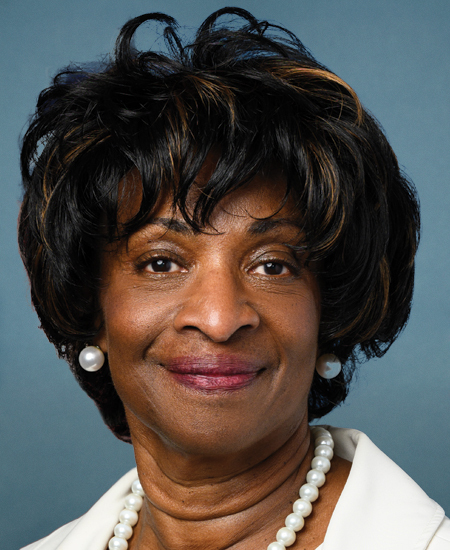
119th Congress Introduced by Valerie Foushee and 1 co-sponsor

Powers a FRA pilot to test switching between multiple motive power sources (battery, electrification, hydrogen, diesel) and rail car designs for rail operations.

Introduced in House
0
WeVote Research Nonpartisan
Bill Summary · HR 9181

Summary of Bill: Rail Motive Power Source Integration Act of 2026 (H.R. 9181)

Purpose and intent

  • Establishes a pilot program led by the Administrator of the Federal Railroad Administration (FRA) to explore and facilitate the integration of multiple motive power sources in the U.S. rail system.
  • Aims to improve the ability to rotate between different power sources during operation for both passenger and freight rail.

Key provisions and requirements

1) Pilot program mandate (Section 2(a))
- The FRA Administrator must establish a pilot program to enable easier rotation between multiple motive power sources in rail operations.

2) Research and development (Section 2(b))
- The pilot program must include:
- Research on integrating multiple power sources and rail technologies, including battery, electrification, hydrogen, and diesel.
- Identification of challenges to implementation, such as costs and land requirements.
- Development of rail car designs that enable switching between different power sources, potentially including diverse electrification systems.
- Demonstration projects to test the feasibility of integrating these designs into the rail system.

3) System analysis study (Section 2(c))
- The FRA must study and identify locations where trains must change power sources due to limitations of the power source in the rail system at certain segments.

4) Reporting timeline (Section 2(d))
- Not later than 1 year after enactment, FRA must report to Congress with:
- Results of the pilot program.
- Findings from the power-source transition location study.

Who and what is affected

  • Agency and program scope: Federal Railroad Administration (FRA) is the implementing agency.
  • Rail operations: Applies to both passenger and freight rail systems in the United States.
  • Technologies and designs: Focuses on integrating various motive power sources (battery, electrification, hydrogen, diesel) and compatible rail car designs.
  • Potential locations: Requires identification of segments where power-source changes are necessary.

Procedural and timeline aspects

  • Introduction date: June 8, 2026.
  • Referral: Referred to the House Committee on Transportation and Infrastructure and the Committee on Science, Space, and Technology.
  • Reporting deadline: A report to Congress due within 1 year of enactment.
  • Status (as of introduction): Bill introduced and pending committee action; additional sponsors include Valerie Foushee and Darren Soto.

Potential impact and considerations

  • Encourages exploration of decarbonization and resilience by enabling smoother transitions between power sources.
  • May inform future rulemaking or infrastructure investments if the pilot demonstrates feasibility and cost-effectiveness.
  • Potential challenges to address in practice include higher upfront costs, land/infrastructure requirements for new technologies, interoperability between different electrification and propulsion systems, and safety implications of multi-source operation.

Overall, the bill seeks to pilot and assess practical pathways for multi-source motive power in U.S. rail, with a focus on feasibility, design adaptation, and identification of implementation barriers.

Compiled from official sources — confirm details with the bill’s official record.

Sign in to ask a question.