

WeVote

Bill

Bill

S 4864

PUPIL Act

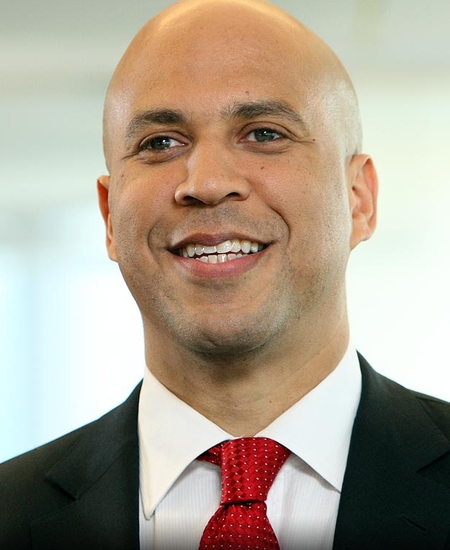
119th Congress Introduced by Cory Booker and 2 co-sponsors

The bill directs a National Academies study to assess paraprofessionals and education support staff in U.S. public schools, covering roles, qualifications, pay, PD, and impact on s

Introduced in Senate
0
WeVote Research Nonpartisan
Bill Summary · S 4864

Overview

  • Bill: S.4864, 119th Congress (PUPIL Act)
  • Purpose: Direct a comprehensive study on paraprofessionals and education support staff in U.S. public schools, led by the National Academies.
  • Introduced in the Senate on June 23, 2026 by Sen. Markey, with co-sponsors Sen. Padilla and Sen. Booker. Refers to the Committee on Health, Education, Labor, and Pensions.

Main purpose and intent

  • The act aims to examine, assess, and report on the workforce of paraprofessionals and education support staff who serve students from prekindergarten through grade 12 in public schools.
  • It seeks to inform policy making by understanding workforce characteristics, preparation, compensation, career pathways, and the conditions that affect effectiveness and student outcomes.

Key provisions and changes

  • Short title: Providing Understanding of Paraprofessionals in Learning Act (PUPIL Act).
  • Definitions:
    • Education Support Staff: Includes clerical/administrative, transportation, food service, custodial/maintenance, health and student services, technical services, and skilled trades staff in pre-K–12 settings.
    • Paraprofessional: As defined in ESEA section 3201 (20 U.S.C. 7011).
    • References to ESEA terms (professional development, Secretary, State) for consistency.
  • Findings:
    • Paraprofessionals/education support staff are essential, with over 2,000,000 workers serving more than 54,000,000 students.
    • Many face annual layoffs and lack job security; over 500,000 support staff assist students with disabilities.
    • These workers are often diverse and embedded in communities, yet their voices are not always reflected in policy.
  • Study mandate (Section 4):
    • Timing: Within 90 days of enactment, the Secretary must negotiate a contract with the National Academies to conduct the study.
    • Scope: The study will cover paraprofessionals and education support staff serving public elementary and secondary schools nationwide.
    • Objectives (elements in subsection (b)):
    • Demographics, educational/professional characteristics; recruitment, retention, tenure; and minimum qualifications/credentials (including state/local variations and compliance with relevant certification/licensure requirements of ESEA and IDEA).
    • Roles and responsibilities across settings and student populations.
    • Evidence on impact on student outcomes (academic, social-emotional, behavioral); conditions for effectiveness (training, supervision, role clarity, instructional context).
    • Compensation structures (salaries, benefits, conditions); variation by state/LEA/context; strategies to improve pay, stability, and job quality.
    • Availability and quality of professional development; strategies to strengthen PD.
    • Career advancement pathways, including models for progression to certified teaching and other roles.
    • Identification of policy levers/investments at federal, state, and local levels; actionable strategies to strengthen the workforce while supporting educational quality and outcomes.
    • Data gaps and additional research needs.
    • For each classification established by the study, analyze starting salaries and average salaries; compare by location to cost of living.
    • Examine employment models (e.g., contracted/privatized/out-sourced staff) and implications for stability, training, supervision, alignment with school goals, and student outcomes.
    • Recommendations for Congress, federal agencies, states, LEAs, and other stakeholders.
    • Position classifications: The National Academies will create classifications for different education support staff and paraprofessional roles and disaggregate data by these classifications where practicable.
  • Report and transparency:
    • The National Academies must complete and transmit a public report to Congress within 24 months of entering the agreement.
  • Funding:
    • Authorization of appropriations: $2,000,000 to carry out the Act.

Who/what would be affected

  • Affected entities:
    • Paraprofessionals and education support staff serving pre-K–12 students in public schools.
    • Public school districts and local educational agencies (LEAs) implementing policies for paraprofessionals.
    • Federal and state education policymakers who rely on workforce data to inform decisions.
    • The National Academies of Sciences, Engineering, and Medicine, as the study partner.
  • Outcomes for workers:
    • The study aims to illuminate pathways for better preparation, credentials, compensation, career advancement, and job stability.
    • Potential policy reforms at federal, state, and local levels based on evidence gathered.

Procedural and timeline aspects

  • Enactment: Requires the Secretary to enter into a contract with the National Academies within 90 days after enactment to conduct the study.
  • Study duration: The NAS study results and a public report are due within 24 months of the agreement.
  • Reporting: Final report to Congress and public release (transparency objective).
  • Funding: A one-time authorization of $2 million to support the study.

Potential impact and considerations

  • By grounding policy in a comprehensive, data-driven study, the bill could influence future investments in paraprofessional compensation, professional development, and career pathways.
  • It may shed light on the effects of outsourced or contracted staff models and how such arrangements affect school quality and student outcomes.
  • The emphasis on data disaggregation by classifications could help tailor state and local policies to different paraprofessional roles and locations.
  • As a study bill, the act does not itself change existing laws or funding levels beyond the study funding; rather, it seeks to inform future legislative and administrative actions.

Compiled from official sources — confirm details with the bill’s official record.

Sign in to ask a question.