

WeVote

Bill

Bill

SB 853

Public Service Commission - Transmission Line Siting - Limitations

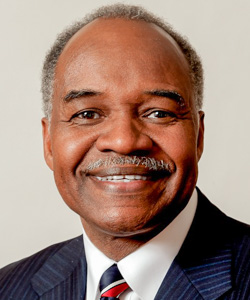
2025 Regular Session Introduced by Ben Brooks and 2 co-sponsors

SB 853 requires new overhead transmission lines to use existing rights‑of‑way; if not enough, lines must be within 0.25 miles of an existing line, with local permitting retained.

Hearing 3/06 at 1:00 p.m.
0
WeVote Research Nonpartisan
Bill Summary · SB 853

SB 853 — Public Service Commission: Transmission Line Siting — Limitations

Status: Hearing scheduled 3/06 at 1:00 p.m. (Introduced March 4, 2025)
Primary sponsors (Maryland version): Senators Lewis Young, Brooks, and Hettleman

Purpose / Intent

To restrict where new overhead electric transmission lines may be sited in Maryland by (1) prioritizing use of existing transmission right‑of‑ways and (2) tightly limiting where new rights‑of‑way may be approved. The bill is intended to reduce siting of entirely new transmission corridors across undeveloped areas.

Key provisions

  • Adds a new subsection to §7‑207 of the Public Utilities Article governing Certificates of Public Convenience and Necessity (CPCN) for overhead transmission lines.
  • Prohibits the Public Service Commission (PSC) from authorizing, and a person from undertaking, construction of an overhead transmission line that does not utilize an existing transmission line right‑of‑way unless the applicant adequately demonstrates to PSC that existing rights‑of‑way are insufficient for the proposed line.
  • If PSC determines existing rights‑of‑way are insufficient, PSC may authorize a new overhead transmission line only if it is sited within 0.25 miles (1/4 mile) of an existing overhead transmission line.
  • Retains and clarifies local permitting authority under the CPCN process:
    • Counties and municipalities continue to have authority to approve or deny local permits required by a CPCN application.
    • Local approvals must be made within a “reasonable time” and, when not preempted by State law, in accordance with local law.
    • Local permit approvals may not be conditioned on receiving certain land‑use approvals (conditional use, special exception, or floating zone) for any aspect of a generating station, overhead transmission line, or qualified lead line proposed under a CPCN.

Who is affected

  • Utilities and developers proposing overhead transmission projects (must prioritize existing rights‑of‑way and, if new corridors are needed, limit siting to within 0.25 miles of existing lines).
  • Maryland Public Service Commission (evaluative role; to apply new standard).
  • Local governments (retain permitting role but under the bill’s timing/conditioning rules).
  • Landowners and communities near potential transmission corridors.
  • Electricity ratepayers and businesses (possible indirect effects on project costs and, ultimately, rates).

Fiscal and operational impact

  • Fiscal note: PSC can implement the bill with existing budgeted resources; no material direct State or local fiscal impact expected.
  • Policy note: PSC and stakeholders have warned the restrictions could eliminate some lower‑cost transmission options, potentially increasing project costs that are ultimately recovered through rates — a potential long‑term cost pressure on ratepayers, state and local governments, and small businesses.

Effective date and procedural timeline

  • Bill text indicates an effective date of July 1, 2025.
  • At the time of the materials provided, a public hearing was scheduled for March 6, 2025 (1:00 p.m.). Further legislative action will determine enactment.

Practical implications / trade‑offs

  • Pros: Concentrates new transmission along established corridors, which may reduce new land‑take, environmental disturbance, and community impacts in undeveloped areas.
  • Cons: Limits siting flexibility for planners and utilities; could make some technically or economically preferable routes ineligible, raising construction costs, delaying projects, or constraining capacity needed for reliability and renewable integration.

If you want, I can:
- Draft a short one‑page explainer for utilities or for a county planning office on how the CPCN and local permitting processes would change under SB 853; or
- Produce talking points summarizing benefits and concerns for a stakeholder hearing.

Compiled from official sources — confirm details with the bill’s official record.

Sign in to ask a question.