

WeVote

Bill

Bill

AB 2523

Public postsecondary education: governing bodies: biography and contact information.

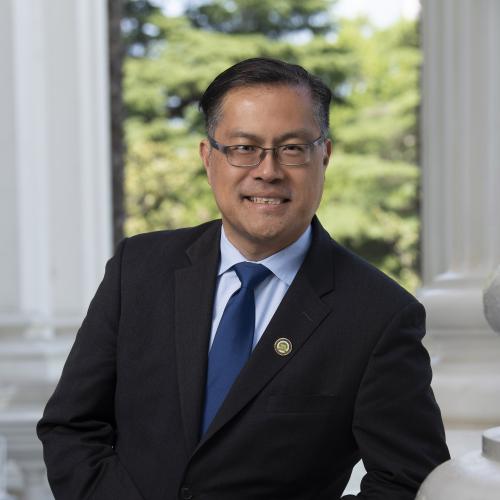
2025-2026 Regular Session Introduced by Mike Fong

Establishes a statewide framework to limit contributions to local elective offices, while allowing local jurisdictions to adopt stricter or different limits and enforcement.

Read second time. Ordered to third reading.
0
WeVote Research Nonpartisan
Bill Summary · AB 2523

Summary of AB 2523 (Session 2025-2026) — Public postsecondary education: governing bodies: biography and contact information

Note: This analysis focuses on the final amended text as reflected in the bill’s summary and legislative history. The measure primarily concerns local campaign contribution limitations and related enforcement, extending statewide-style limits to local elective offices and allowing local jurisdictions to adopt their own, potentially differing, limitations.

1) Main purpose and intent

  • Establish a statewide framework to limit contributions to local elective offices (counties, cities, special districts, and school districts, including community college districts).
  • Create a uniform baseline contribution limit for local offices beginning January 1, 2018, while permitting local governments to impose stricter or alternative limits tailored to their communities.
  • Repeal or sunset existing local authority for governing boards of school districts and community colleges to limit campaign expenditures (existing local expenditure/contribution limit provisions in Education Code would be repealed for those districts by 2018), effectively shifting to contribution-based limits under the Elections Code framework.
  • Provide enforcement mechanisms (civil, administrative, and criminal penalties) and specify who enforces them (primarily the district attorney, with some roles for the Attorney General in certain scenarios).

2) Key provisions and changes

  • Section 10801 et al. (Elections Code — Part 7: Local Limitations on Contributions)

    • Prohibits a person from contributing to a candidate for local elective office in excess of the local contribution limit, and prohibits a candidate from accepting more than that amount.
    • A contribution returned within 14 days is not counted as received for purposes of this part.
    • Personal funds used by a candidate for their own campaign are exempt from the limitations.
  • Local limitation authority

    • Local governments (counties, cities, special districts, and school districts) may impose a local contribution limitation by ordinance, resolution, or local initiative.
    • Local limits may differ from the statewide baseline; thus, a jurisdiction may impose stricter or alternative limits.
    • If a local government imposes its own limit, it may also establish its own enforcement standards (administrative, civil, or criminal penalties).
    • If a jurisdiction adopts a local limit, Sections 10801–10803 do not apply in that jurisdiction.
  • Enforcement and penalties

    • Civil fines up to $5,000 or up to three times the excess amount contributed/accepted, whichever is greater; misdemeanor penalties apply for knowing violations.
    • District Attorney enforces civil/criminal penalties in most cases; if the candidate is the district attorney or a candidate for district attorney, enforcement is handled by the Attorney General.
    • Violations must be prosecuted within four years of the violation.
    • The act contemplates penalties for negligent, intentional, or willful violations, with consideration of intent in determining penalties.
  • operative dates

    • The core local-contribution limit regime becomes operative January 1, 2018.
    • Existing school district and community college district authority to limit campaign expenditures is repealed as of January 1, 2018 (Sections 35177 and 72029 are amended to sunset on that date).
    • Provisions creating statewide-like contribution limits apply unless a local jurisdiction has already established its own limits.
  • Definitions and scope

    • Defines “local elective office,” “contribution,” “election,” “local government,” and related terms to align with the Government and Elections Codes.
    • Clarifies that personal funds are exempt, and that certain local contributions returned promptly are not counted.
  • Relationship to state law

    • The bill asserts that it furthers the purposes of the Political Reform Act of 1974.
    • Provides that a local government’s existing contribution limits are recognized as compliant if in effect on the act’s effective date (per transitional language).

3) Who or what would be affected

  • Local elected office candidates in counties, cities, special districts, and school districts (including community college districts) would be subject to a contribution limit.
  • Local governments (counties, cities, special districts, and school districts) would gain authority to establish their own contribution limits and enforcement schemes.
  • Campaigns for local elective offices would face enforcement actions (civil penalties, potential misdemeanors) for violations.
  • District Attorneys would have enforcement duties; the Attorney General would take enforcement in cases involving district attorney candidates.
  • Local political committees and contributors would be affected by the caps and enforcement.

4) Procedural and timeline aspects

  • Implementing date: January 1, 2018, for the statewide baseline contribution limit and for the sunset of existing district-level expenditure restrictions in Education Code sections amended (35177, 72029).
  • Local governments may adopt their own limits before or after 2018, but any local limits would supersede the state’s baseline limits in that jurisdiction.
  • If a local jurisdiction imposes its own limits, it can also adopt enforcement standards and penalties for violations.
  • The act allows for local measures (ordinance/resolution or initiative) to establish limits, subject to not conflicting with the statewide framework and ensuring compliance with broader PR Act requirements.

5) Practical implications and considerations

  • Potential for a more uniform standard of contribution limits across California’s local offices, reducing influence by large contributors in local elections.
  • Flexibility for communities to tailor limits to local conditions (e.g., population, campaign finance norms).
  • Introduction of new enforcement pathways and possible costs to local agencies for implementing enforcement mechanisms.
  • The bill is subject to a two-thirds vote requirement for passage and is designed to align with the Political Reform Act framework, while creating state-mandated local program implications.

If you’d like, I can provide a side-by-side comparison with current local contribution rules in specific jurisdictions or a plain-language one-page briefing for community groups.

Compiled from official sources — confirm details with the bill’s official record.

Sign in to ask a question.