

WeVote

Bill

Bill

SB 542

PUBLIC PEACE, HEALTH, SAFETY & WELFARE

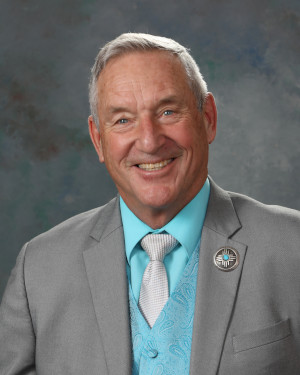
2025 Regular Session Introduced by Bill Soules

Prohibits restarting idle oil pipelines 6 inches or larger unless they pass spike hydrostatic testing approved by OSFM, tightening safety before operations resume.

action postponed indefinitely
0
WeVote Research Nonpartisan
Bill Summary · SB 542

SB 542 — Public Peace, Health, Safety & Welfare (Limón) — Summary

Status: Action postponed indefinitely (06/03/2025)
Introduced: February 20, 2025

Main purpose

SB 542 would strengthen California’s oil-spill prevention and preparedness framework by (1) increasing transparency and public input around facility “reasonable worst case” spill volumes and financial responsibility requirements, and (2) requiring integrity testing before returning long-idle oil pipelines to service.

Key provisions

  • Reasonable worst case (RWC) volumes

    • Beginning January 15, 2027, and at least once every 10 years thereafter, the Administrator for Oil Spill Response must solicit public input on whether RWC spill volumes for facilities remain appropriate.
    • Based on public feedback, the Administrator must review and, as appropriate, revise criteria and formulas used to calculate RWC volumes to reflect the best available information.
  • Financial responsibility / certificates of financial responsibility (COFR)

    • The Administrator must publicly post, on the Office of Spill Prevention and Response (OSPR) website, a list of all COFR applications within 7 business days of receipt.
    • Posted details must include specified applicant information such as the facility’s RWC spill volume and the amount of financial responsibility demonstrated.
    • Starting January 15, 2027, and at least every 10 years thereafter, the Administrator must solicit public input about the appropriateness of financial responsibility requirements and review/revise the formulas and criteria for calculating required financial assurances as warranted.
  • Idle pipeline restart and hydrostatic testing

    • Prohibits restarting any existing oil pipeline (6 inches or larger) that has been idle, inactive, or out of service for 5 years or more unless the pipeline passes a “spike” hydrostatic testing program that meets standards established by the Office of the State Fire Marshal (OSFM).
    • Tests must be performed by a qualified testing company; OSFM must adopt implementing regulations.
    • The prohibition applies notwithstanding other law; failure to comply would expand criminal liability under existing pipeline safety statutes (i.e., creates/update a state‑mandated local program).

Who would be affected

  • Owners/operators of facilities (vessels, pipelines, terminals, storage facilities) that handle, store, or transport oil — required to hold COFRs and now face public disclosure and periodic review of RWC and financial assurance calculations.
  • Operators/owners of existing oil pipelines 6 inches or larger that have been out of service ≥5 years — must complete prescribed hydrostatic testing before restarting.
  • OSPR (Administrator for Oil Spill Response) — new posting, outreach, and review responsibilities.
  • Office of the State Fire Marshal — required to set testing standards and promulgate regulations.
  • Qualified testing companies — would perform mandatory spike hydrostatic testing.

Procedural/timeline highlights

  • Public input and review cycles: commence January 15, 2027, then at least once every 10 years.
  • COFR application postings: within 7 business days of application receipt.
  • OSFM to develop regulations for hydrostatic testing (no specific deadline in text).
  • Status: Action postponed indefinitely (bill not advancing as of the last update).

Legal/fiscal notes

  • The bill would expand the scope of criminal liability by prohibiting pipeline restarts without required testing; this expansion is noted as imposing a state‑mandated local program.
  • The bill states that no state reimbursement to local agencies/school districts is required for mandates imposed by the measure (per constitutional reimbursement provisions).

Practical effect

If enacted, SB 542 would increase public transparency and periodic reassessment of spill planning assumptions and financial assurance requirements, and it would require scientific, OSFM‑approved hydrostatic testing for long‑idle pipelines before operation resumes — tightening safeguards intended to reduce the risk and consequences of oil spills along California waters.

Compiled from official sources — confirm details with the bill’s official record.

Sign in to ask a question.