

WeVote

Bill

Bill

HRES 1333

Providing for consideration of the bill (H.R. 8646) making appropriations for Agriculture, Rural Development, Food and Drug Administration, and Related Agencies programs for the fiscal year ending September 30, 2027, and for other purposes; providing for consideration of the bill (H.R. 7726) to amend the Child Care and Development Block Grant Act of 1990 to withhold funds from noncompliant States under such Act; providing for consideration of the bill (H.R. 7892) to amend the Higher Education Act of 1965 to require to the Secretary of Education to use an identity fraud detection system to review each FAFSA to determine whether the FAFSA presents a reasonable suspicion of identity fraud; and providing for consideration of the bill (H.R. 8872) to amend part A of title IV of the Social Security Act to target funds to low-income families, strengthen program integrity guardrails for State expenditure of funds, require measurement of improper payments, and establish goals for eliminating fraud and improper payments under the program of block grants to States for temporary assistance for needy families, and for other purposes.

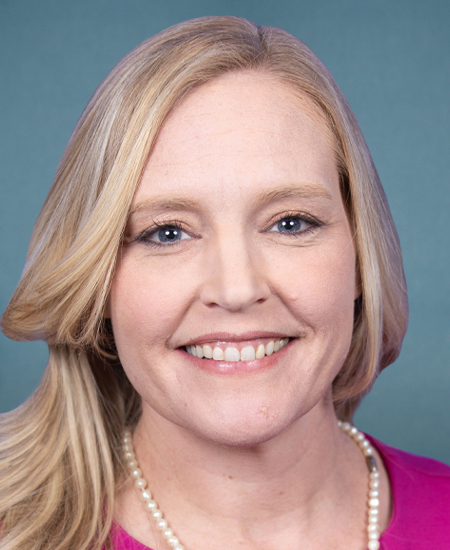
119th Congress Introduced by Erin Houchin

Sets the terms for considering four bills on funding, child care compliance, FAFSA fraud screening, and TANF integrity with limited, preprinted amendments.

Motion to reconsider laid on the table Agreed to without objection.
3
WeVote Research Nonpartisan
Bill Summary · HRES 1333

Summary of H.Res. 1333 (119th Congress)

This House resolution proposes the language for the House to proceed to consideration of four separate bills under a structured rule and outlines the debate, amendment, and voting procedures for each. It does not itself enact policy but sets the floor rules for considering these bills.

1) Purpose and intent

  • The resolution provides for the orderly consideration of four separate bills:

    • H.R. 8646: A bill making appropriations for Agriculture, Rural Development, FDA, and Related Agencies for FY ending September 30, 2027.
    • H.R. 7726: A bill amending the Child Care and Development Block Grant Act of 1990 to authorize withholding funds from noncompliant States.
    • H.R. 7892: A bill amending the Higher Education Act of 1965 to require the Secretary of Education to use an identity fraud detection system to review each FAFSA for reasonable suspicion of identity fraud.
    • H.R. 8872: A bill amending part A of title IV of the Social Security Act to target funds to low-income families, strengthen program integrity guardrails for State expenditures, require measurement of improper payments, and set goals to reduce fraud and improper payments under the TANF block grant program.
  • The resolution is intended to enable consideration of these bills under a controlled timetable with limited debate and specific amendment rules.

2) Key provisions and changes the resolution would facilitate (content of the four bills)

Note: The resolution itself does not alter policy but describes how the four bills would be considered. The substantive provisions are as described in the respective bills:

  • H.R. 8646 (Agriculture, Rural Development, FDA, and Related Agencies appropriations)

    • Funds federal programs in agriculture, rural development, FDA, and related agencies for FY 2027.
    • Policy details would be in the bill text (not included in the resolution).
  • H.R. 7726 (Child Care and Development Block Grant Act)

    • Would withhold funds from states that are not compliant with the Act.
    • Aims to enforce compliance with child care development program requirements.
  • H.R. 7892 (Higher Education Act)

    • Would require the Secretary of Education to implement an identity fraud detection system to screen each FAFSA for reasonable suspicion of identity fraud.
    • Intended to strengthen integrity of federal financial aid by detecting fraud.
  • H.R. 8872 (TANF/Temporary Assistance for Needy Families)

    • Would target funds to low-income families and tighten program integrity guardrails on state expenditures.
    • Would require measurement of improper payments and set goals to reduce fraud and improper payments within TANF block grants to states.

3) Who or what would be affected

  • States administering the Child Care and Development Block Grant program (H.R. 7726): potential withholding of funds for noncompliance.
  • Institutions and individuals applying for federal student aid (H.R. 7892): FAFSA processing would be subject to an identity fraud detection system.
  • States receiving TANF funds (H.R. 8872): changes to fund targeting, budget governance, and anti-fraud measures.
  • Agricultural, rural development, FDA, and related program stakeholders (H.R. 8646): federal appropriations for FY 2027 would fund these programs; broader policy impacts depend on the enacted appropriations and accompanying authorizations.

4) Procedural and timeline aspects

  • The resolution designates a structured rule for debate:

    • The House may suspend standard rules to consider H.R. 8646 under Committee of the Whole; general debate limited to one hour (equal divide between the chair and ranking member of the Appropriations Committee or designees).
    • Amendments to H.R. 8646 must be those printed in the Rules Committee report; amendments will be considered in a specific order, with limited live amendments.
    • The chair may offer up to 10 pro forma amendments for debate.
    • After debate, the bill would be reported to the House with amendments and proceed to final passage in the usual manner (previous question to final passage with a single motion to recommit).
  • Separate consideration for each of the other three bills (H.R. 7726, H.R. 7892, H.R. 8872) under closed rules:

    • Each bill would be considered with one hour of debate, equally divided between the chair and ranking minority member (or designees).
    • Adequate time for general consideration and for one motion to recommit is provided.
    • The Rules specify that the amendments offered for these bills would be those printed in the accompanying Rules Committee Print and would be treated in an orderly sequence.
  • The action history shows the resolution passed the House on June 3, 2026, by a party-line or close vote (211-207), with the debate and ordering of amendments completed as described.

5) Practical takeaway

  • H.Res. 1333 is a procedural resolution that sets the terms for considering four specific bills in the House, each addressing distinct policy areas: agricultural/federal funding, child care funding compliance, FAFSA integrity, and TANF program integrity and targeting.
  • It ensures limited, organized debate and restricts amendments to those printed in the accompanying Rules Committee reports, while allowing for the possibility of amendments en bloc on certain measures.
  • Readers should refer to the text of the four bills themselves to understand the precise policy changes and fiscal implications once enacted.

Compiled from official sources — confirm details with the bill’s official record.

Sign in to ask a question.