

WeVote

Bill

Bill

HR 8311

Protecting American Consumers from Robocalls Act

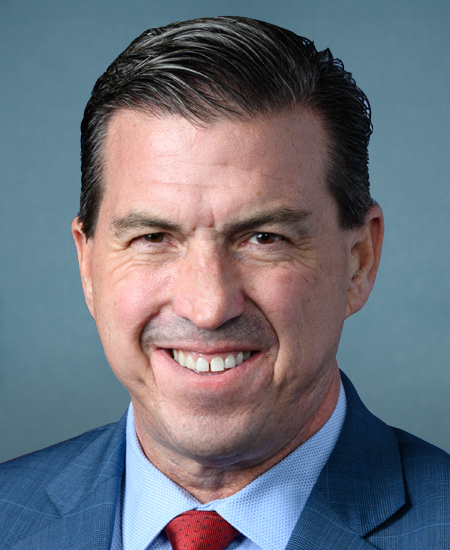
119th Congress Introduced by Kevin Mullin and 2 co-sponsors

Expands Do Not Call protections to all subscribers, broadens penalties for violations, and widens what counts as an automatic dialing system to curb robocalls.

Introduced in House
0
WeVote Research Nonpartisan
Bill Summary · HR 8311

Overview

HR 8311, the Protecting American Consumers from Robocalls Act, introduced April 15, 2026, amends the Telephone Consumer Protection Act (TCPA) to strengthen and broaden Do Not Call (DNC) protections. The bill expands who is covered, enlarges the private right of action for violations, and updates the definition of an “automatic telephone dialing system” (ATDS). It is sponsored by Rep. Schakowsky (with Rep. Mullin) and co-sponsored by Rep. Soto.

Purpose and intent

  • Expand the scope of Do Not Call rules under the TCPA to include all telephone subscribers, not just residential callers.
  • broaden the private right of action for calls that violate these rules, increasing potential accountability and remedies against violators.
  • modify the definition of “automatic telephone dialing system” to catch a wider range of dialing technologies and practices.

Key provisions

  1. Expanding scope of Do Not Call rules and private right of action (Section 2)

    • Amend TCPA section 227(c) to:
      • Remove “residential” qualifier in paragraph (1) and related references, thereby covering all subscribers (e.g., cell phones, business lines, and other services).
      • Remove “residential” qualifier in paragraph (3) and related subparagraphs, expanding prohibitions beyond residential calls.
      • In paragraph (5), broaden the standard from “more than one call within any 12-month period by or on behalf of the same entity” to a broader rule of “a telephone call by or on behalf of an entity” (i.e., fewer limitations on frequency).
      • Remove the qualifier “up to” in subparagraph (B), effectively tightening or clarifying remedies or standards (context suggests alignment with broader prohibition standards).
  2. Regulatory revisions by the FCC (Section 2)

    • The Federal Communications Commission (FCC) must revise its regulations under TCPA section 227(c) within 270 days of enactment to implement the amendments.
  3. Definition of Automatic Telephone Dialing System (ATDS) (Section 3)

    • Amend TCPA section 227(a)(1) to:
      • Add language allowing “a list of telephone numbers” to be treated within the ATDS definition (i.e., not limited to random or sequential number generators).
      • Include in subparagraph (B) that dialing can occur “successively without human intervention” after dialing numbers, broadening the criteria for an ATDS.

Who/what would be affected

  • Telecommunications entities and telemarketers that place calls to consumers would be subject to expanded prohibitions.
  • All telephone subscribers (consumers and businesses) would be protected under the DNC rules, not just residential landline users.
  • The FCC would be required to update regulations promptly, guiding enforcement and compliance.
  • Private individuals and entities could pursue new or expanded civil actions for TCPA violations.

Procedural and timeline aspects

  • Effective date: The bill sets a 270-day deadline after enactment for the FCC to issue revised regulations implementing the amendments.
  • Enactment and status: Referred to the House Committee on Energy and Commerce on April 15, 2026; introduced by Rep. Schakowsky with co-sponsors Mullin and Soto.

Potential impacts

  • Stronger deterrence for robocallers due to broader coverage and an expanded private right of action.
  • Increased compliance burden for a wider range of callers, including business-to-consumer and possibly non-traditional calling campaigns.
  • More robust consumer protection by reducing the effectiveness of opt-out or caller-id avoidance tactics through a broader ATDS definition.
  • Greater regulatory clarity once FCC rules are updated, aiding enforcement and private litigation.

Compiled from official sources — confirm details with the bill’s official record.

Sign in to ask a question.