

WeVote

Bill

Bill

S 4307

Protecting American Consumers from Robocalls Act

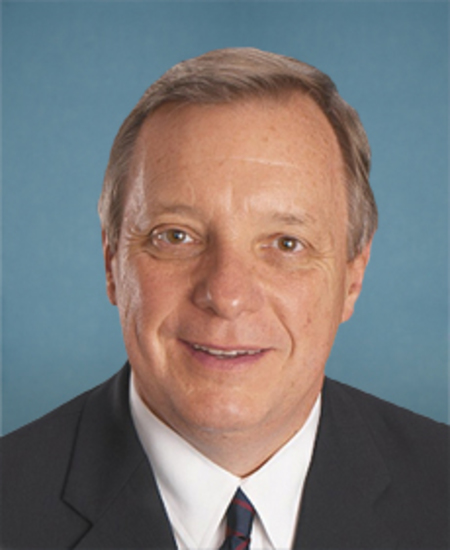
119th Congress Introduced by Dick Durbin and 5 co-sponsors

Expands Do Not Call protections to cover non-residential numbers and list-based dialing, and clarifies ATDS to boost enforcement against robocalls.

Introduced in Senate
0
WeVote Research Nonpartisan
Bill Summary · S 4307

Overview

The Protecting American Consumers from Robocalls Act (S. 4307, 119th Congress) aims to strengthen and expand protections against unwanted robocalls by broadening the reach of the Do Not Call rules, expanding private enforcement, and clarifying what constitutes an automatic dialing system.

Purpose and intent

  • Improve protection for consumers from unwanted telemarketing calls and robocalls.
  • Expand the scope of Do Not Call regulations to cover more dialing practices and entities.
  • Empower private right of action or otherwise enable enforcement mechanisms to deter robocall activity.
  • Update the regulatory framework to reflect evolving dialing technologies and practices.

Key provisions

1) Expanding scope of Do Not Call rules and private enforcement (amendments to 47 U.S.C. 227(c))
- Remove the word “residential” from several parts of the statute, thereby broadening applicability beyond traditional residential phone lines.
- In paragraph (1), the clause preceding subparagraph (A) will no longer be limited to residential numbers.
- In paragraph (3), the portion preceding subparagraph (A) and subparagraph (E) will similarly stop referencing residential numbers.
- In paragraph (5), the language preceding subparagraph (A) and subparagraph (B) will be adjusted to remove restrictions tied to “more than one telephone call within any 12-month period” and to modify the cap on calls (replacing “up to” certain limits with broadened language).
- These changes collectively widen the sources and targeting of prohibited robocalls beyond traditional residential lines, potentially covering business numbers, multiline systems, and other non-residential contexts.

2) Regulatory implementation timeline
- The Federal Communications Commission (FCC) must revise regulations under 47 U.S.C. 227(c) to implement the amendments.
- Timeline: Revisions must be completed within 270 days after enactment.

3) Definition of automatic telephone dialing system (ATDS)
- Amend 47 U.S.C. 227(a)(1) to clarify and broaden what constitutes an ATDS:
- In subparagraph (A), add “or a list of telephone numbers” after the phrase “using a random or sequential number generator,” to address dialing from precompiled lists.
- In subparagraph (B), insert “successively without human intervention” after the phrase related to dialing such numbers, clarifying automated sequential dialing without human input.

Who and what is affected

  • Telemarketers, robocallers, and entities using autodialing or pre-recorded message systems.
  • Non-residential numbers (e.g., business lines) and potentially a wider range of telephone numbers due to removal of the residential limitation.
  • Consumers who receive calls, including those on business or non-traditional lines, would be protected under expanded Do Not Call provisions.
  • FCC to update implementing regulations; enforcement could involve private rights of action or equivalent enforcement mechanisms under amended Do Not Call rules.

Procedural and timeline aspects

  • Introduction and referral: Introduced in the Senate and referred to the Committee on Commerce, Science, and Transportation (April 15, 2026).
  • Regulation update deadline: FCC must issue revised rules within 270 days of enactment.

Practical impact

  • Broader Do Not Call coverage may deter more robocall activities that target non-residential numbers.
  • Clearer ATDS definitions could facilitate enforcement against newer dialing technologies and list-based campaigns.
  • Consumers gain stronger protections and potential avenues for redress against unlawful robocalls once regulations are in place.

Compiled from official sources — confirm details with the bill’s official record.

Sign in to ask a question.