

WeVote

Bill

Bill

S 5129

PROTECT Act of 2026

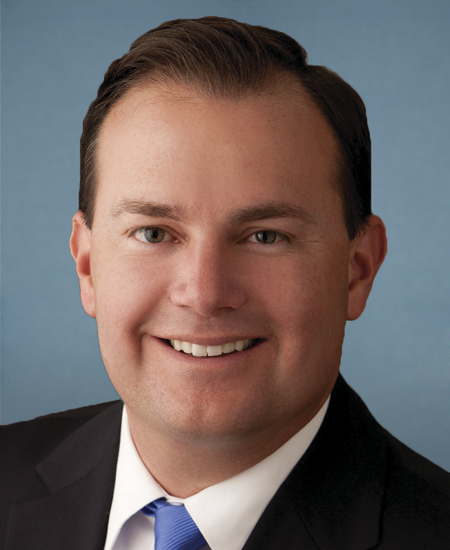
119th Congress Introduced by Mike Lee

The bill requires platforms to verify uploader age and consent of all depicted individuals for uploaded intimate images, with penalties for noncompliance.

Introduced in Senate
0
WeVote Research Nonpartisan
Bill Summary · S 5129

Overview

  • Bill: S.5129, the PROTECT Act of 2026 (Preventing Rampant Online Technological Exploitation and Criminal Trafficking Act of 2026)
  • Purpose: To prevent distribution of intimate visual depictions without consent by imposing verification, consent, and enforcement requirements on online platforms that host or facilitate such imagery.
  • Sponsor: Senator Mike Lee (co-sponsor) in the 119th Congress.

Main purpose and intent

  • Create a federal framework to curb the uploading and distribution of intimate visual depictions (including explicit pornography) without consent.
  • Target covered platforms that host user-generated content or that regularly publish intimate visual depictions.
  • Establish clear consent verification obligations for platforms, users, and all participants depicted in explicit imagery.
  • Introduce civil and criminal penalties for violations, with a focus on accountability of platforms and individuals involved.

Key provisions and changes

A. New statutory section: 18 U.S.C. § 2257B (Uploading pornographic images to online platforms)

  • Definitions
    • Consent: As defined in the Communications Act’s consent standard.
    • Covered platform: A public-facing website/service/app that primarily hosts user-generated content or routinely publishes intimate visual depictions.
    • Intimate visual depiction: Visuals showing sexually explicit conduct or exposure of naked genitals, anus, pubic area, or post-pubescent female nipples, with identifying cues (face, marks, background, voice, or creator confirmation).
    • Pornographic image: Any visual depiction of actual or feigned sexually explicit conduct or an intimate visual depiction.
    • User: An information content provider (as defined in 47 U.S.C. § 230(f)).
  • Verification obligations for platforms (subsection (b))
    • Verification of uploading user: Platforms may not allow upload of a pornographic image unless the platform verifies the user’s identity and that the user is at least 18.
    • Means of verification: Adult access code/ID, digital age certificate, or other AG-determined feasible methods.
    • Verification of participants in the image: Platforms must verify that every person depicted is at least 18, has provided explicit written consent for each sex act depicted, and has provided explicit written consent for distribution of the specific image.
    • Consent forms: Requires consent forms approved by the Attorney General, including details such as name, birth date, consent statements, geographic distribution, duration, list of acts, and withdrawal rights; requires at least one valid ID per person in the image.
    • AG-created consent form: AG must create and publish a consent form within specified timelines; platforms must make forms available to users after a set date; alternative consent forms may be approved by the AG.
  • Effective date and applicability (subsection (c))
    • Provisions take effect 90 days after enactment.
    • Apply to all images uploaded on/after that date, including those uploaded earlier.
  • Rules of construction (subsection (d))
    • Does not alter other legal obligations or limit other laws, and preserves First Amendment protections.

B. Platform reupload controls (Section 2)

  • Amends the TAKE IT DOWN Act to require platforms not only to remove but also to block reuploads of removed content.

C. Section 3 (Enforcement and penalties)

  • Civil and criminal enforcement
    • Civil penalties for platforms failing to verify uploaders: Up to $10,000 per day per image that remains up after notice of violation.
    • Civil liability for failure to verify participants: Damages to the harmed party or $10,000 per day per image, or actual damages.
    • Civil liability for user obligations: Damages to the harmed party or $10,000 per day per image, or actual damages.
    • Relationship to existing law: Clarifies that it does not alter Communications Decency Act 230 protections.
  • Criminal penalties
    • First violation: Up to 5 years imprisonment, fines, or both.
    • Subsequent violations: 2 to 10 years imprisonment, fines, or both.

D. Severability

  • If any provision is held unconstitutional, the rest remains in effect.

Who would be affected

  • Covered platforms: Social media sites, apps, and online services that host user-generated content and that regularly publish intimate visual depictions.
  • Users who upload images: Must undergo identity and age verification to upload pornographic imagery.
  • Individuals depicted: Must provide explicit written consent for the sex acts shown and for distribution of each specific image; consent forms require identifying information and withdrawal rights.
  • The Attorney General: Responsible for creating consent forms and approving alternative forms.

Procedural and timeline aspects

  • Introduction and referral: Introduced July 23, 2026; referred to the Senate Committee on the Judiciary.
  • Effective date: Provisions take effect 90 days after enactment.
  • Compliance timeline: AG-consent forms to be created within 60 days of enactment; consent forms must be available to users 90 days after enactment.
  • Reupload policy: TAKe IT DOWN Act amendment to ensure blocking of reuploads persists.

Potential impact and considerations

  • Strengthens platform accountability for hosting intimate images, with a focus on verified age and consent.
  • Creates new compliance burdens and potential liability for platforms, including per-day/per-image penalties.
  • Introduces stringent consent documentation requirements for individuals depicted, potentially increasing administrative complexity for content creators and platforms.
  • Balances with First Amendment considerations by preserving protected speech protections.
  • Fielded within a federal framework, complementing state laws and other obscenity or consent-related statutes.

Compiled from official sources — confirm details with the bill’s official record.

Sign in to ask a question.