

WeVote

Bill

Bill

HR 7247

Prison Libraries Act of 2026

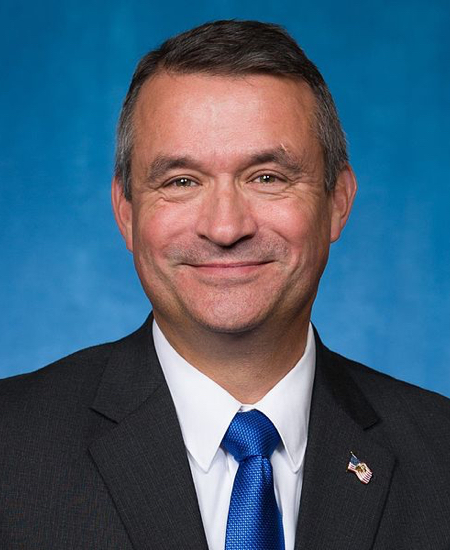
119th Congress Introduced by Don Bacon and 36 co-sponsors

Establishes a federal grant program to fund prison libraries and related education services to improve literacy, reintegration, and reduce recidivism.

Introduced in House
0
WeVote Research Nonpartisan
Bill Summary · HR 7247

Summary of HR 7247 (Prison Libraries Act of 2026)

Purpose and intent

  • Establishes a federal program to provide grants for the creation and operation of prison libraries.
  • Aims to advance reintegration, reduce recidivism, and expand educational opportunities for incarcerated individuals.

Key provisions and changes

  • Program establishment (Sec. 2)

    • The Attorney General must create a grant program within one year of enactment.
    • Grants are to be used to provide library services to incarcerated individuals as described in the act.
  • Eligibility criteria (Sec. 3)

    • Eligible grantees: States or territories that submit an application with:
    • A comprehensive plan (objectives, program design, evaluation plan).
    • Evidence of a physical library in a correctional facility or a plan to create one.
    • Demographic data about the facility’s population demonstrating need (education level, recidivism rates, socioeconomic data, etc.).
  • Authorized uses of funds (Sec. 4)

    • Funds may be used for a wide range of library-related activities, including but not limited to:
    • Education and job training.
    • Acquisition of materials and equipment reflecting diverse interests and languages.
    • Library infrastructure upgrades to be more welcoming and less restrictive.
    • Hiring of qualified librarians and staff with specific library-management and cataloging capabilities.
    • Literary and digital literacy training.
    • Career readiness, civic engagement, restorative justice, resident-led programs.
    • Health and wellness, cultural exchange, language services, audiobooks, eBooks.
    • Computer and internet access, book discussions, family literacy during visits.
    • Resource fairs and coordination with local public libraries (interlibrary loan, shared resources, coordinated events).
  • Prohibited uses (Sec. 5)

    • Funds cannot be spent on:
    • Food, clothing, hygiene items.
    • Salaries and benefits not directly tied to library services.
    • General medical or mental health care, inmate transport, facility maintenance unrelated to libraries, non-library staff training, or other non-library operations.
  • Prioritization criteria (Sec. 6)

    • Grants prioritized for:
    • Adherence to standard library management guidelines and incorporation of postsecondary education.
    • Plans with clear, measurable outcomes (literacy, enrollment/graduation, skill development, post-release employment opportunities).
    • Broad impact across the inmate population with multiple initiatives.
    • Geographic diversity intended (between states/territories and urban/rural areas).
    • A required reporting system to monitor progress, performance, and expenditures.
  • Term and renewal (Sec. 7)

    • Individual grants initially last one year and may be renewed annually for up to a total of six years.
  • Reporting (Sec. 8)

    • Grantees must provide annual performance measures, library activity statistics, program outcomes, and expenditure reports.
  • Conditions for users (Sec. 9)

    • Incarcerated individuals may not be charged fees for:
    • Access to books, eBooks, audiobooks, computers and internet, educational materials, printing, or other library services.
    • Libraries must be available for postsecondary programs and educational programming.
  • Consultation (Sec. 10)

    • The Attorney General must consult with the Director of the Institute of Museum and Library Services in implementing the act.
  • Funding authorization (Sec. 11)

    • Authorizes $10,000,000 annually for fiscal years 2026–2031 to carry out the act.

Who is affected

  • Primarily incarcerated individuals who would gain access to enhanced library services and related programs.
  • State and territorial governments that operate correctional facilities and libraries.
  • Public libraries and educational institutions that may partner with prisons (through interlibrary loan, resource sharing, and coordinated programming).
  • Agencies implementing federal grants, with reporting and oversight requirements for compliance and effectiveness.

Procedural and timeline notes

  • Referred to the House Judiciary Committee upon introduction (January 27, 2026).
  • Requires final enactment to initiate program within one year of enactment.
  • Grant term structure: 1-year initial grants, potentially up to six years total through renewals.
  • Ongoing reporting and performance evaluation framework to monitor outcomes and expenditures.

Potential impact and considerations

  • Could expand educational and literacy opportunities for incarcerated individuals, potentially supporting reintegration and reducing recidivism.
  • Emphasizes data-driven approaches with measurable outcomes and geographic diversity to avoid uneven distribution of resources.
  • Sets clear boundaries on how funds may be used, ensuring library-centric purposes and safeguarding against non-library expenditures.
  • Requires interagency collaboration (Attorney General and Institute of Museum and Library Services) to leverage library expertise in implementation.

Compiled from official sources — confirm details with the bill’s official record.

Sign in to ask a question.