

WeVote

Bill

Bill

S 4778

Postsecondary Student Success Act of 2026

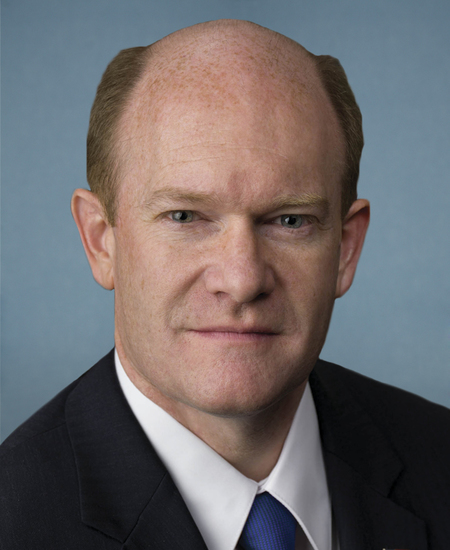
119th Congress Introduced by Chris Coons and 1 co-sponsor

Funds competitive, evidence-based programs to boost retention and graduation for high-need college students, including dedicated support for Indian entities.

Introduced in Senate
0
WeVote Research Nonpartisan
Bill Summary · S 4778

Postsecondary Student Success Act of 2026 (S. 4778)

Purpose and goals

  • Authorizes the Secretary of Education to award competitive grants to establish evidence-based student success programs aimed at increasing participation, retention, and completion (or graduation) rates for high-need students at eligible higher education entities.
  • Includes reserved funding for eligible Indian entities to support similar objectives.

Key definitions and framework

  • Defines “high-need student” to include groups such as:
    • Low-income students
    • First-generation college students
    • Caregiver students
    • Students with disabilities
    • Stopped-out or reentry students (including justice-impacted)
    • Military-connected students
  • Establishes three tiers of evidence-based reforms or practices:
    • Tier 1: Evidence Tier 1 reforms or practices with promise based on prior research.
    • Tier 2: Reforms that demonstrate impact and cost-effectiveness, with rigorous evaluation.
    • Tier 3: Reforms with sizable, meaningful impacts that are tested for reproducibility and sustained effectiveness, including understanding conditions for success.
  • Defines “eligible entity” (public institution, or partnerships/consortia involving higher ed and nonprofits) and “eligible Indian entity” (tribal college/university governance body).
  • Introduces “evidence-based” per foundations in the Elementary and Secondary Education Act.

Funding and allocations

  • Reservation for Indian entities: 2% of the annual appropriations to increase participation, retention, and completion for high-need students.
  • Competitive grants (fiscal years 2027–2032):
    • Not less than 20% of available funds must be awarded to entities proposing at least one Tier 3 reform/practice.
    • Remaining grants may address Tier 1 or Tier 2 reforms/practices.
  • Administrative and technical funds: Permissive use of up to 5% for administration/capacity building/evaluation/reporting and up to 2% for technical assistance (from the total annual appropriation not reserved for other purposes).

Authorized activities and uses of funds

Grantee activities may include, but are not limited to:
- Comprehensive student services to support retention and success (e.g., mentoring, advising, case management, real-time progress data, improved transfer pathways, enrollment incentives).
- Direct student supports (tutoring, academic supports, enrichment, emergency financial aid).
- Career preparation and planning (career coaching, networking, work-based opportunities, pathways to high-demand fields).
- Initiatives to recruit/retain faculty and instructional staff.
- Provisions to improve through institutional collaboration (2-year and 4-year programs, and workforce systems).

Possible evidence-based reforms/grants may involve:
- Accelerated learning opportunities (dual/concurrent enrollment, early college high school programs).
- Reform of course scheduling and credit policies.
- Strengthening transfer pathways between institutions.

Evaluation and accountability

  • The Department must evaluate the effectiveness of funded reforms and practices and disseminate findings.
  • Evaluations compare participating students with similar-background non-participants to measure impact on completion/retention.
  • Final evaluation report due within 18 months after enactment to relevant Senate and House committees.

What entities are affected

  • Eligible entities: public colleges/universities, and eligible nonprofit-education partnerships or consortia.
  • Eligible Indian entities: Tribal Colleges/Universities or their governance bodies.
  • Institutions implementing this program across 2027–2032 would align with evidence-tier requirements and reporting.

Timelines and procedural notes

  • Bill introduced and referred to the Senate Committee on Health, Education, Labor, and Pensions on June 11, 2026.
  • Authorization covers grants for fiscal years 2027 through 2032.
  • Final evaluation report due within 18 months from enactment.

Summary of potential impact

  • Encourages use of rigorously evaluated, evidence-based strategies to boost postsecondary success for high-need students.
  • Prioritizes innovative (Tier 3) reforms while allowing broader Tier 1/2 approaches.
  • Supports holistic services (academic, financial, career), improved transfer pathways, and stronger faculty capacity.
  • Creates dedicated funding streams for Indian entities to address disparities in postsecondary attainment.
  • Emphasizes data-driven evaluation to inform dissemination of effective practices to the sector.

Compiled from official sources — confirm details with the bill’s official record.

Sign in to ask a question.