

WeVote

Bill

Bill

HF 638

Political subdivisions prohibited from establishing or enforcing ranked-choice voting.

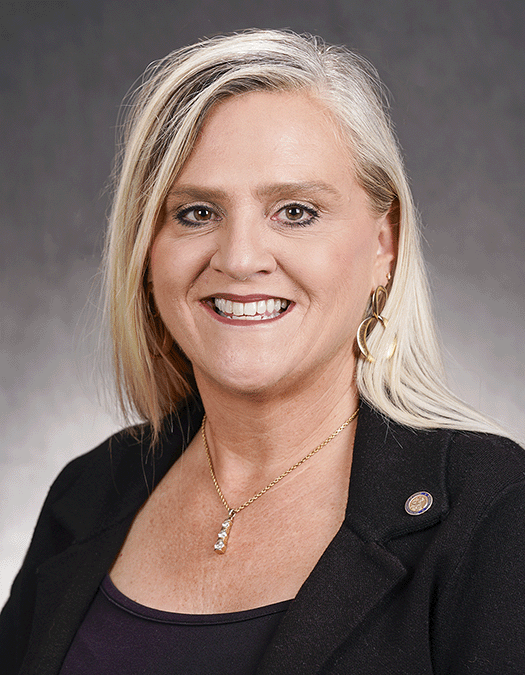
2025-2026 Regular Session Introduced by Pam Altendorf and 5 co-sponsors

Minnesota bill prohibits local governments from using ranked-choice voting, centralizing election methods at state level.

Author added Scott
0
WeVote Research Nonpartisan
Bill Summary · HF 638

Legislative bill overview

HF 638 would prohibit Minnesota political subdivisions (cities, counties, school districts, etc.) from establishing or enforcing ranked-choice voting (RCV) systems in their elections. The bill effectively removes local authority to adopt alternative voting methods and preserves plurality/first-past-the-post voting as the only permitted system statewide.

Why is this important

Ranked-choice voting has gained attention as a potential solution to concerns about vote-splitting and polarization in elections. This bill would prevent local experimentation with RCV—a practice some municipalities have already adopted or considered—and centralizes voting system decisions at the state level rather than allowing local democratic choice.

Potential points of contention

  • Local control vs. state mandate: The bill removes municipal autonomy in election administration, which some argue should be locally determined; supporters counter that uniform voting systems prevent confusion and logistical complications.
  • Ranked-choice voting efficacy debate: Advocates claim RCV reduces polarization and increases representative outcomes; opponents argue it's unnecessarily complex and unproven at scale, and cite implementation challenges in other jurisdictions.
  • Implementation concerns: RCV requires different ballot design, voter education, and vote-counting procedures; opponents worry about voter confusion and election administration costs, while supporters note these are manageable with proper resources.

Compiled from official sources — confirm details with the bill’s official record.

Sign in to ask a question.