

WeVote

Bill

Bill

S 4262

Permanent Housing Affordability Act

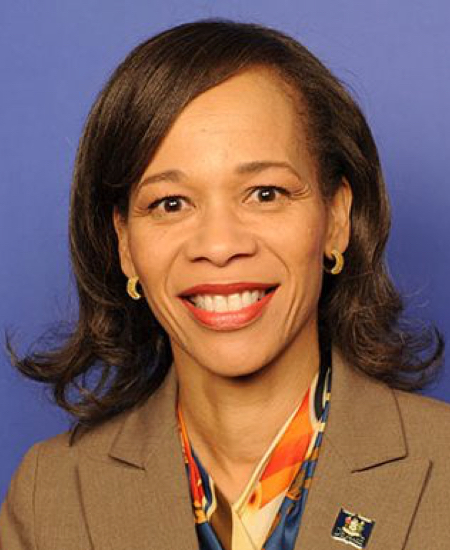
119th Congress Introduced by Lisa Blunt Rochester

Creates a federal framework to fund and promote shared equity housing (CLTs, ground leases) to keep homes affordable for long-term, income-qualified buyers.

Introduced in Senate
0
WeVote Research Nonpartisan
Bill Summary · S 4262

Summary of S.4262 — Permanent Housing Affordability Act (119th Congress, 2nd Session)

Proposed by Sen. Lisa Blunt Rochester, with a co-sponsor, this bill aims to promote and expand shared equity homeownership as a long-term strategy to preserve housing affordability. It creates definitions, establishes a funding framework, pilots programs, and integrates surplus federal land transfers to support community land trusts and similar models.

1) Purpose and Intent

  • Promote shared equity models of homeownership to preserve long-term affordability for low- and moderate-income households.
  • Build a scalable federal framework that supports ground-lease or deed-restricted ownership, ensuring housing remains affordable across generations.
  • Leverage federal surplus land and targeted financing to accelerate the development and rehabilitation of affordable units.

2) Key Provisions and Changes

A. Definitions (Section 2)

  • Establishes precise terms, including:
    • Community Land Trust (CLT): a nonprofit or government entity focused on acquiring/holding land to provide permanently affordable housing, with affordability enforced via ground leases, deeds, or similar mechanisms (minimum periods of 99 years or the state-law maximum, if higher).
    • Shared Equity Homeownership Model: resale-restricted, owner-occupied housing designed to remain affordable through resale formulas and ground leases/deed restrictions.
    • Eligible Entity / Eligible Grantee: entities (local governments, state instrumentalities, nonprofits including CLTs, and CDFIs) that manage shared equity programs and can receive federal funds.
    • Qualified Homebuyer: household income ≤ 120% of area median income (AMI).

B. Lasting Housing Affordability Fund (Section 3)

  • Creates a program to award grants to eligible grantees to provide low-interest construction loans (≤ 3% interest; ≤ 1% origination fee) to eligible entities.
  • Loans prioritize high-need areas (high cost burden, displacement risk, redlining) and properties intended to be affordable for terms exceeding 99 years where applicable.
  • Eligible uses include construction/rehabilitation costs for homes to be owned by buyers, limited equity cooperatives, or CLTs.
  • Annual reporting by grantees and a Congress-facing annual report on program outputs.
  • Authorized appropriation: $100 million for FY 2027, available until expended.

C. Lasting Affordability Homeownership Grant Pilot Program (Section 4)

  • HUD program to fund entities that purchase land or existing properties to develop homes for sale to qualified homebuyers or CLT members.
  • Priority for longer-term affordability; clear timelines: vacant land projects must be built and marketed within 3 years (extendable for extenuating circumstances with public list of affected localities); existing properties must reach sale readiness within 3 years.
  • Income targeting: households at or below 80% AMI (or up to 120% AMI in rural areas).
  • Use of ground leases/deed restrictions to ensure ongoing affordability; resale formulas govern future transfers.
  • Authorized appropriations: $100 million annually for FY 2027–2031; up to 10% of funds may fund technical assistance.
  • Biennial reporting to Congress on program results.

D. Shared Equity Housing Research and Awareness (Section 5)

  • HUD program to research best practices for CLTs and shared equity models; funding for capacity building and technical assistance; public awareness campaign and coordination with lenders (e.g., Fannie Mae, Freddie Mac).
  • Appropriations as needed.

E. Surplus Land (Section 6)

  • Amends the Surplus Federal Land process to allow transfer of surplus property to CLTs or other shared equity models.
  • Requirements ensure perpetual affordability and, on disposition, discount the sale value to reflect public benefits (standard discount up to 75%; greater discounts possible with justification).
  • Annual reporting on surplus land conveyed and the discounted value achieved.

3) Who Would Be Affected

  • Local governments, state instrumentalities, and nonprofits (including CLTs) implementing shared equity programs.
  • Homebuyers who qualify under income thresholds for long-term affordable ownership.
  • Communities with high housing cost burdens or displacement risk, including rural areas.
  • Federal agencies involved in land disposition and housing financing (HUD, Treasury, FHFA).

4) Procedural/Timelines

  • Introduced and referred to the Senate Banking, Housing, and Urban Affairs Committee on March 26, 2026.
  • Major funding and pilot programs specify fiscal years 2027–2031 for capitalization.
  • Regular reporting obligations to Congress, with interim and final evaluations of program effectiveness.

Compiled from official sources — confirm details with the bill’s official record.

Sign in to ask a question.