

WeVote

Bill

Bill

HF 2813

Penalties for employees and officials for failure to stop fraudulent payments increased, and responsibilities for employees and officials to stop fraudulent payments enhanced.

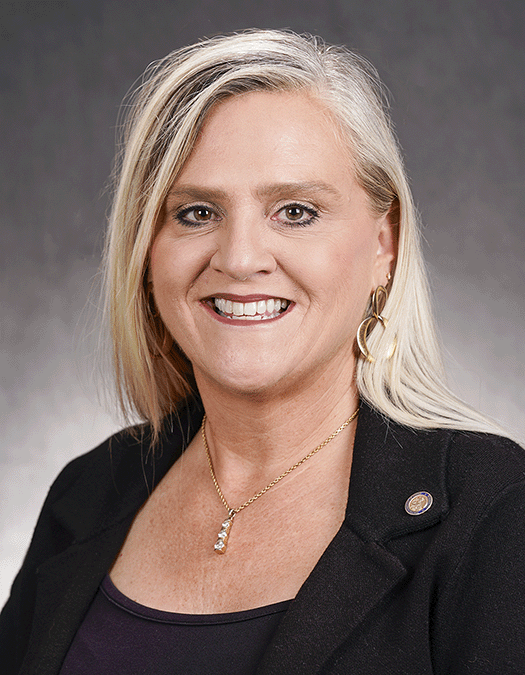
2025-2026 Regular Session Introduced by Pam Altendorf and 1 co-sponsor

Minnesota bill increases penalties for government employees who fail to prevent fraudulent payments and expands their legal duty to identify and stop improper fund disbursements.

Introduction and first reading, referred to State Government Finance and Policy
0
WeVote Research Nonpartisan
Bill Summary · HF 2813

Legislative bill overview

HF 2813 increases criminal and administrative penalties for government employees and officials who fail to prevent or stop fraudulent payments. The bill also expands their legal responsibilities and duties to identify and halt improper fund disbursements. This creates stronger accountability mechanisms for state and local government personnel handling public money.

Why is this important

Fraudulent or improper government payments represent direct losses to taxpayers and erode public trust in institutions. By heightening consequences and clarifying obligations for employees, the bill aims to create stronger internal controls and deter negligence or complicity in payment fraud schemes.

Potential points of contention

  • Scope ambiguity: The bill may not clearly define what constitutes "failure to stop" versus reasonable limitation of individual employee authority, potentially creating liability for workers with limited oversight responsibilities
  • Implementation burden: Enhanced duties could require significant new training, systems, and verification procedures across all government agencies, raising operational costs
  • Chilling effect concerns: Increased penalties might discourage good-faith decision-making or create defensive bureaucracy where employees over-scrutinize legitimate payments, slowing government services

Compiled from official sources — confirm details with the bill’s official record.

Sign in to ask a question.