

WeVote

Bill

Bill

HR 9414

Pell Grant Preservation and Expansion Act of 2026

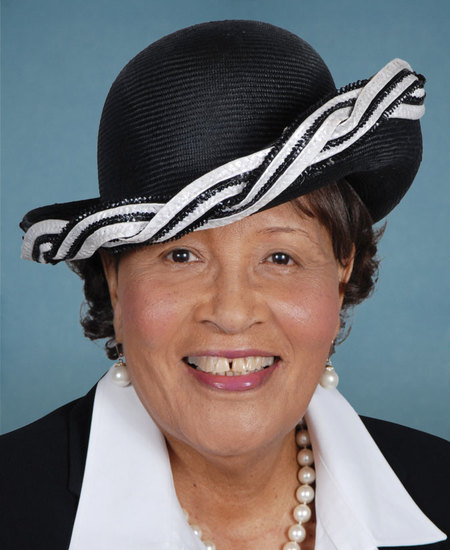
119th Congress Introduced by Alma Adams and 41 co-sponsors

Pell Grants would be inflation-adjusted, mandatory funding with up to $15,000 max by 2031–32 and expanded eligibility for Dreamers, means-tested beneficiaries, and restored prior l

Introduced in House
0
WeVote Research Nonpartisan
Bill Summary · HR 9414

Purpose and scope

  • Name: Pell Grant Preservation and Expansion Act of 2026 (H.R. 9414)
  • Objective: Rework and significantly expand the Federal Pell Grant program, shifting it toward a fully mandatory funding model that grows with inflation and expands eligibility and grant amounts. The bill also aims to restore prior eligibility cuts, increase support for means-tested-benefit recipients, extend eligibility for Dreamer students, and streamline program rules related to Satisfactory Academic Progress (SAP) and other eligibility factors.
  • Effective date: Generally July 1, 2026, with provisions applying to award year 2026–2027 and onward; Education Department would implement steps prior to that date to ensure orderly implementation.

Key provisions and changes

  1. Doubling and mandatory funding for Pell Grants

    • Pell Grant maximums are increased over successive award years:
      • 2026–2027: $10,000 total maximum
      • 2027–2028: $11,000
      • 2028–2029: $12,000
      • 2029–2030: $13,000
      • 2030–2031: $14,000
      • 2031–2032 and beyond: $15,000 (adjusted each year by inflation, rounded to the nearest $50)
    • The program would become fully mandatory funding, automatically adjusted for inflation.
    • Provisions for ongoing appropriations (to be provided as necessary) ensure Pell Grants are funded for eligible students each award year.
  2. Eligibility and benefit enhancements for specific groups

    • Increased maximum Pell Grants for students with negative or very low student aid index (SAI), effectively increasing awards beyond the standard maximum in certain cases.
    • Special rule for recipients of means-tested benefits: the act would treat an applicant with means-tested benefits as eligible for higher Pell aid to reflect economic need.
    • Dreamer students (as defined in the bill) would be eligible for Federal student aid under the Pell program; the bill adds Dreamer status to the eligibility framework and directs the Department to issue regulations on hardship-based waivers for age requirements.
  3. Dreamers and noncitizen eligibility

    • Adds Dreamer students (immigrants who meet specific criteria) to the Pell eligibility framework, including pathways for those who are not citizens or nationals and who may have historically limited access to federal aid.
  4. Restoring and expanding eligibility for prior cuts

    • Restores total semesters of Pell Grant eligibility from previously reduced limits, increasing the number of semesters a student can receive Pell funds.
  5. Satisfactory Academic Progress (SAP) reforms

    • Overhauls SAP requirements and related penalties:
      • Institutions must establish reasonable SAP policies that are consistently applied and clearly communicated.
      • Institutions must outline GPA requirements, progress metrics, and how various academic actions (incompletes, withdrawals, transfers) affect progress.
      • Financial aid warning and probation policies are defined, including what happens to aid eligibility during warning/probation and the conditions for reinstatement.
      • Institutions must provide robust student notification and documentation of SAP determinations.
      • The act emphasizes consumer testing to develop best-practice templates for institutions to implement SAP policies.
  6. Reinstatement and resets of eligibility

    • Creates rules for regaining eligibility after a failure to meet SAP, including resets after re-enrollment and limits on resets.
    • Requires a two-year reset window before re-eligibility would be considered again in some cases.
    • Secretary would issue notices to students who fail to regain eligibility, with information about re-enrollment and transfers.
  7. Other conforming amendments

    • Makes multiple conforming adjustments across the Higher Education Act to align with the new Pell framework (section references and cross-references).

Who would be affected

  • Eligible undergraduate and certain postsecondary students who receive Pell Grants.
  • Dreamer students and recipients of means-tested benefits who gain expanded eligibility or higher grant amounts.
  • Institutions of higher education that administer Title IV aid, due to new SAP standards, warning/probation rules, reporting requirements, and enhanced consumer-facing communications.
  • Students with prior scholarships or non-Pell aid that interact with Pell eligibility, due to restoration of eligibility and updated maximums.

Procedural and timeline notes

  • The act establishes July 1, 2026 as the effective date, with implementation steps required beforehand by the Secretary of Education to ensure orderly transition.
  • The bill designates Pell as a fully mandatory program moving forward, with inflation-based growth and annual funding as needed.
  • An annual reporting mechanism on outcomes of eligibility resets is included, detailing reenrollment, institution-level data, and completion metrics.

Summary

HR 9414 proposes a comprehensive overhaul of the Pell Grant program to provide substantially larger, inflation-adjusted grants on a mandatory funding basis, restore and expand eligibility for underserved and new groups (including Dreamers and means-tested-benefit recipients), and implement clearer, institutionally consistent standards for maintaining eligibility through updated SAP rules. It emphasizes predictable funding, enhanced information to students, and data-driven oversight of program outcomes.

Compiled from official sources — confirm details with the bill’s official record.

Sign in to ask a question.