

WeVote

Bill

Bill

S 4610

Pacific POWER Act

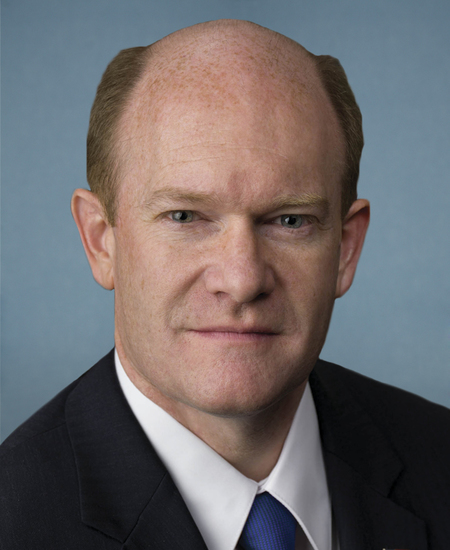
119th Congress Introduced by Chris Coons and 3 co-sponsors

Promotes international geothermal development by funding partnerships, diplomacy, and standards to deploy next-gen geothermal energy for electricity and direct-use globally.

Committee on Foreign Relations. Reported by Senator Risch with an amendment in the nature of a substitute. Without written report.
0
WeVote Research Nonpartisan
Bill Summary · S 4610

Summary of Bill S.4610 (Pacific POWER Act)

Purpose and overarching aim

  • Proposes to promote the development and use of geothermal resources in the Pacific region as part of a broader strategy to enhance energy security, strengthen Indo-Pacific alliances, and support U.S. national security and economic interests.
  • Establishes an international geothermal program and accompanying diplomacy and partnership activities to advance geothermal deployment, including next-generation geothermal technologies.

Key provisions and changes

  • Definitions (Section 2)

    • Clarifies terms such as “appropriate committees of Congress,” “direct use,” “geothermal partners,” “next-generation geothermal,” and “Secretary” (Secretary of State).
    • “Next-generation geothermal” includes enhanced geothermal systems, closed-loop systems, supercritical-temperature geothermal, and other innovative technologies.
    • “Geothermal partners” are U.S. allies and partners selected under the program.
  • Findings and Sense of Congress (Sections 3–4)

    • Finds the Indo-Pacific region’s critical importance to U.S. security and energy needs.
    • Emphasizes that geothermal energy can enhance resilience, reduce vulnerability to coercion, and expand U.S. export opportunities.
    • Encourages bilateral MOUs or similar agreements on geothermal energy with key allies.
  • Geothermal Diplomacy (Section 5)

    • The Secretary of State, with the Secretary of Energy, will pursue bilateral and multilateral efforts to advance geothermal energy.
    • Goals include expanding deployment (electricity and direct-use applications), creating forums for learning, risk-sharing and financing tools, regulatory/power market reforms, and standards for environmental, safety, and community engagement.
    • Special emphasis on Indigenous rights and community engagement, revenue sharing, reservoir management, seismic risk mitigation, water-resource protection, and transparent data-sharing.
  • Indo-Pacific Engagement and Multilateral Mechanisms (Section 5b–d)

    • Targets engagement with specific partners in the Indo-Pacific (e.g., Taiwan, Philippines, Japan, Australia, Indonesia, India, New Zealand, Papua New Guinea) and in some versions, Thailand.
    • Leverages multilateral forums (Quad, US-Japan-Philippines, US-Japan-Korea, US-ASEAN dialogues, Pacific Community, IEA, G7) to advance geothermal cooperation.
  • International Geothermal Program and Partner Selection (Section 6)

    • Within 180 days of enactment, the Secretary must submit a global assessment identifying high-potential geothermal areas, suitable locations, regulatory/economic conditions, and national security implications.
    • Selects at least five geothermal partners that meet criteria:
    • At least three Indo-Pacific countries.
    • At least one country not currently producing/consuming geothermal at commercial scale.
    • At least one country with significant potential to expand capacity.
    • Establishes memoranda of understanding or similar agreements with selected partners.
    • Creates an advisory mechanism with private sector and nonprofit geothermal expertise to identify export opportunities, standards, data practices, and investment connections.
  • Implementation and Program Administration (Section 7)

    • Requires a formal strategy within 180 days of partner selection outlining objectives, resources, and opportunities (regional partnerships, supply chain resilience, financing tools, feasibility studies, and agency-supported finance).
    • Program implementation led by the Under Secretary of State for Economic Growth, Energy, and the Environment, coordinating with the Office of International Affairs and the Geothermal Technologies Office.
    • Mandates annual reporting to Congress on activities, partner engagement, strategy changes, personnel allocations, and assistance provided.
    • Authorized to coordinate technical and financial assistance (grants, loans, loan guarantees) to partners and U.S. companies.
    • Requires ongoing interagency coordination and semiannual briefings to relevant Congressional committees.
    • Authorization of appropriations for 2027–2031 to fund the Program; transfer authority allows moving funds to relevant agencies with advance notice to Congress.

Who would be affected

  • U.S. government agencies (State Department, Energy, Treasury, Commerce, Interior, DOD-related financing bodies, EXIM Bank, Millennium Challenge Corporation, U.S. Trade and Development Agency, U.S. International Development Finance Corporation).
  • Geothermal industry participants in the United States (developers, equipment manufacturers, financial institutions, industry associations, nonprofits).
  • Partner countries in the Indo-Pacific and other regions identified as geothermal partners.
  • Local communities and Indigenous groups in areas affected by geothermal projects (due to community engagement, consent processes, and revenue-sharing expectations).

Procedural and timeline aspects

  • Establishment timeline:
    • Not later than 180 days after enactment: assess global resources and identify potential partner countries; select at least five geothermal partners.
    • Not later than one year after enactment: establish the International Geothermal Program to implement the Act’s provisions.
    • Not later than 180 days after Program establishment and partner selection: submit a comprehensive strategy for advancing geothermal energy with each partner.
  • Reporting:
    • Annual reports to Congress detailing activities, partner engagements, strategy adjustments, personnel, and funding usage.
    • Semiannual briefings to the appropriations and foreign relations/energy committees (through the interagency coordination mechanism).
  • Funding:
    • Authorized appropriations for 2027–2031, with authority to transfer funds between State and other agencies as needed, with timely congressional notification.

Note on scope

  • The bill emphasizes both electricity generation and direct-use applications (heating, cooling, industrial use).
  • It prioritizes Indigenous engagement, local economic benefits, and transparent data sharing.
  • It leverages existing international forums and partnerships to advance geothermal technology, market development, and supply chains.

Compiled from official sources — confirm details with the bill’s official record.

Sign in to ask a question.