

WeVote

Bill

Bill

HR 6606

Opportunities for Success Act of 2025

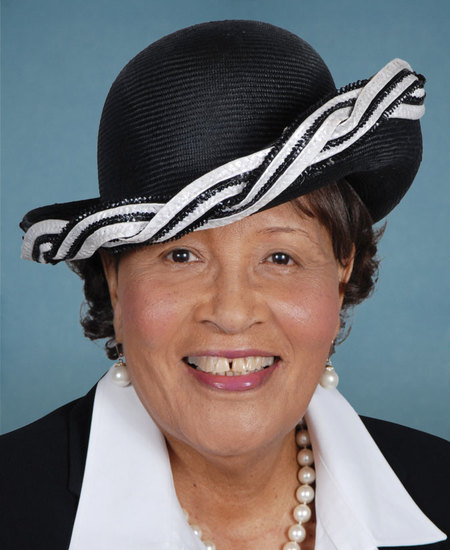
119th Congress Introduced by Alma Adams and 2 co-sponsors

Reauthorizes and expands Federal Work-Study, funds work-based learning through 2031, ties allocations to Pell-related performance, rewarding improved institutions via metrics.

Introduced in House
0
WeVote Research Nonpartisan
Bill Summary · HR 6606

Summary of HR 6606: Opportunities for Success Act of 2025

Overview

  • Purpose: Reauthorize and expand the Federal Work-Study (FWS) program under the Higher Education Act of 1965. The bill defines and broadens work-based learning opportunities for college students and revises how funds are allocated to participating institutions, with a focus on improved institutions and student outcomes.

  • Introduced: December 11, 2025

  • Status: Introduced in the House; referred to the Committee on Education and Workforce

  • Primary sponsors: Congresswoman Angie Craig (and cosponsors including Alma S. Adams)

  • Key objective: Increase support for work-based learning experiences tied to students’ fields of study, while restructuring funding to reward institutions that demonstrate improvements in Pell Grant participation and completion rates.

What the bill would do

1) Reauthorization and funding levels (Section 2)

  • Authorizes funding for work-based learning and related programs beginning FY 2027 through FY 2031 and beyond. Specifically, the bill sets targeted annual funding amounts under the FWS-related authorizations:

    • FY 2027: $1.5 billion
    • FY 2028: $1.75 billion
    • FY 2029: $2.0 billion
    • FY 2030: $2.25 billion
    • FY 2031: $2.5 billion
    • Each subsequent fiscal year would receive a level set to continue these amounts (subject to future appropriations).
  • Expanded scope of work-based learning. The bill extends work-based learning to include activities described in the statute (internships, fellowships, research assistant positions, teacher residencies, clinical experiences, community service, cooperative education, apprenticeships, etc.) and explicitly allows work-based experiences even if they do not carry academic credit.

  • Definition of work-based learning. The added definition emphasizes sustained interactions with industry, community, or academic professionals in real workplace settings, including on-campus opportunities, aligned with a student’s field of study, and engaging in a variety of formats (internships, residencies, assistantships, etc.).

2) Allocation and targeting of funds (Section 3)

  • Revised allocation formulas for FY 2027–FY 2031. The bill creates and refines “reservations” for two purposes:

    • Improved Institutions Reservation: When overall FWS funds exceed $700 million, a portion is reserved for “improved institutions.” The mechanism:
    • Sets aside the lesser of 20% of the excess above $700 million or $150 million.
    • Allocates that reserved amount to improved institutions based on either:
      • A Pell-related proportion formula, or
      • A minimum floor of $5,000 per improved institution, whichever is larger.
    • Grant Program Reservation: A fixed amount (e.g., $30 million) is reserved to support grants under a specified program (section 449).
  • Definition and criteria for “Improved Institution.” To qualify as an improved institution, an institution must:

    • Be participating in the program,
    • Meet performance thresholds related to Pell Grant recipients, completion rates of Pell students, and growth in completion rates (with annual improvement benchmarks).
  • Public disclosure. Beginning one year after allocations to improved institutions, the Department would publicly publish:

    • The list of improved institutions receiving funding,
    • For each, the percentage of students who are Pell Grant recipients,
    • Pell recipient completion rates, and
    • Comparisons of these metrics to prior years.
  • Reallocation and transparency. Any funds returned by improved institutions would be reallocated using the same basis as existing improved-institution allocations. Public reporting standards would promote accountability.

Who would be affected

  • Higher education institutions participating in the Federal Work-Study program (including the newly defined improved institutions meeting Pell-related metrics).
  • Students benefiting from expanded work-based learning opportunities (internships, co-ops, residencies, clinical experiences, etc.) and potentially greater access to employment-based experiences aligned with their studies.
  • Institutions with high Pell engagement and improving completion metrics could receive greater allocations under the improved-institution framework.

Procedural and timeline notes

  • Next steps: After introduction, the bill would be referred to the House Committee on Education and Workforce for review, potential amendment, and reporting to the full House.
  • Effective timeline: The funding levels and allocation formulas are set to begin in fiscal years 2027–2031, with ongoing appropriations required to fund these amounts.

Potential impact considerations

  • Increased emphasis on work-based learning could expand experiential opportunities for students, particularly in fields with strong industry ties.
  • A performance-based allocation to “improved institutions” aims to incentivize improvements in Pell recipient outcomes, though the complexity of Pell dynamics and program participation may influence results.
  • The public reporting requirements would enhance transparency around institution-specific performance related to Pell and completion metrics.

Compiled from official sources — confirm details with the bill’s official record.

Sign in to ask a question.