

WeVote

Bill

Bill

HRES 1432

Of inquiry requesting the President and directing the Secretary of Health and Human Services to transmit, respectively, certain documents to the House of Representatives relating to the freeze on State-based Temporary Assistance for Needy Families, Child Care and Development Fund, and Social Services Block Grant payments for California, Colorado, Illinois, Minnesota, and New York.

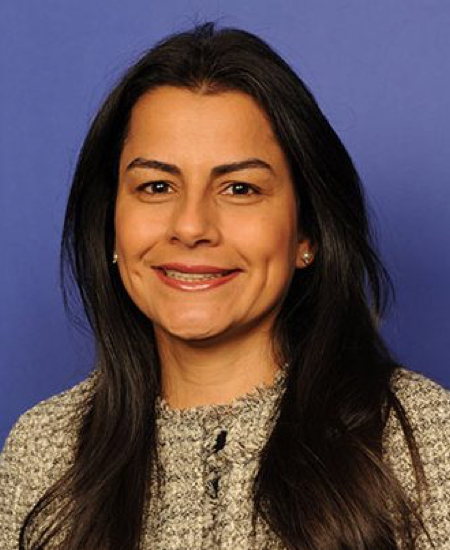
119th Congress Introduced by Nanette Barragán and 22 co-sponsors

The bill requests the President and HHS to turn over documents explaining and justifying a freeze on TANF, CCDF, and SSBG payments in five states.

Submitted in House
0
WeVote Research Nonpartisan
Bill Summary · HRES 1432

Summary of HRES 1432 (119th Congress)

Purpose and intent

  • HRES 1432 is an House of Representatives resolution that seeks to formally inquire and request documentation from the President and the Secretary of Health and Human Services (HHS).
  • The objective is to obtain records related to the freeze on certain federal assistance payments administered through state-based programs, specifically:
    • Temporary Assistance for Needy Families (TANF)
    • Child Care and Development Fund (CCDF)
    • Social Services Block Grant (SSBG)
  • The focus is on states California, Colorado, Illinois, Minnesota, and New York.

Key provisions and changes

  • Directs the President to transmit to the House relevant documents and communications related to the freeze of the above welfare program payments in the specified states.
  • Directs the Secretary of Health and Human Services to provide related documents, including any policies, memos, or guidance that explain or justify the freeze, as well as data or analyses supporting the decision.
  • The resolution does not itself change program funding or policy; rather, it initiating an information-gathering and oversight process by the House.
  • It acts as a formal request for documents rather than imposing new regulations or spending programs.

Who/what would be affected

  • Federal entities:
    • The White House (President) and the Department of Health and Human Services (HHS) would be required to produce documents.
  • State recipients:
    • States named in the inquiry (California, Colorado, Illinois, Minnesota, New York) whose TANF, CCDF, and SSBG payments may have been affected by a freeze.
  • Congress:
    • The House would receive the documents to inform oversight, potential hearings, and policymaking decisions.

Procedural and timeline aspects

  • Action history indicates:
    • July 15, 2026: The bill was submitted in the House.
    • July 15, 2026: Referred to the House Committee on Ways and Means.
  • As a House resolution, it is typically a procedural step used to request information, authorize investigations, or express the sense of the House; it does not itself become law or authorize spending.
  • The timeline for document transmission is not specified in the summary text of the resolution; it would be subject to committee action and standard congressional inquiry procedures.

Potential impact

  • Enhances congressional transparency by obtaining government documentation related to the payment freeze.
  • Enables lawmakers to assess the rationale, scope, and effects of any freeze on TANF, CCDF, and SSBG funds in the five states.
  • Could inform potential legislative or policy actions if the documents reveal policy decisions requiring clarification, revision, or congressional authorization.
  • May influence oversight priorities for the Ways and Means Committee related to welfare programs and federal-state funding dynamics.

Notable sponsors (co-sponsors)

  • A broad group of House members from various districts, including Judy Chu, Jimmy Gomez, Jimmy Panetta, Linda Sánchez, Brad Schneider, Mike Thompson, Nanette Barragán, Yvette Clarke, Ilhan Omar, Jonathan Jackson, Nikki Budzinski, Jan Schakowsky, Salud Carbajal, Dave Min, Bill Foster, Jared Huffman, Diana DeGette, Robin Kelly, Mike Quigley, Sean Casten, Julia Brownley, Eric Sorensen, and Danny Davis.

If you’d like, I can provide a side-by-side comparison with similar prior resolutions or draft a plain-language briefing for a non-legislative audience.

Compiled from official sources — confirm details with the bill’s official record.

Sign in to ask a question.