

WeVote

Bill

Bill

HR 10056

Nurse Overtime and Patient Safety Act of 2026

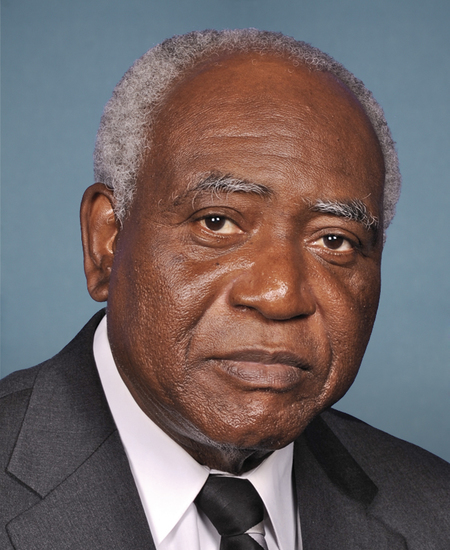
119th Congress Introduced by Danny Davis and 3 co-sponsors

Imposes limits on mandatory nurse overtime in Medicare-funded facilities to improve patient safety and reduce fatigue.

Introduced in House
0
WeVote Research Nonpartisan
Bill Summary · HR 10056

Overview

  • Bill: HR 10056, Nurse Overtime and Patient Safety Act of 2026
  • Session: 119th Congress
  • Purpose: Amend the Medicare program’s constraints on nursing work hours by restricting mandatory overtime for nurses working in certain Medicare-funded provider settings, with related protections and reporting requirements.

Main purpose and intent

  • Establish patient safety by limiting mandatory overtime for nurses in providers of services that receive Medicare payments.
  • Create a federal standard to address fatigue-related patient safety risks linked to long or consecutive work hours.
  • Provide whistleblower protections and penalties to enforce compliance, while preserving existing rights and collective bargaining agreements.

Key provisions and changes

  • Section 3: Limitations on Mandatory Overtime for Nurses

    • Adds a new subsection (l) to Section 1866 of the Social Security Act.
    • Prohibits mandatory overtime except under specified conditions (see exceptions below).
    • Defines hours that count as “hours worked,” including meetings, training, and on-call time when the nurse is required to be present or available.
    • General prohibition: a provider may not require a nurse to work beyond:
    • a previously scheduled shift or duty period, unless otherwise allowed;
    • 48 hours in a workweek; or
    • 12 consecutive hours in a 24-hour period; and
    • not to work after the 12th hour of a shift for the next 10 hours.
    • Exceptions during emergencies or disasters: during declared emergencies or disasters, nurses may be required to work longer if:
    • reasonable efforts to fill staffing needs have been made by the provider;
    • the excess work period ends when the emergency/disaster ends (or provider’s role ends);
    • a next-shift vacancy is known at the end of the current shift;
    • there is potential harm to a patient if a nurse leaves.
    • Voluntary overtime remains allowed.
    • Whistleblower protections:
    • Nurses may file complaints with the Secretary for violations.
    • The Secretary must investigate and may require a corrective plan and civil penalties.
    • Nondiscrimination protections:
    • Providers may not retaliate against nurses who refuse mandatory overtime or who report violations, or participate in investigations.
    • Notice and documentation requirements:
    • Providers must have written policies on mandatory overtime, provide them to staff, and post a conspicuous notice of nurses’ rights.
    • Posting of nurse schedules:
    • Providers must regularly post nurse schedules and provide daily schedules on request.
    • Civil monetary penalties:
    • Penalties up to $10,000 per knowing violation; higher penalties may apply for patterns of violations.
    • Definitions:
    • “Mandatory overtime,” “overtime,” “nurse” (R.N., LPN, or LVN), “provider of services” (types of facilities listed), “declared emergency or disaster,” and related terms.
    • State law relationship:
    • This subsection does not preempt stricter state overtime protections.
  • Section 4: Reports

    • Standards on safe working hours for nurses:
    • The Director of AHRQ, through the Secretary of Health and Human Services, must study appropriate maximum-hour standards.
    • The study may vary by provider, department, duties, shifts, and other factors; may involve contracting with an eligible entity.
    • A report with recommendations for standards is due to Congress within 2 years of enactment.
    • Federal facilities study:
    • The Director of OMB must study whether federally operated medical facilities have overtime practices inconsistent with 1866(l).
    • A report with recommendations for implementing consistent policies in federally operated facilities is due within 6 months of enactment.
  • Effective date

    • The amendments take effect 1 year after enactment.
  • Relationship to other laws

    • The act does not preempt state law that provides greater protections regarding nurse overtime.

Who would be affected

  • Providers of services that receive Medicare payments (e.g., hospitals, psychiatric hospitals, hospital outpatient departments, critical access hospitals, ambulatory surgical centers, home health agencies, rehabilitation agencies, clinics, rural health clinics, federally qualified health centers, and other secretary-designated facilities).
  • Nurses working in these facilities (RNs, LPNs, LVNs).
  • State and federal regulatory bodies enforcing healthcare labor standards.

Procedural and timeline aspects

  • Introduction: August 6, 2026 (Ms. Matsui, with co-sponsors)
  • Referral: Committee on Energy and Commerce and Committee on Ways and Means
  • Effective date: 1 year after enactment
  • The bill requires:
    • AHRQ-directed standards study within 2 years
    • OMB-directed federal facilities study within 6 months, with broader implementation guidance to follow
  • Penalties and whistleblower provisions imply potential regulatory enforcement and public reporting of penalties on the HHS website

Potential impact (summary)

  • Aims to reduce nurse fatigue and associated patient safety risks by limiting mandatory overtime across Medicare-funded facilities.
  • Introduces clear time-based limits (48-hour weekly cap; 12-hour shift cap within 24 hours) with emergency exceptions.
  • Creates formal processes for complaints, investigations, and corrective actions, including penalties for violations.
  • Requires transparency through posted schedules and documented policies.
  • Encourages future standards for maximum safe working hours through a formal study and Congress-based guidance.

Compiled from official sources — confirm details with the bill’s official record.

Sign in to ask a question.