

WeVote

Bill

Bill

HF 4665

Number of proof of residence oaths a person can sign on any election day reduced from eight to two.

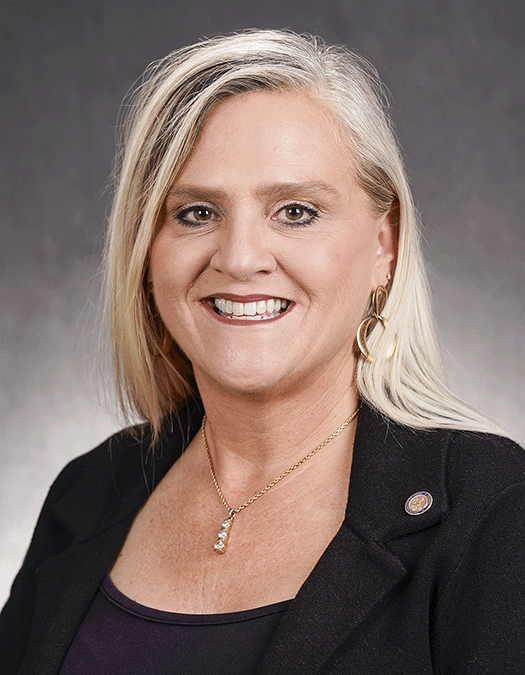
2025-2026 Regular Session Introduced by Pam Altendorf and 4 co-sponsors

Reduces maximum proof-of-residence oaths one person can sign on election day from eight to two, potentially limiting voter access for those without ID.

Author added Perryman
0
WeVote Research Nonpartisan
Bill Summary · HF 4665

Legislative bill overview

HF 4665 reduces the maximum number of proof of residence oaths a single person can sign on election day from eight to two. A proof of residence oath allows someone without official identification to vote by having a registered voter vouch for their residence. This change would significantly limit how many unregistered voters one person can vouch for during a single election.

Why is this important

Proof of residence oaths serve voters who lack traditional ID documentation, potentially affecting homeless individuals, recent movers, and others without fixed addresses. The reduction would either prevent some eligible voters from casting ballots or require election officials to find additional vouchers, impacting both voter access and election administration workload on voting day.

Potential points of contention

  • Voter access concerns: Reducing oath limits may disenfranchise eligible voters in communities with fewer registered voters willing to serve as witnesses, disproportionately affecting rural areas or populations with housing instability
  • Election administration burden: Limiting oaths per person could create bottlenecks at polling places if demand for vouchers exceeds the reduced capacity, requiring poll workers to manage overflow or turn away voters
  • Fraud prevention vs. access trade-off: Supporters may argue fewer oaths per person reduces fraud risk, while opponents contend the current system has minimal documented abuse and this change sacrifices access for uncertain security gains

Compiled from official sources — confirm details with the bill’s official record.

Sign in to ask a question.